
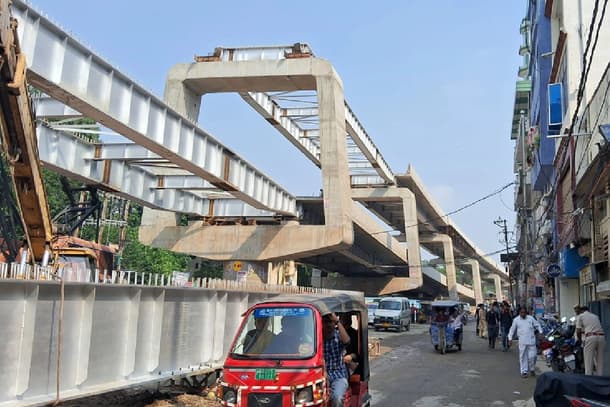
Authorities in Gurugram have approved a major infrastructure upgrade aimed at tackling traffic congestion in some of the city’s busiest junctions. Gurugram Metro Rail Limited (GMRL) has received in-principle approval to construct a flyover at Bakhtawar Chowk and a double-decker flyover along the Hero Honda Chowk to Umang Bhardwaj Chowk stretch.
The decision was taken following a meeting with the Gurugram Metropolitan Development Authority (GMDA).
Double-Decker Design to Save Space and Cost
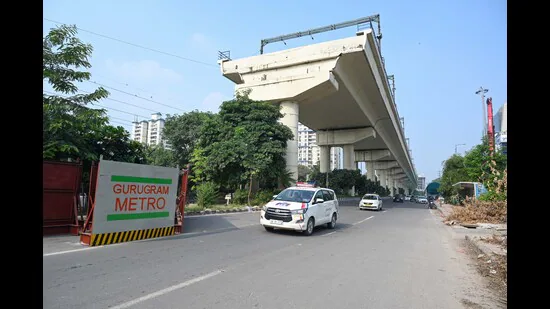
Officials said the project will use an innovative double-decker structure, where metro pillars and road flyover pillars will be shared. This design will help reduce construction costs while also saving valuable road space.
According to GMRL officials, the elevated design will allow both the metro line and the flyover to run on the same structural pillars, minimizing land usage and maintaining smooth traffic flow on the surface roads.
Flyover Plan Replaces Earlier Underpass Proposal
Earlier, authorities had planned to build an underpass at Bakhtawar Chowk, but that proposal would have reduced the 60-metre road width of the stretch.
The new flyover design has been preferred because it maintains the full road width while managing heavy traffic at the junction, which is known for frequent congestion.
Similar Plan for Hero Honda Chowk Stretch
GMDA has also given initial approval for a double-decker flyover near Hero Honda Chowk, one of Gurugram’s most critical traffic intersections.
Officials said detailed planning and modalities will now be finalized, after which the proposal will be submitted to the Haryana state government for final approval.
Part of Larger Metro Connectivity Plan
The flyovers are expected to complement the upcoming Gurugram metro expansion project, improving mobility while ensuring that road and metro infrastructure develop together.
A similar double-decker design proposal for the Ghata to Vatika Chowk stretch has also been submitted to the Haryana Mass Rapid Transport Corporation Limited (HMRTC) for consideration.
Urban planners believe the project could significantly reduce congestion at key intersections while supporting Gurugram’s growing metro network.