
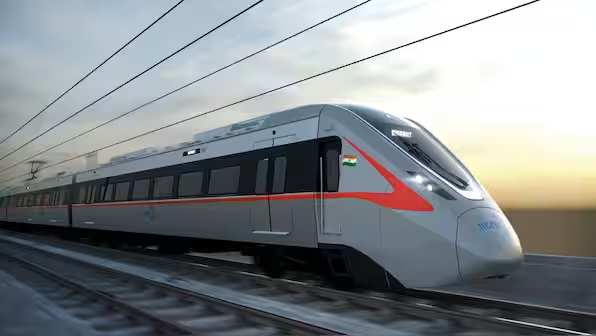
The much-awaited full launch of the Delhi–Meerut Rapid Rail Transit System (RRTS), branded as Namo Bharat, marks a historic milestone for the National Capital Region. Yet long before the corridor became fully operational, it had already begun reshaping how people live, work, study, and travel across cities.
Since the first section opened in October 2023, the high-speed rail link has steadily reduced travel times and blurred the traditional boundaries between Delhi and surrounding towns.
Living Farther, Working Anywhere
One of the most visible impacts has been on housing choices. Professionals who once felt compelled to live near Delhi are now settling in more affordable cities such as Meerut, Modinagar, and Ghaziabad while continuing careers in the capital.
For many families, the corridor has turned long-distance commuting into a practical daily routine. Travel from Meerut to Ghaziabad now takes around 30 minutes, making relocation decisions easier and reducing pressure on NCR’s expensive property markets.
Faster Than Road Travel
Commuters report dramatic savings in both time and money. A journey that previously took two hours by road — often through congested highways — can now be completed in under an hour in air-conditioned coaches.
Premium fares remain far cheaper than daily cab rides, making the service attractive for regular travel. Workers, students, entrepreneurs, and even weekend visitors are increasingly relying on rapid rail instead of private vehicles.
New Opportunities for Students and Businesses
The corridor is also expanding access to education and employment. Students from smaller towns can now attend coaching centres and colleges in Delhi without relocating, while businesses benefit from improved connectivity between markets.
Entrepreneurs say the ability to travel quickly has increased productivity and enabled closer supervision of operations spread across cities.
Improved Family Connectivity
Beyond work and education, the rail link has strengthened social connections. Families separated by distance can now meet more frequently, turning what used to be long, tiring trips into convenient day visits.
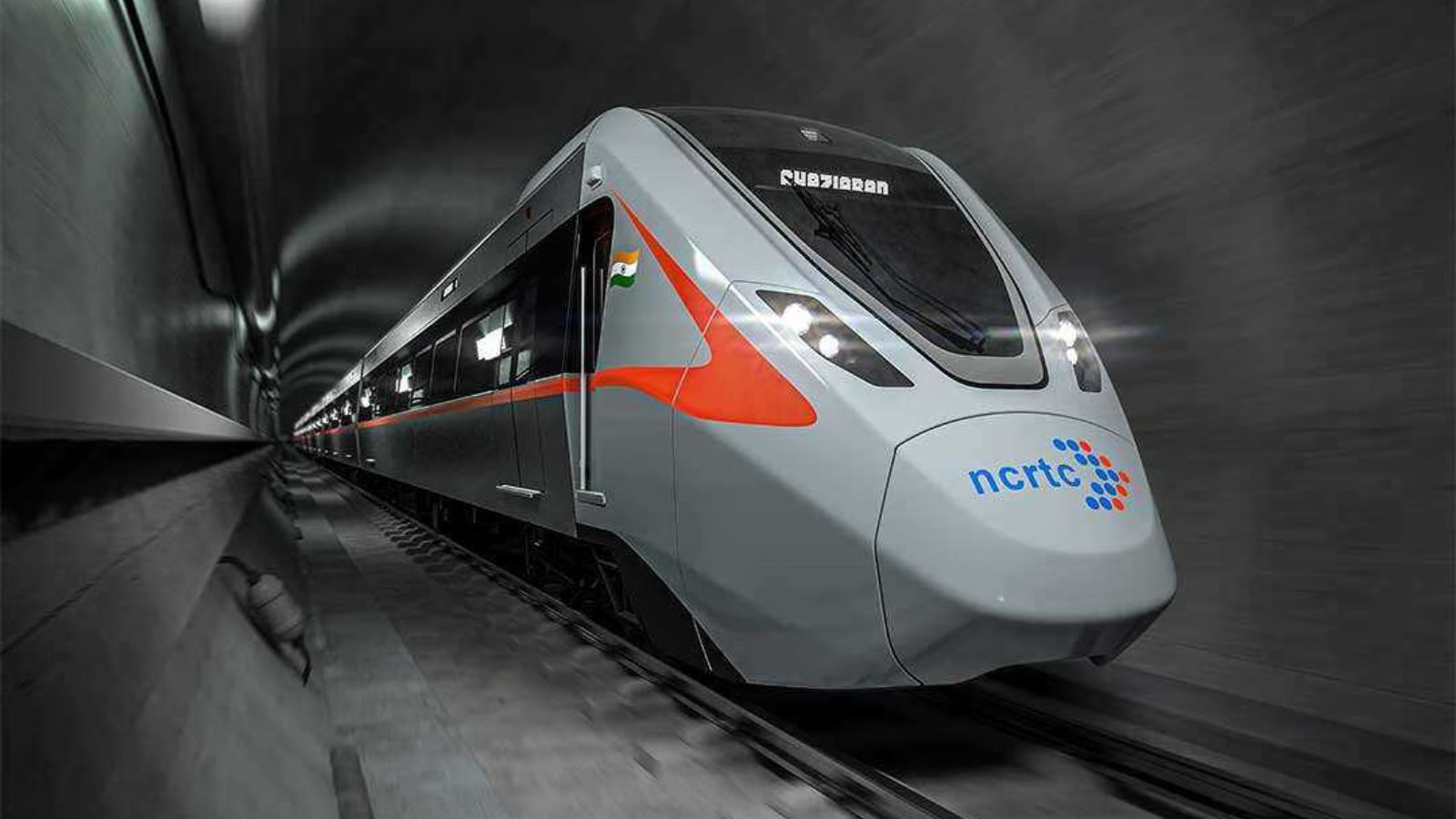
Last-Mile Connectivity Still a Challenge
Despite its success, commuters highlight one major gap: transport from stations to final destinations. In some areas, expensive auto fares or limited public transport options reduce the overall cost advantage of the system.
Authorities are expected to address these issues as ridership grows following the full launch.
A New NCR in the Making
With the entire 82-km corridor now operational and travel time between Meerut and Delhi expected to be around 55 minutes, the RRTS is poised to accelerate regional integration further.
Urban planners believe the project could redefine NCR as a truly interconnected mega-region — where people can live in one city, work in another, and access opportunities across the entire region without relocation.
The rapid rail is no longer just a transport project; it is becoming the backbone of a new economic and social geography for northern India.