
In a moment that could redefine the future of warfare, Ukraine has demonstrated that the battlefield is no longer dominated solely by missiles, fighter jets, or heavy artillery. Instead, precision drones—small, adaptable, and relentless—have emerged as game-changers, capable of achieving what some of the world’s most advanced weapons systems could not.
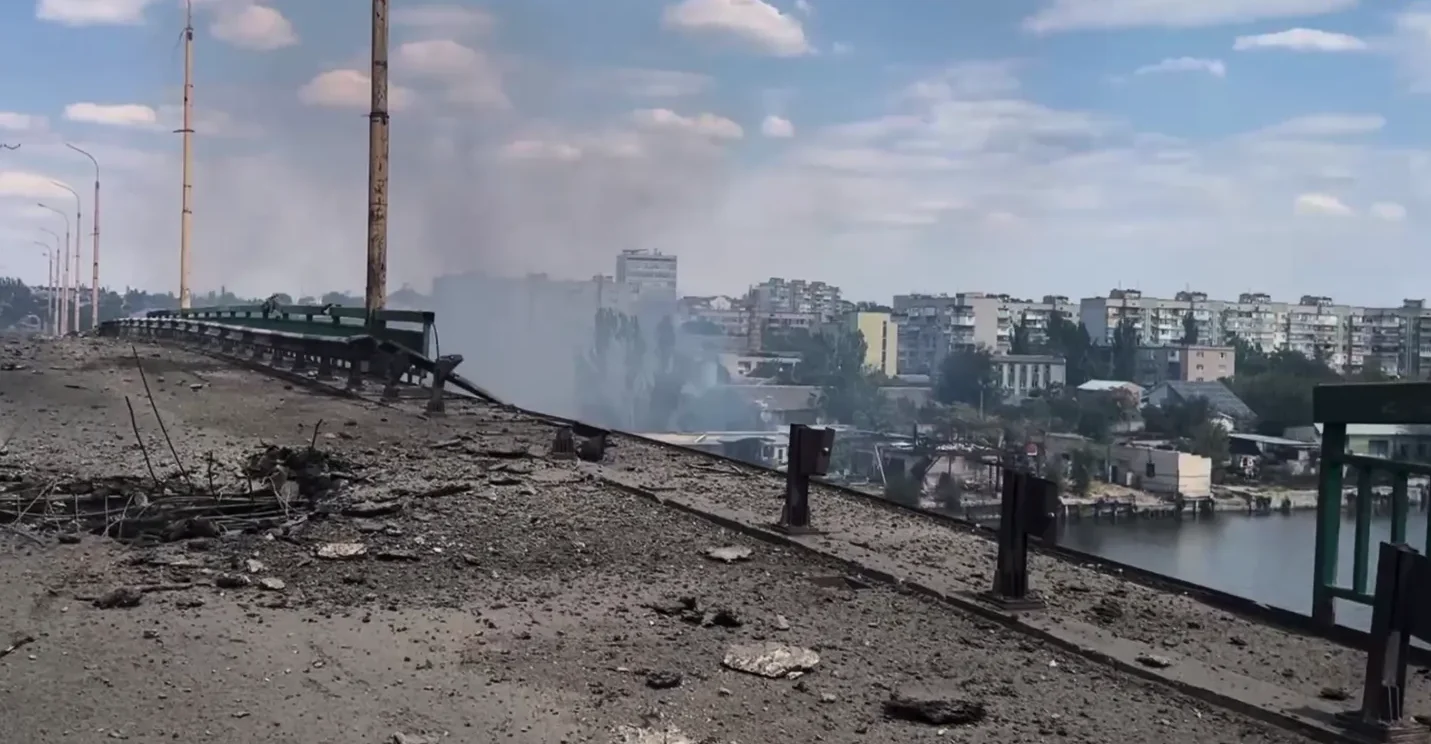
Amid the ongoing Russia-Ukraine war, Ukrainian forces successfully destroyed a strategically vital bridge over the Konka River in the Kherson region—an objective that had resisted repeated attempts using conventional firepower.
A Target That Refused to Fall
For months, this bridge stood as a stubborn symbol of resistance. It was not just a physical structure—it was a lifeline for Russian forces, enabling the movement of troops, ammunition, and supplies across the frontline.
Ukrainian forces launched multiple attempts to destroy it using airstrikes and long-range rocket systems, including the highly advanced M142 HIMARS. Yet, despite their destructive capability, these systems struggled against the realities of modern combat.
Bridges are notoriously difficult targets. Their narrow structure, combined with heavy air defence systems and the need for pinpoint accuracy, makes them extremely hard to destroy from high-speed aircraft or distant artillery platforms. Even a slight miscalculation can render an attack ineffective.
After repeated failures, the mission demanded a radically different approach—one that relied not on brute force, but on precision, persistence, and innovation.
The Rise of Drone Warfare
The task was handed to a specialized Ukrainian unmanned systems unit, which turned to the British-designed Malloy T-150 drone—a platform originally built for logistics and heavy payload transport.
What followed was not a single explosive strike, but a calculated campaign of aerial precision.
Over a period of nearly 30 days, operators executed a series of coordinated drone missions:
Each drone carried payloads ranging between 50 to 68 kilograms of explosives
More than 1.5 tonnes of explosive material was gradually delivered
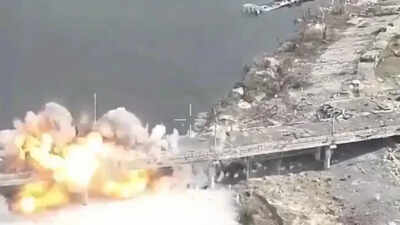
Strikes were carefully directed at the bridge’s structural weak points—its supports and load-bearing sections
Instead of overwhelming the target with force, the drones systematically weakened it, turning the operation into a slow but inevitable collapse.
At the decisive moment, a final detonation was triggered—bringing down the bridge and cutting off a critical supply route.
Why This Operation Is a Turning Point
This was not just a tactical victory—it was a strategic statement.
The success of this operation highlights a profound shift in how wars are being fought. Expensive missile systems and high-speed jets, once considered the backbone of military dominance, are now being complemented—and in some cases outperformed—by cost-effective, intelligent drone systems.
Drones offer several advantages:
●They can hover and adjust mid-mission, ensuring greater accuracy
●They reduce risk to human pilots and soldiers
●They are harder to detect and intercept compared to traditional aircraft
●They allow repeated, targeted strikes instead of one-time attacks
Most importantly, drones enable a new kind of warfare—one driven by intelligence, adaptability, and surgical precision rather than sheer firepower.
A Glimpse Into the Future of Combat
Military experts worldwide are closely watching this development. The implications extend far beyond the current conflict.
What Ukraine has demonstrated is a new operational doctrine—where infrastructure like bridges, supply chains, and logistics hubs can be neutralized through sustained, precision-based drone campaigns.
This evolution is forcing armed forces across the globe to rethink their strategies. Investments are rapidly shifting toward unmanned systems, artificial intelligence, and data-driven targeting.
The battlefield is no longer just about who has the biggest weapons—it is increasingly about who uses technology smarter and faster.

The War That Is Rewriting Warfare
As the conflict continues, moments like this underline a larger reality: modern warfare is being rewritten in real time.
The destruction of a single bridge may appear tactical on the surface, but its implications are far-reaching. It signals a world where innovation can outmaneuver tradition, where smaller systems can deliver outsized impact, and where the future of combat lies not just in power,but in precision.