
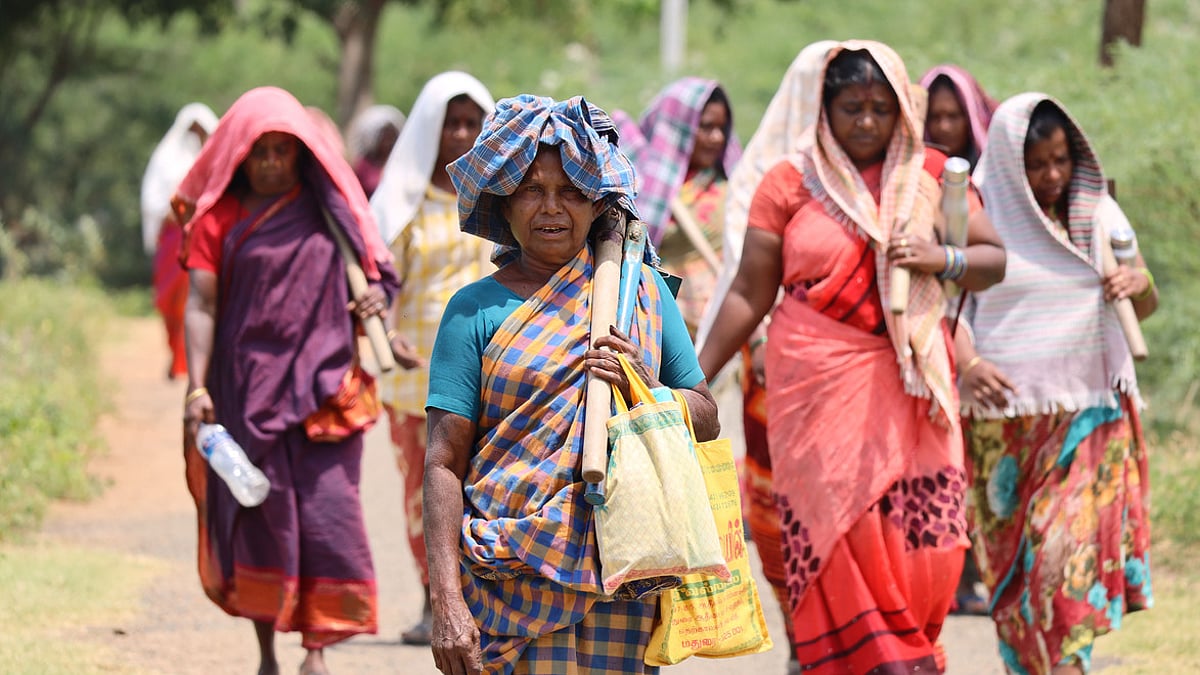
The Lok Sabha on Thursday passed the Viksit Bharat Guarantee for Rozgar and Ajeevika Mission (Gramin) Bill, or VB-G RAM G Bill, marking a major shift in India’s rural employment policy. The legislation, which seeks to replace the nearly two-decade-old Mahatma Gandhi National Rural Employment Guarantee Act (MGNREGA), was cleared by a voice vote amid fierce protests by Opposition parties.
As the Bill was taken up for passage, Opposition MPs stormed the well of the House, raising slogans, tearing copies of the legislation, and accusing the government of diluting the legally enforceable right to work. Despite the uproar, the government pushed the Bill through, calling it a long-overdue reform to strengthen rural livelihoods and improve accountability.
What the New Law Promises
Introduced in December by Union Rural Development and Agriculture Minister Shivraj Singh Chouhan, the VB-G RAM G Bill provides a statutory guarantee of 125 days of wage employment per year to rural households—an increase over the 100-day guarantee under MGNREGA. The Centre has allocated Rs 95,000 crore for the programme.
The government says the new framework focuses on outcome-based employment, meaningful asset creation, and improved utilisation of public funds. Special emphasis has been placed on women, senior citizens, persons with disabilities, and marginalised communities including Scheduled Castes and Scheduled Tribes.
Greater Role for Gram Sabhas
A key feature of the Bill is enhanced decentralisation. Gram sabhas and gram panchayats will have a stronger role in planning and approving works, ensuring that projects align with local needs rather than being driven solely by fund utilisation targets.
Officials argue that the revised structure addresses long-standing implementation gaps under MGNREGA, including weak monitoring and uneven material expenditure by States.
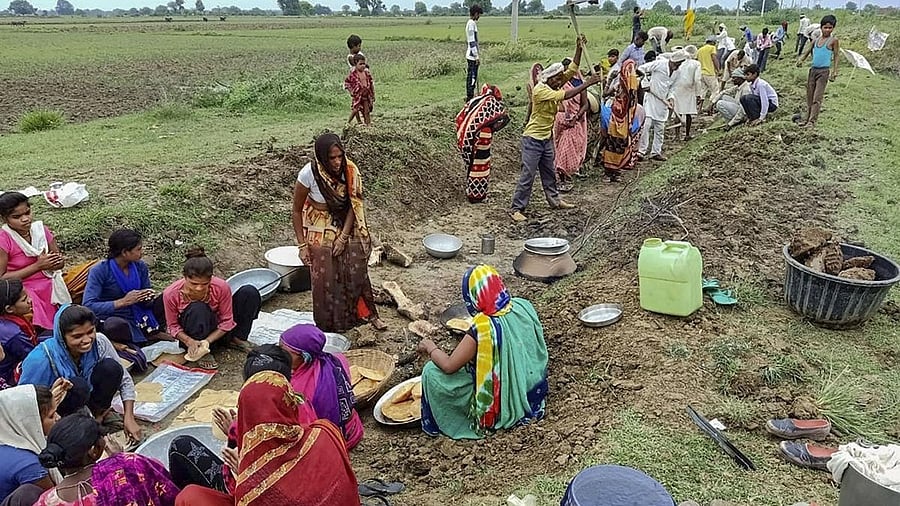
Opposition Slams ‘Rollback of Rights’
The Opposition, led by the Congress, described the move as a rollback of hard-won rural rights. Congress president Mallikarjun Kharge accused the government of dismantling a landmark welfare law and erasing Mahatma Gandhi’s legacy from India’s social safety net.
Opposition leaders warned that MGNREGA had played a critical role in reducing rural distress, curbing migration, and providing economic support during crises such as the Covid-19 pandemic. They questioned whether the new law would offer the same level of legal protection and employment security.
How It Differs From MGNREGA
While MGNREGA guaranteed 100 days of work—with higher limits in certain regions—the new law raises the threshold to 125 days but links employment more closely to decentralised planning, audits, and performance-based oversight. The government maintains that the core objective of employment generation remains intact, even as the structure evolves.
What Lies Ahead
With the Bill now passed by the Lok Sabha, its political and administrative implications are expected to dominate national debate. As rural employment remains a sensitive issue, the transition from MGNREGA to VB-G RAM G will be closely watched on the ground.
The legislation has not only reshaped India’s rural employment framework but has also reignited a larger conversation on welfare reforms, historical legacy, and the future direction of social protection in India.