
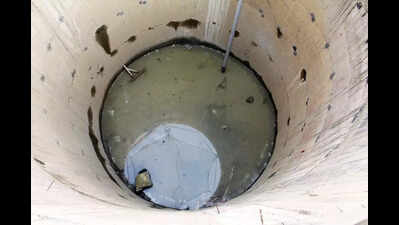
New Delhi is facing an unexpected challenge in its crackdown against illegal groundwater extraction. According to a recent report submitted to the National Green Tribunal (NGT), 153 illegal borewells in the capital cannot be traced, leaving authorities unable to seal them or take corrective action.
The issue has surfaced during an ongoing campaign against rampant groundwater exploitation, which poses a serious threat to Delhi’s already stressed water table. The Central Ground Water Authority (CGWA), in its latest status report, has highlighted that incorrect and incomplete records have become a major obstacle in enforcement.
Over 20,000 Illegal Borewells Identified Across Delhi
As per the report, the Delhi Jal Board had earlier identified 20,297 illegal borewells across different parts of the city. District administrations were tasked with sealing these borewells or ensuring their closure.
So far, action has been taken against the majority of them:
15,962 borewells have been sealed by district authorities
3,875 borewells were voluntarily shut down by their owners
However, 153 borewells remain untraceable due to incorrect addresses, missing ownership details, and wrong mobile numbers recorded in official data.
Legal and Administrative Complications Add to the Problem
The report further reveals that:
●142 borewells are yet to be sealed
●160 borewells are protected under court stay orders
●5 borewells have received approval from the District Level Authority Committee (DLAC)
Officials admitted that sealing untraceable borewells has become nearly impossible without accurate ground-level information, raising concerns about enforcement efficiency.
Who Is Responsible for Action?
Under the Ground Water Regulation Direction, 2010, powers to regulate groundwater extraction in Delhi lie with District Magistrates (DMs) and Sub-Divisional Magistrates (SDMs), as delegated by the Lieutenant Governor.
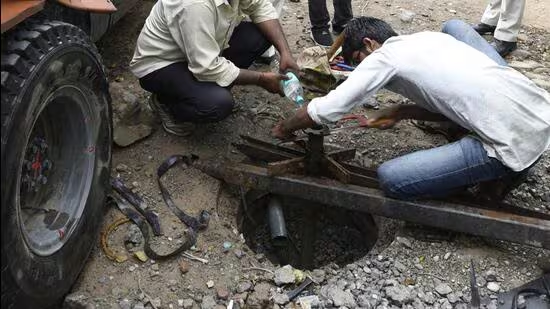
While the Delhi Jal Board identifies and reports illegal borewells, the actual sealing process is carried out by district administrations with police support. Recovery of environmental penalties is also handled at the district level.
Growing Concern Over Groundwater Depletion
Experts warn that such gaps in data management and enforcement could severely undermine efforts to conserve groundwater in Delhi. Illegal borewells continue to drain aquifers unchecked, especially in areas already facing water scarcity.
The NGT is expected to review the issue closely, as authorities work to update records, verify locations, and tighten monitoring mechanisms to ensure that no illegal borewell escapes action.