
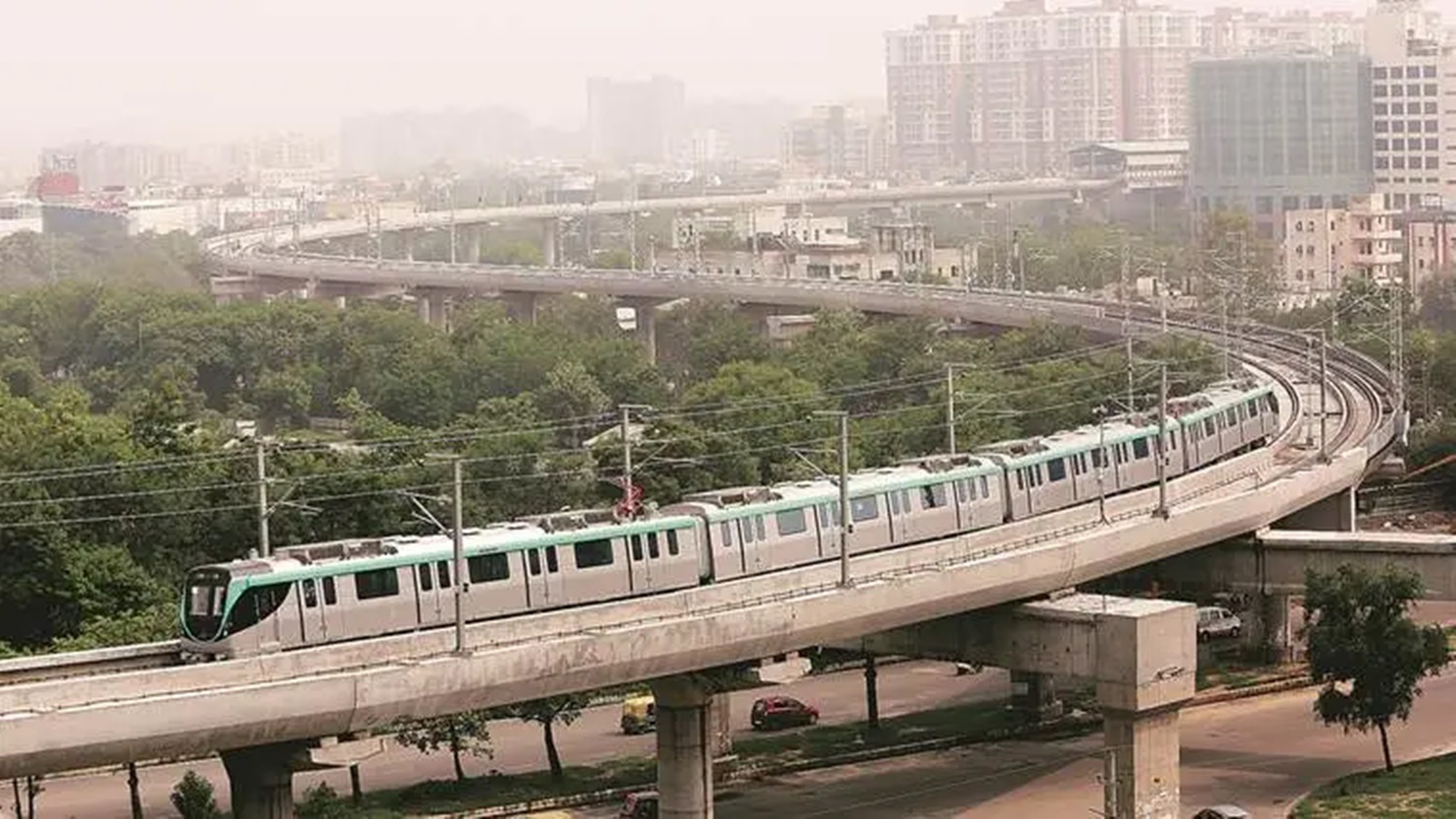
The long-awaited Greater Noida West metro corridor is set for a major redesign, with the Noida Metro Rail Corporation (NMRC) announcing that Phase 1 of the project will now include only four stations instead of the 11 proposed earlier.
The move comes days after the Union Cabinet approved the Botanical Garden–Sector 142 extension of the Aqua Line. Following this approval, NMRC confirmed that it will prepare a revised Detailed Project Report (DPR) for the Greater Noida West corridor, limiting the initial phase to stations at Sector 61, Sector 70, Sector 123, and Greater Noida Sector 4 (Gaur Chowk)
Original 18 km Plan Put on Hold
The initial alignment envisioned an 18-kilometre stretch connecting Delhi Metro’s Sector 61 Blue Line station to Knowledge Park V in Greater Noida. The proposed corridor was to pass through key residential and industrial sectors, including 70, 122, 123, Ecotech 12, and Greater Noida sectors 2, 3, 10, and 12.
Although the Uttar Pradesh government approved the alignment in 2024, the Ministry of Housing and Urban Affairs (MoHUA) withheld final clearance. The delay was linked to a parallel proposal — the 72-kilometre Ghaziabad–Jewar rapid rail corridor — which overlaps portions of the Greater Noida West route.
Rapid Rail Corridor Influencing Metro Plans
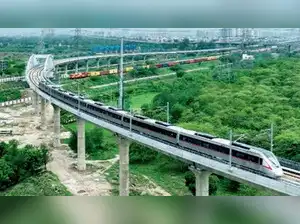
The proposed rapid rail line, being prepared by the National Capital Region Transport Corporation (NCRTC), is expected to connect Ghaziabad’s RRTS station to the upcoming Noida International Airport at Jewar. The corridor would pass through Siddharth Vihar, Char Murti Chowk, Knowledge Park V, Surajpur, and Alpha-1, among other locations.
With both projects potentially serving overlapping catchment areas, the Centre appears to be reassessing route viability, ridership projections, and financial sustainability before approving the full metro corridor.
Residents Await Clarity
Greater Noida West, home to a rapidly growing residential population, has long demanded improved public transport connectivity. While the scaling down to four stations ensures that the project moves forward in some capacity, many residents may see it as a partial step rather than a comprehensive solution.
Officials indicated that the revised DPR will take into account traffic demand, integration with existing metro lines, and future connectivity with the rapid rail corridor.
As infrastructure planning in the region evolves, the metro corridor’s phased approach reflects a broader balancing act between immediate commuter needs and long-term regional transport integration.