
Gurgaon’s worsening air quality has once again come under judicial scrutiny, with the National Green Tribunal (NGT) issuing notices to the Haryana government and civic authorities over allegations that road dust and construction activity are major contributors to the city’s PM10 pollution spike.
The tribunal acted on a plea claiming that despite repeated warnings and public complaints, authorities failed to implement effective on-ground measures to control dust emissions. The matter is now scheduled for further hearing on March 18.
Road Dust Biggest Culprit?
The applicant told the tribunal that dust from poorly maintained roads and large-scale construction activity continues to push particulate matter levels higher. According to official records, nearly 30% of Gurgaon’s 2,400-km road network — over 700 km — has been marked for redevelopment due to poor surface quality and high dust generation.
A proposed road dust control plan for 2026–27 estimates an outlay of Rs 1,971 crore for upgrades. However, residents argue that enforcement remains weak and implementation slow.
“Smooth roads, proper greening and maintaining pavements are basic steps, yet agencies have not acted effectively,” said a resident from Sector 22, echoing widespread frustration.
Tribunal Seeks Accountability
A bench comprising Justice Prakash Shrivastava and expert member Dr Afroz Ahmad directed that notices be issued to the concerned authorities. The petitioner has been asked to formally serve respondents and file proof before the next hearing.
The plea states that no similar matter is pending before the Supreme Court, clearing the way for the tribunal to proceed with hearings.
Health Risks Mount
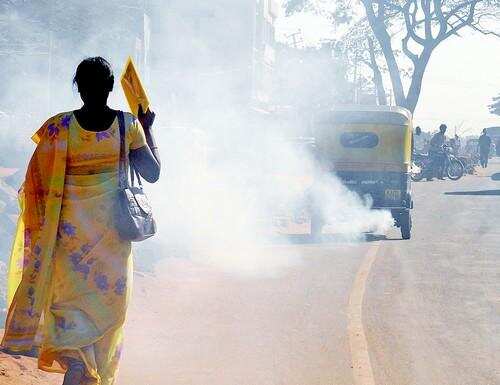
Pollution experts warn that PM10 particles — coarse particulate matter — can severely affect respiratory health. While larger particles impact external organs, finer particles can penetrate deep into the lungs and even enter the bloodstream, increasing risks of cardiovascular and respiratory diseases.
With Gurgaon frequently oscillating between ‘poor’ and ‘very poor’ air quality categories, residents fear long-term health consequences if dust mitigation measures are not strictly enforced.
A Growing Urban Challenge
Rapid urbanisation, ongoing infrastructure projects and weak dust management have combined to intensify the problem. Environmental advocates say the NGT’s intervention could push authorities to accelerate road repairs, enforce construction norms and improve dust suppression systems.
As the city prepares for another summer season — typically marked by dry conditions and higher dust dispersion — the tribunal’s scrutiny may prove pivotal in determining whether Gurgaon can effectively curb one of its most persistent pollution sources.
The next hearing will likely clarify what corrective steps Haryana’s agencies must undertake to bring the city’s dust crisis under control.