
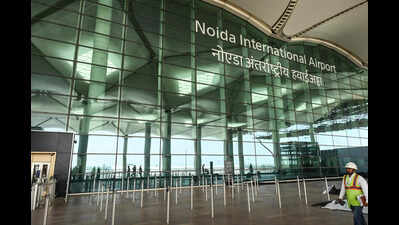
In a major relief for thousands of farmers affected by the expansion of Noida International Airport, the district administration has launched a new village-level compensation system aimed at eliminating delays and simplifying the entire process.
The initiative marks a significant shift from bureaucratic procedures to on-ground, fast-track execution, bringing government services directly to farmers’ doorsteps.
Camps Across Villages to Fast-Track Payments
Daily camps have been rolled out across 14 villages in Jewar, covering large-scale land acquisition under Phase 3 and Phase 4 of the airport project.
These camps are being set up at:
●Schools
●Panchayat bhawans
●Community centres
Each location is equipped with key officials including revenue inspectors, lekhpals, and surveyors to ensure instant processing and verification of documents.
The aim is clear — reduce waiting time and make compensation accessible, transparent, and faster.
Compensation Boost: Rs 4,300 Per Sqm
Farmers are now being compensated at Rs 4,300 per square metre, along with applicable interest.
This revised rate came after intervention by Yogi Adityanath, who approved a significant increase from the earlier Rs 3,100 per sqm.
The revision reflects growing recognition of farmers’ contribution to one of India’s biggest infrastructure projects.
One-Day Processing Replaces Week-Long Delays
Earlier, farmers had to wait nearly a week for their compensation files to move through multiple administrative layers.
Now, under the camp system:
●Documents are submitted on-site
●Verification happens the same day
●Files are directly forwarded for approval
This streamlined approach is expected to cut processing time from 5–7 days to just one day, dramatically improving efficiency.
Massive Scale: Thousands of Families, Thousands of Hectares
The current compensation drive covers:
●1,838 hectares of land
●Around 16,000 farmer families
Additionally, compensation for Phase 2 has already been completed, while resettlement efforts are underway for over 1,000 families across seven villages.
Economic Transformation on the Ground
The impact of compensation payouts is already visible in the region.
Many farmers who once depended on uncertain agricultural income are now experiencing a major financial transition.
Reports from villages highlight:
●Investment in land and property
●Construction of modern homes
●Increased spending on education
●Financial security through savings and deposits
For many, this shift has turned traditional farming households into new economic participants in a rapidly urbanizing region.
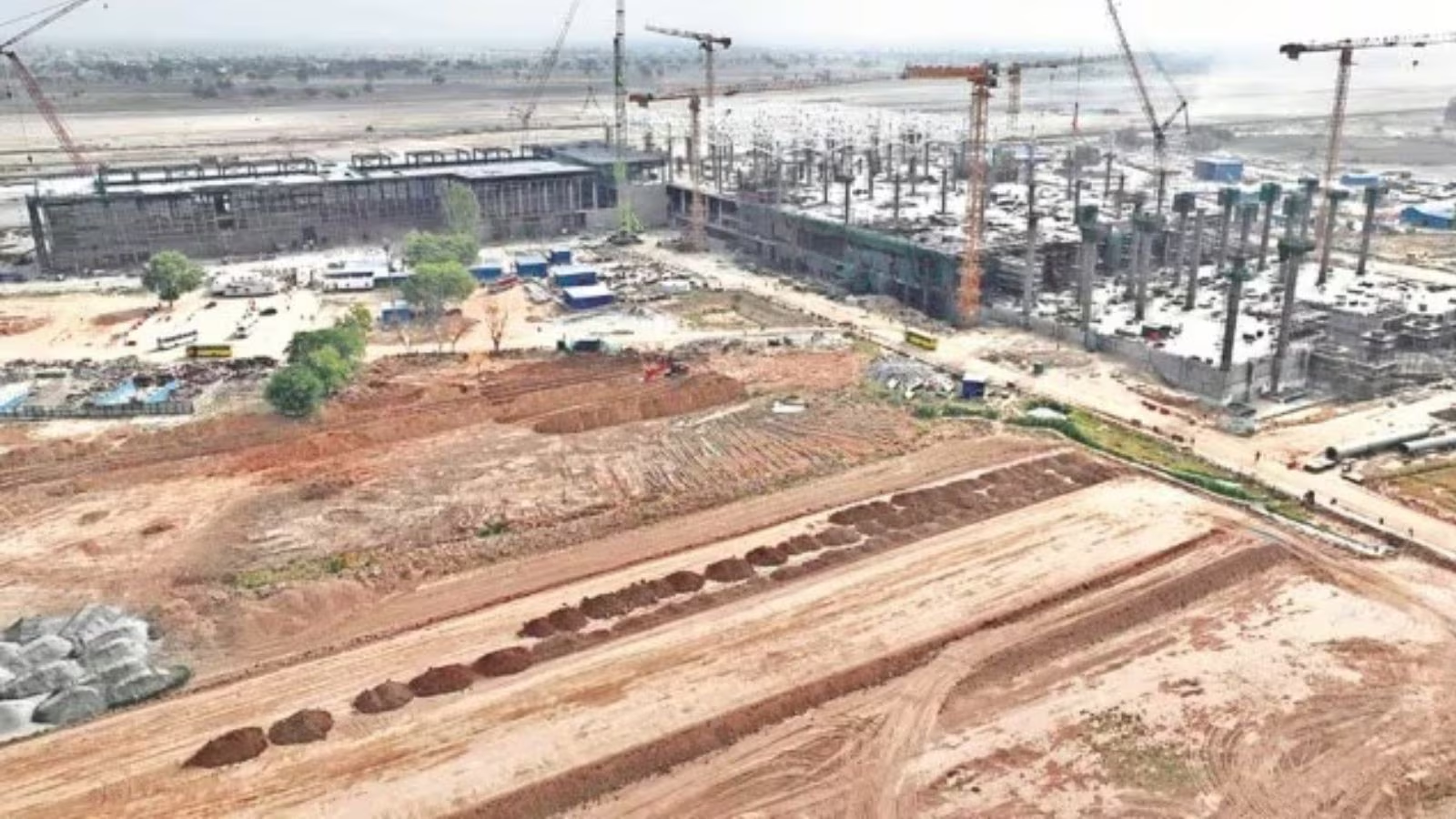
Rehabilitation & Future Planning
Authorities are also working on a dedicated resettlement colony, ensuring that displaced families receive structured rehabilitation along with financial compensation.
Once compensation distribution is completed, development agencies will begin work on these rehabilitation zones.
Why This Matters
The Jewar compensation model reflects a broader change in how large infrastructure projects are being executed in India.
●Faster processes
●Direct citizen engagement
●Transparent systems
It shows how administrative innovation can reduce friction in land acquisition—often one of the biggest hurdles in development projects.
The new village camp system is not just about faster payments—it represents a shift toward citizen-centric governance.
◆From paperwork delays to doorstep service
◆From uncertainty to financial empowerment
As the airport project moves ahead, this model could become a benchmark for future land acquisition and compensation processes across India.