
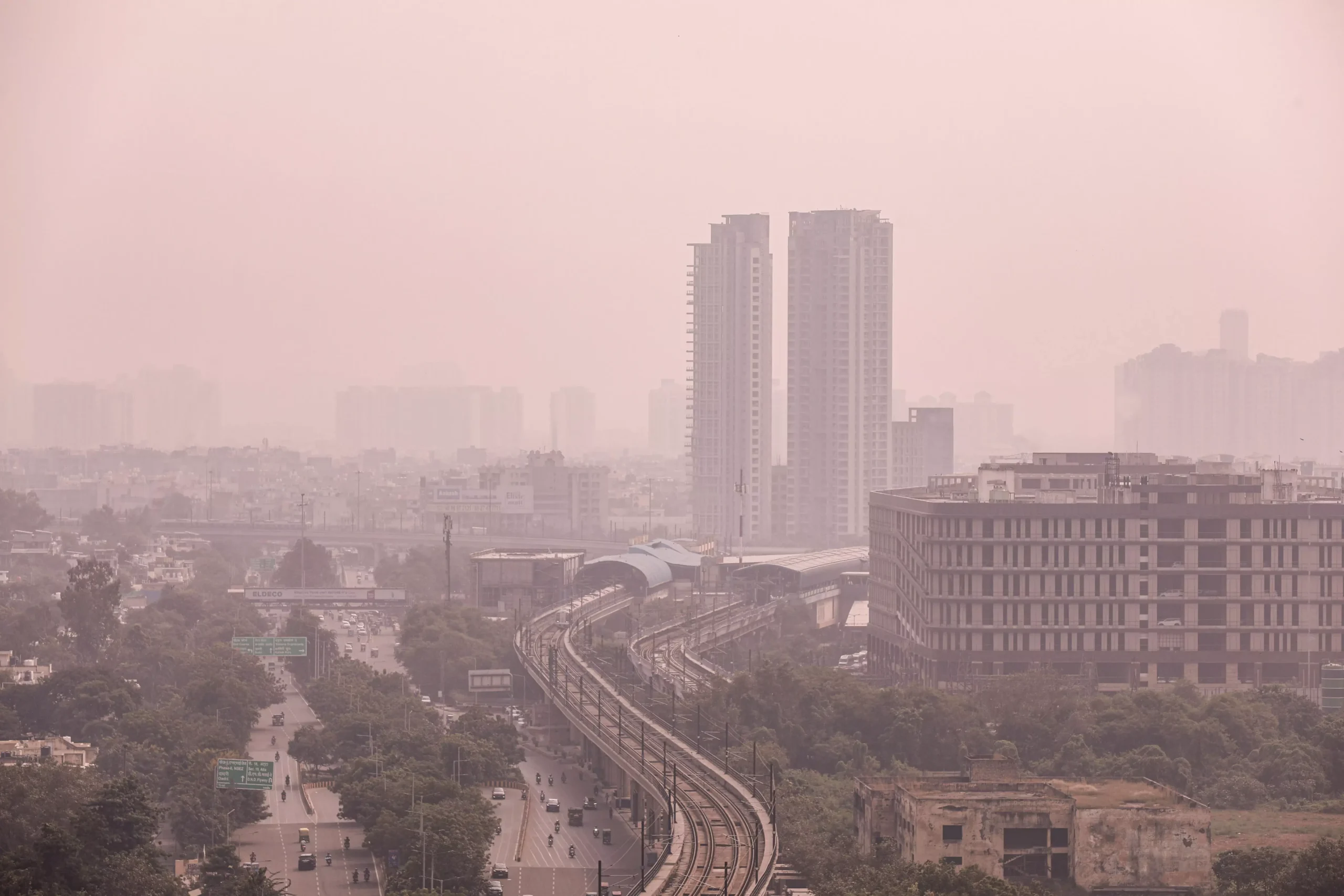
Air pollution has once again tightened its grip on Delhi-NCR, with Noida and Ghaziabad slipping into the ‘severe’ air quality category on Saturday, triggering fresh health concerns for residents. A thick blanket of smog, coupled with dense fog and sluggish winds, pushed pollution levels sharply higher within just 24 hours.
According to data from the Central Pollution Control Board (CPCB), Noida recorded the worst air quality in the country, with its Air Quality Index (AQI) soaring to 409, up from 376 on Friday. This sudden deterioration came after a brief spell of relief earlier in the week, when air quality had improved to the ‘poor’ category following nearly two weeks of ‘very poor’ and ‘severe’ conditions since December 11.
Pollution Hotspots Across Noida and Ghaziabad
Several areas in Noida reported alarming pollution levels. Sector 1 recorded an AQI of 447, while Sector 116 stood at 419, both firmly in the ‘severe’ zone. Sector 125 (394) and Sector 62 (377) remained in the ‘very poor’ category, offering little respite to residents.
Ghaziabad mirrored Noida’s grim trend, with AQI worsening to 404 from 382 a day earlier. In Greater Noida, air quality stayed ‘very poor’ at 395, though some pockets breached the ‘severe’ threshold. Knowledge Park V recorded an AQI of 417, while Knowledge Park III stood at 373.
Delhi’s air quality also deteriorated, edging closer to the ‘severe’ category, with the AQI climbing to 385 by evening.
Why Is Pollution Rising Again?
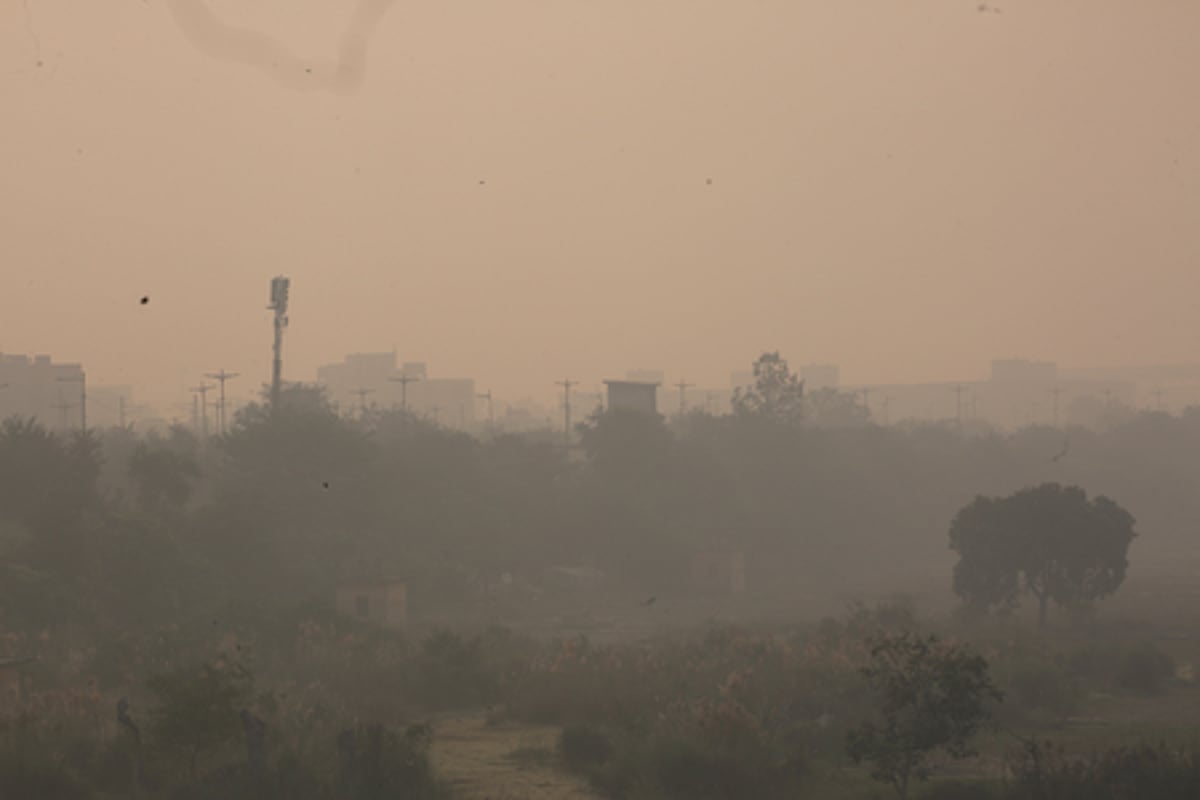
Meteorological conditions played a major role in the rapid buildup of pollutants. The Indian Institute of Tropical Meteorology (IITM) reported weak north-westerly winds, staying below 15 kmph during the day and dropping to under 5 kmph by evening, severely limiting the dispersion of pollutants.
Adding to the problem, moderate fog reduced visibility to as low as 400 metres in parts of the region, trapping emissions close to the surface. Low temperatures further intensified the situation, allowing pollutants to accumulate.
Weather Alert Issued
The India Meteorological Department (IMD) has issued a yellow alert for dense fog in isolated areas on Sunday morning. Winds are expected to remain weak throughout the day, raising concerns that air quality may stay poor in the coming days. While skies are likely to remain partly cloudy, clearer conditions are expected only around December 30.
On Saturday, the maximum temperature stood at 22.2°C, slightly above normal, while the minimum dipped to 7.8°C.
Health Advisory
With air quality back in the danger zone, experts advise residents—especially children, the elderly, and those with respiratory issues—to limit outdoor activities, use masks when stepping out, and follow health advisories until pollution levels improve.