
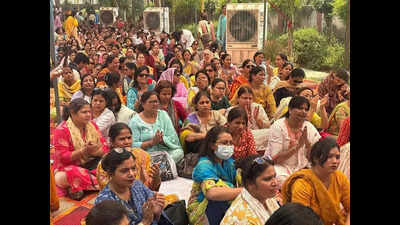
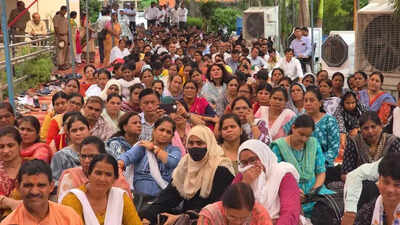
A major wave of protest swept through Noida as more than 2,000 government school teachers launched a three-day agitation against the mandatory Teacher Eligibility Test (TET) requirement for existing staff. Wearing black bands while continuing classroom duties, teachers described the rule as unfair, retrospective, and threatening to their livelihoods.
Why Teachers Are Protesting
The protest follows a Supreme Court directive stating that all teachers — including those already appointed or promoted — must clear the TET within two years. Educators argue that the order unjustly targets experienced teachers who were recruited under earlier rules and fulfilled all eligibility criteria at the time of appointment, especially those hired before 2011.
Union representatives said the move creates uncertainty for thousands of teachers and their families.
“Recruitment before 2011 followed due procedures. Imposing TET now ignores years of service and experience,” said a teachers’ association leader.
Phased Protest Plan
The agitation is being carried out in stages:
◆Social media campaign launched to raise awareness
◆Black-band protest (Feb 23–25) while continuing official duties
◆Large demonstration on Feb 26 outside the District Magistrate’s office
◆Memorandum to the Prime Minister to be submitted through district authorities
Despite the protests, teachers have maintained normal operations such as teaching, exam invigilation, and administrative duties to avoid disrupting students.
Concerns Over Job Security
Teachers fear the rule could jeopardize careers built over decades. Many describe the mandate as a “black law” that undermines experience and institutional stability.
“Government policies should protect educators, not push them into insecurity,” a protesting teacher said.
What Happens Next
Authorities have acknowledged receiving earlier representations, but no formal relief has yet been announced. With protests escalating, the issue could evolve into a larger national debate on teacher qualifications, policy fairness, and retrospective regulations.