

The Noida International Airport in Jewar, located in Uttar Pradesh’s Gautam Buddha Nagar district, has moved a step closer to becoming operational after receiving a crucial security clearance from the Bureau of Civil Aviation Security (BCAS).
BCAS has issued a No Objection Certificate (NOC) to the Directorate General of Civil Aviation (DGCA), paving the way for the airport to obtain its aerodrome license, the final regulatory approval required before commercial flight operations can begin.
BCAS Security Clearance Removes Final Major Obstacle
BCAS, the authority responsible for aviation security standards in India, granted the NOC after completing a comprehensive security audit of the airport.
The clearance confirms that the airport meets key security requirements, including:
●Access control systems
●CCTV surveillance network
●Anti-sabotage protocols
●Passenger screening procedures
Without BCAS approval, no airport in India is allowed to begin operations.
Christoph Schnellmann, CEO of Noida International Airport, said that with this security clearance in place, the next step is obtaining the aerodrome license from DGCA.
“After receiving BCAS clearance, DGCA will complete its inspection process and issue the aerodrome license, which will allow us to finalize operational timelines with airline partners,” he said.
DGCA Inspection Scheduled This Week
The DGCA, India’s civil aviation regulator, is expected to conduct its final inspection of the airport later this week.
During the inspection, officials will review:
●Runway infrastructure
●Terminal facilities
●Taxiways and aircraft parking areas
●Airfield lighting and navigation systems
●Emergency and fire response services
Once the inspection is successfully completed, DGCA will issue the aerodrome license, authorizing commercial flight operations.
Technical Standards Under DGCA Regulations
The aerodrome license is issued under Civil Aviation Requirements (CAR) Section 4, which sets strict standards for airport infrastructure and safety.
Key features of the Noida International Airport include:
Runway length: 3,700 meters (Code 4F standard)
Runway End Safety Area (RESA): Minimum 240 meters
Instrument Landing System (ILS): Category-I compliant
Advanced navigation systems: VOR/DME and precision approach lighting
Fire safety: ICAO Category-8 fire-fighting capability
The runway and related systems were successfully tested during validation flights conducted in December 2024.
Domestic Flights to Begin First
After receiving the aerodrome license, IndiGo is expected to become the launch airline, operating domestic flights in the first phase.
Other airlines such as Akasa Air and Air India Express are also in discussions for domestic and international routes, while negotiations continue with carriers from West Asia and Southeast Asia.
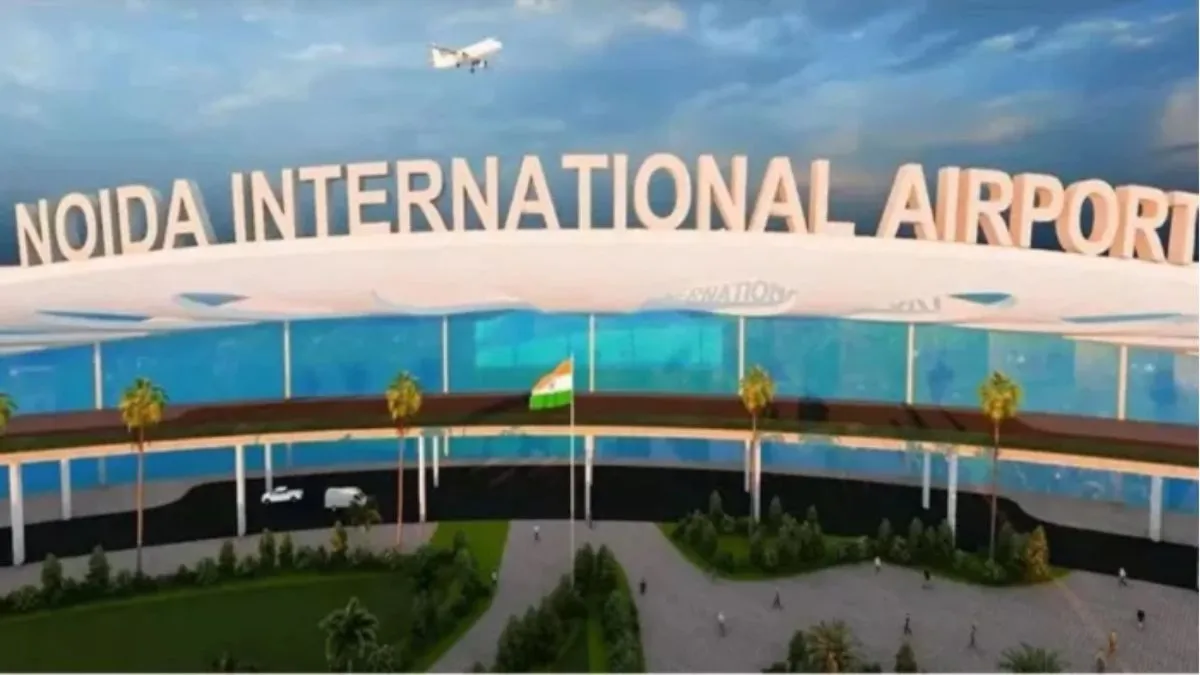
Airport Capacity and Expansion Plans
Spread across 1,284 acres, the Noida International Airport will be developed in four phases.
Phase 1 capacity: 12 million passengers annually
Final capacity: Up to 70 million passengers annually
Infrastructure plan: Three runways and four terminals
Future Connectivity Plans
The airport will be supported by strong surface and rail connectivity, including:
●Intercity bus services
●Taxi aggregator networks
●Intelligent traffic management systems
●Future Regional Rapid Transit System (RRTS) connection from Ghaziabad
●Proposed Delhi–Varanasi high-speed rail corridor, which will include an airport stop
Major Boost for NCR Aviation
Once operational, the airport will significantly reduce congestion at Delhi’s Indira Gandhi International Airport and strengthen connectivity across Delhi-NCR and western Uttar Pradesh.
Officials believe the project will also accelerate regional tourism, logistics, trade, and economic development, transforming the region into a major aviation hub.