
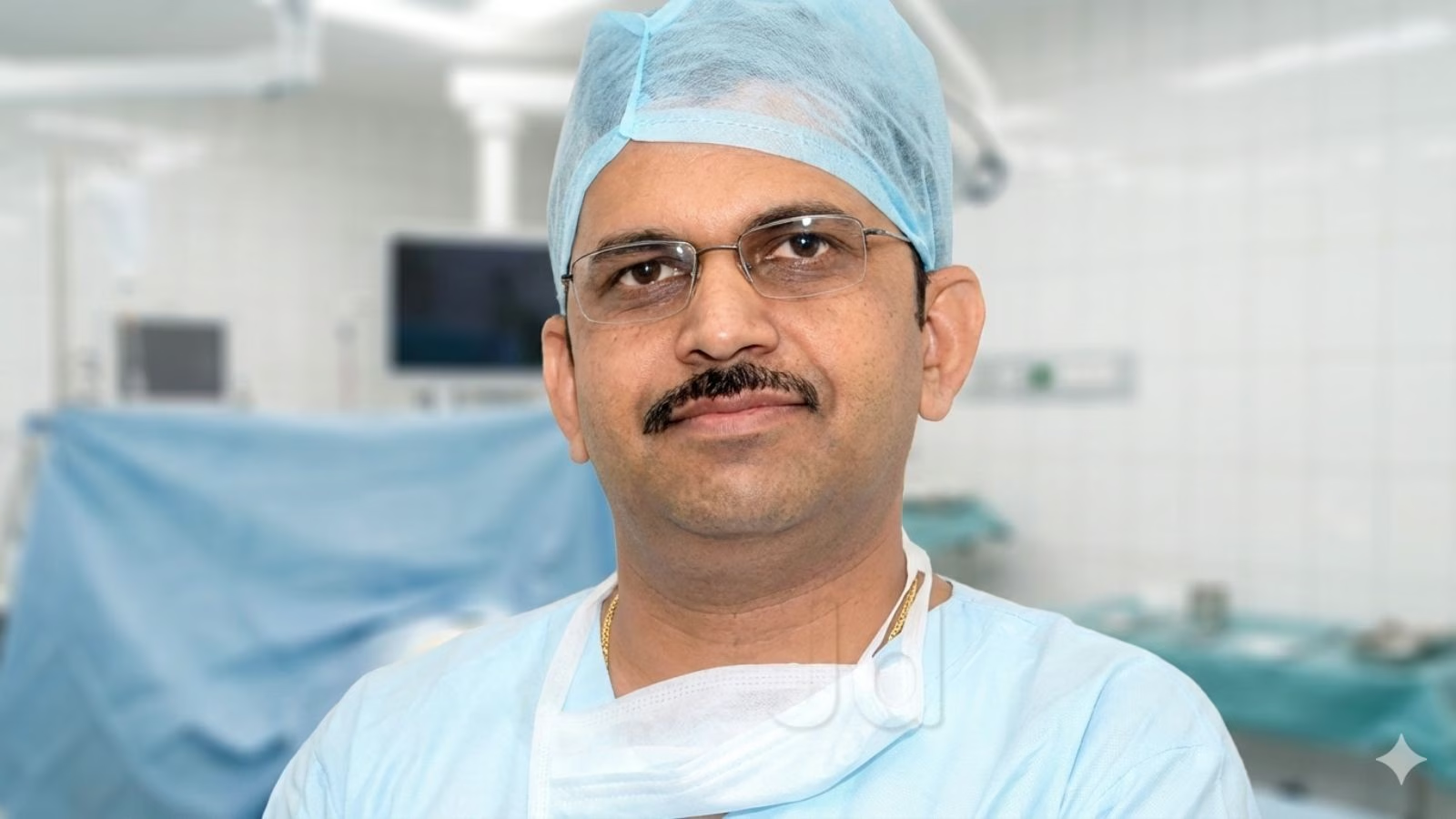
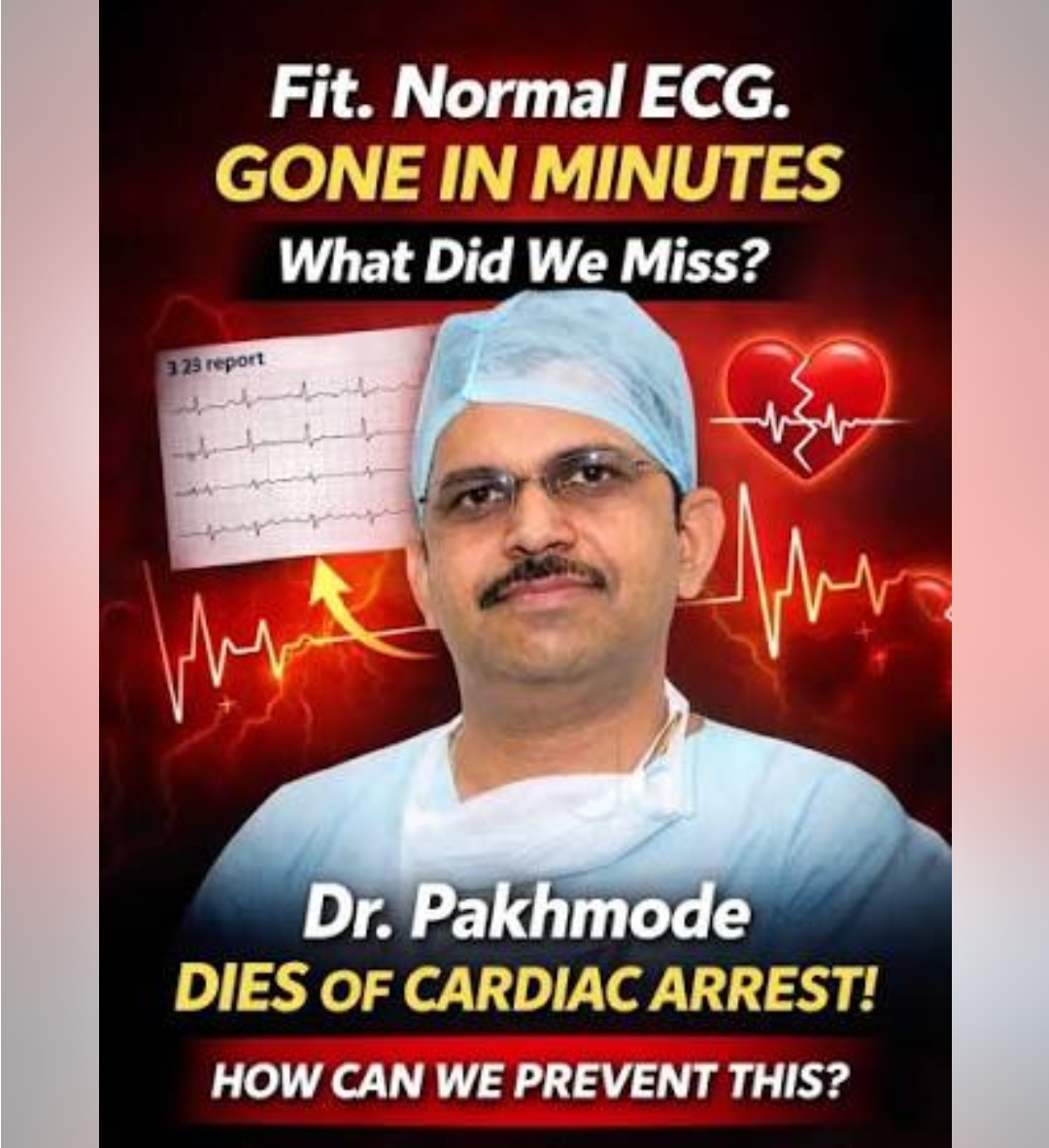
The sudden death of renowned neurosurgeon Dr Chandrashekhar Pakhmode has sent shockwaves through the medical fraternity and raised serious questions about hidden cardiac risks, even among doctors who appear medically fit. Despite having a reportedly normal ECG, Dr Pakhmode passed away just three days later — a tragedy that underscores the limitations of routine cardiac tests and the dangers of extreme work stress.
A Life Defined by Relentless Work
Dr Pakhmode, who ran two hospitals in Nagpur with a combined capacity of nearly 200 beds, was among the most respected neurosurgeons in the region. Known for his tireless dedication, he often performed 8 to 9 surgeries a day, while also handling over 100 patient consultations daily.
His routine reflected the intense demands he placed on himself:
●Day began at 5 am
●Patient examinations started as early as 6 am
●Surgeries continued till 4 pm
●Evening OPD often stretched past midnight
Colleagues recall that he rarely skipped work, even when exhausted.
The ‘Clean ECG’ That Gave False Reassurance
According to sources close to the family, Dr Pakhmode had undergone a routine ECG shortly before his death, which reportedly showed no alarming signs. This normal report offered reassurance — but only temporarily.
Medical experts point out that ECGs alone cannot detect all heart conditions, especially:
●Silent coronary artery disease
●Stress-induced cardiac issues
●Plaque rupture or sudden arrhythmias
Many fatal heart events occur without prior warning symptoms.
Stress: The Invisible Risk Factor
Doctors say long working hours, chronic stress, lack of rest, and irregular meals significantly increase cardiac risk — even in physically active individuals.
“Surgeons often ignore their own health,” said a senior cardiologist.
“High stress hormones, sleep deprivation, and constant pressure can trigger fatal cardiac events despite normal test results.”
A Wake-Up Call for the Medical Community
Dr Pakhmode’s demise has reignited discussion around:
Mandatory advanced cardiac screening for high-stress professionals
Importance of stress management and rest, even for doctors
The need to go beyond basic tests like ECGs
Experts recommend periodic stress tests, CT angiography, and lifestyle audits, especially for professionals working extreme hours.
More Than a Personal Tragedy
Beyond personal loss, Dr Pakhmode’s death serves as a powerful reminder:
Good reports do not always equal good health.
As tributes pour in, the medical community is being forced to confront an uncomfortable truth — doctors save lives every day, but often fail to protect their own.