
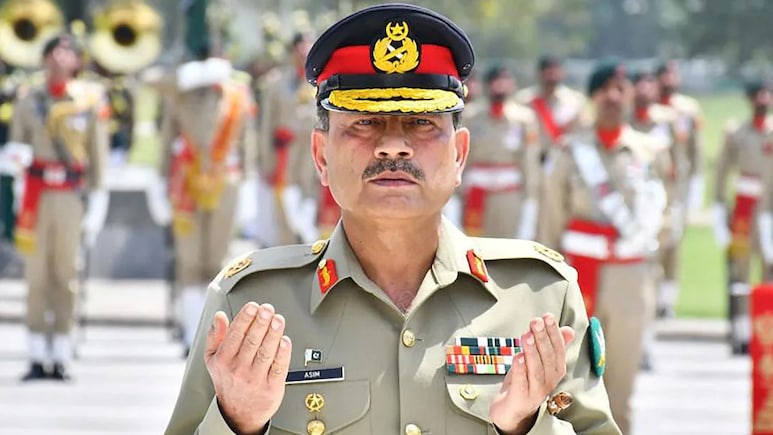
In a region where neighbours are gradually strengthening democratic institutions, Pakistan has once again taken a dramatically different turn — one that reinforces a hard truth: in the Islamic Republic, democracy lives only as long as the military allows it.
Pakistan has seen dictators before — Ayub Khan, Zia-ul-Haq, Pervez Musharraf — but its newest innovation in authoritarian rule may be its most sophisticated yet.
General Asim Munir, already serving as Pakistan’s Army Chief, has now been elevated as the country’s first Chief of Defence Forces (CDF) with a powerful five-year mandate.
This single move has rewritten Pakistan’s power structure without a traditional coup — creating a system where the uniform reigns supreme while the constitution provides convenient cover.
A Coup Without the Coup: Munir’s Silent Takeover
Unlike Pakistan’s previous generals who seized power openly, Munir’s strategy is far more subtle — and far more effective.
●No tanks rolled out.
●No constitution was suspended.
●No emergency was declared.
Instead, the CDF role was crafted and installed legally, transforming the army chief into the de facto ruler of Pakistan.
Under this arrangement:
●The Prime Minister becomes symbolic.
●The President becomes ceremonial.
●Parliament becomes irrelevant.
Pakistan looks democratic on paper — but in practice, Munir now sits atop every military and security institution, overshadowing civilian authority.
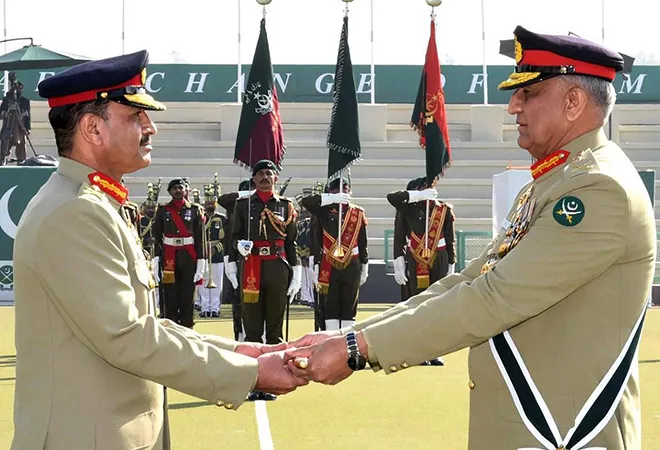
Pakistan’s Endless Power Paradox
Since independence, Pakistan has had 23 Prime Ministers, yet none have completed a full term.
Real power has always lived in Rawalpindi’s GHQ.
Each time an elected leader gains legitimacy or mass support, the army intervenes — sometimes directly, sometimes through courts, and now through “constitutional restructuring.”
Munir’s elevation as CDF is simply the latest chapter in Pakistan’s long history of democratic facades masking military dominance.
South Asia’s Neighbours Move Forward — Pakistan Moves Back
While Pakistan militarises its democracy:
●Sri Lanka’s military stepped back during its economic collapse.
●Bangladesh’s army refrained from interfering during its heated political transition.
●Nepal’s armed forces have remained firmly under civilian command.
These countries are choosing restraint.
Pakistan continues to choose the barracks.
The belief that “only the army can save Pakistan” remains deeply rooted — ensuring civilian institutions stay weak and dependent.
The Collapse of the ‘Marshal Doctrine’
Pakistan’s longstanding doctrine — that military control equals stability — has delivered the opposite:
●chronic political crises
●collapsing economy
●global isolation
●governance paralysis
General Munir’s power consolidation doesn’t solve Pakistan’s problems.
It merely repackages military rule into a modern, bureaucratic, legally sanitised form.
The “Marshal Doctrine” hasn’t failed because it was wrong —
it has failed because it was based on silencing democracy rather than building it.
A Brilliant Army or a Broken Democracy?
Pakistan’s democracy hasn’t failed; it has never been allowed to function.
●The army keeps adapting:
●sometimes through coups,
●sometimes through courts,
●now through constitutional engineering.
Munir’s model is simply the newest version — a quiet coup that changes everything without announcing itself.
Power Wears Khaki, Democracy Wears a Mask
Pakistan’s newest political chapter shows that the uniform still rules — not by force, but by design.
As South Asia grows into stronger democracies, Pakistan continues to orbit around military authority.
The “Marshal Doctrine” survives —
but at the cost of a nation where democracy exists only as long as it salutes the men in uniform.