
In a major step towards cleaning up India’s statute books, Parliament on Wednesday passed the Repealing and Amending Bill, 2025, paving the way for the repeal or amendment of 71 obsolete and redundant laws that no longer serve any practical purpose.
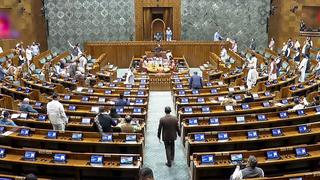
The Bill was cleared by the Rajya Sabha through a voice vote, a day after it received approval from the Lok Sabha. The government said the move is aimed at simplifying governance, correcting long-pending drafting errors, and improving the “ease of living” for citizens.
‘No Place for Useless Laws’: Law Minister
Piloting the Bill in the Upper House, Union Law Minister Arjun Ram Meghwal said laws that have outlived their relevance should not remain on the statute books.
“Our focus is not just ease of doing business, but ease of living for common citizens. If a law serves no purpose today, there is no justification for keeping it,” Meghwal said.
He stressed that several old laws still reflected colonial-era thinking and needed urgent removal to align India’s legal framework with constitutional values.
Ending Discriminatory Provisions
Highlighting inconsistencies in existing laws, the Law Minister cited provisions of the Indian Succession Act, 1925, which mandated compulsory probate of wills for Hindus, Buddhists, Sikhs, Jains and Parsis in certain regions, while exempting Muslims.
“Is this not discrimination?” Meghwal asked, asserting that the Constitution does not permit unequal treatment based on religion, caste or gender. He said the amendments aim to remove such outdated and discriminatory provisions.
Opposition Flags Implementation Concerns
While supporting the idea of removing outdated laws, opposition members raised concerns over the impact of sweeping changes.
Congress MP Vivek K. Tankha argued that the exercise appeared largely technical and questioned whether sufficient assessment had been done to understand the real-world consequences of repealing multiple statutes at once.
He cautioned that changes made on paper must be carefully evaluated to avoid unintended legal complications for citizens.
Key Laws Set to Go
The Bill proposes repealing several laws that have lost relevance over decades, including:
◆Indian Tramways Act, 1886
◆Levy Sugar Price Equalisation Fund Act, 1976
◆Bharat Petroleum Corporation Limited (Determination of Conditions of Service of Employees) Act, 1988
It also amends four major laws to update terminology, streamline procedures and fix drafting issues, such as:
◆General Clauses Act, 1897
◆Code of Civil Procedure, 1908
◆Indian Succession Act, 1925
◆Disaster Management Act, 2005
Over 1,500 Archaic Laws Cleared Since 2014
Meghwal informed Parliament that since 2014, the government has reviewed 1,577 outdated laws, repealing 1,562 and reenacting 15 in revised form to suit modern needs.
Mixed Reactions Across Parties
BJP MP Subhash Barala said outdated laws had long caused unnecessary hardship and procedural delays for citizens.
TMC MP Sushmita Deo, meanwhile, urged the government to ensure that legal reforms do not weaken civil liberties or democratic rights.
Members from multiple parties, including DMK, BJD, CPI(M), AAP, BSP and JMM, also took part in the debate.