
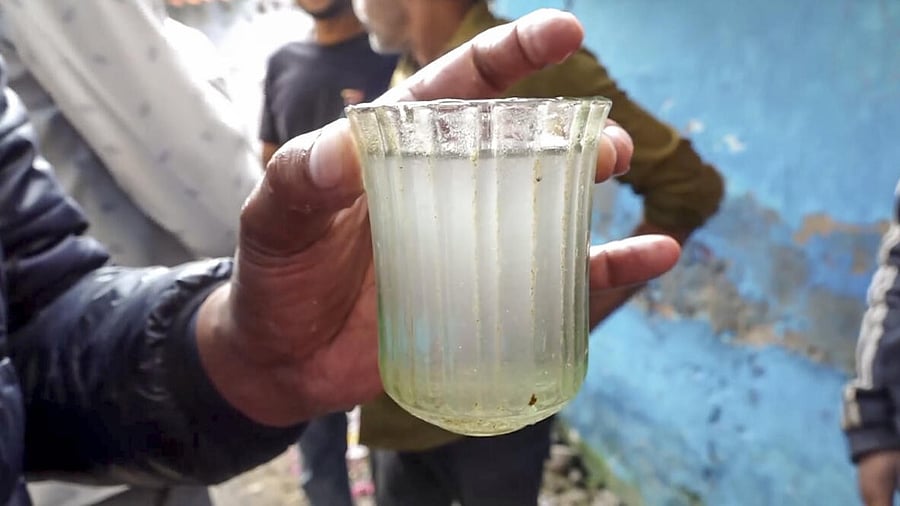
For more than three months, residents of a residential society in Noida Sector 29 have been grappling with a disturbing reality — muddy, foul-smelling water flowing from their taps, sometimes even carrying visible insects and worms. Despite repeated complaints to civic authorities, residents allege that the problem remains unresolved, forcing them to seek private testing and alternative water arrangements.
The society, which houses a large number of retired defence personnel and senior citizens, says the issue has not only disrupted daily life but also raised serious concerns about public health and safety.
Laboratory Tests Confirm Contamination
Frustrated by the lack of action, residents pooled money to get their water tested at a government-approved laboratory in Delhi. The results were alarming.
The report confirmed the presence of coliform bacteria, making the water unfit for human consumption under Bureau of Indian Standards (BIS) norms, which mandate zero tolerance for such contamination.
Coliform bacteria typically indicate sewage or faecal contamination, pointing towards possible leakage or mixing of sewage lines with potable water pipelines.
Authorities Accused of Temporary Fixes and Denial
Residents allege that instead of identifying and repairing the root cause, officials have relied on temporary measures and shifting explanations.
Some residents were told the problem existed because the society lies at the tail end of the water supply line, while others were informed that backflow from vacant houses could be responsible.
“These excuses don’t explain why worms are coming out of taps,” said a resident, adding that flushing pipelines and short-term chlorination have failed to address the issue.
Forced to Depend on Tankers and Bottled Water
With tap water declared unsafe, families have been forced to rely on water tankers, bottled drinking water, and private filtration systems, significantly increasing household expenses.
Elderly residents and children are particularly vulnerable, with many reporting stomach infections, skin irritation, and fear of long-term health consequences.
Residents say the irony is painful — living in a planned urban sector yet struggling for something as basic as clean drinking water.
Fears of Repeating Past Civic Disasters
The situation has drawn comparisons to earlier civic crises in other Indian cities where contaminated water led to large-scale health emergencies.
“Are we waiting for a tragedy before action is taken?” a resident asked, expressing fear that administrative neglect could spiral into a larger public health disaster.

Demand for Accountability and Permanent Repair
Residents are now demanding:
●A comprehensive inspection of underground pipelines
●Replacement of damaged water and sewer lines
●Public disclosure of water quality reports
●Accountability for officials responsible for prolonged inaction
Civic authorities have reportedly assured residents that inspections will be conducted, but locals remain sceptical, citing past assurances that yielded no lasting results.
A Crisis That Raises Bigger Questions
The Noida Sector 29 water crisis highlights deeper concerns about urban infrastructure maintenance, inter-departmental coordination, and citizen grievance redressal.
For residents, the issue is no longer just about water — it is about dignity, safety, and trust in governance.
Until a permanent solution is implemented, thousands remain uncertain about the most basic necessity of life — safe water to drink.