
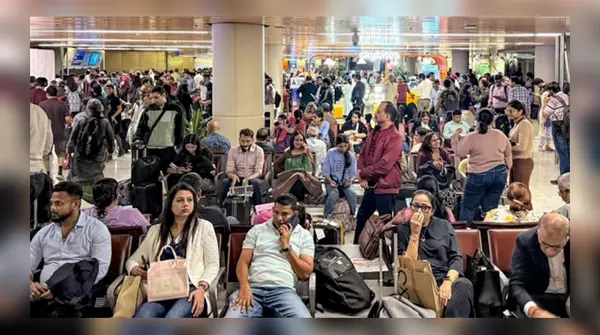
India woke up to travel chaos on Friday as IndiGo — the country’s largest airline — plunged into one of the worst operational meltdowns in its history, forcing the Indian Railways to step in as a national lifeline.
With over 1,000 flights cancelled in just three days due to a severe crew shortage and Flight Duty Time Limit (FDTL) complications, lakhs of passengers found themselves stranded, while airfares shot through the roof.
To contain the crisis and provide immediate relief, the Railways added 116 extra coaches across high-demand routes, increasing network capacity by 12,000 additional berths.
IndiGo Turbulence: Massive Disruptions, Sky-High Fares
IndiGo’s sudden collapse has disrupted more than 45% of its daily operations, creating a supply shock across Indian aviation.
With fewer seats available nationwide, ticket prices on competing airlines exploded:
Kolkata–Mumbai: Fares touched Rs 90,000 on SpiceJet
Air India tickets surged to Rs 43,000
Goa–Mumbai short-haul flights crossed Rs 21,000
Aviation analysts warn that if the crisis continues, it may impact corporate travel, tourism revenues, and air cargo movement.
“This is a classic supply shock — demand remains, but capacity collapsed overnight,” said an aviation expert.
Railways Steps Up: 116 Coaches, Special Trains on Standby
Recognizing the national impact, the Ministry of Railways launched an emergency expansion:
●116 additional coaches deployed on busy metro routes
●Increased capacity on Delhi, Mumbai, Bengaluru, Chennai, Hyderabad & Kolkata sectors
●Special trains prepared for deployment depending on passenger rush
●Platform reallocations & Tatkal alert systems activated
A senior Railway official said:
“As airfares spike beyond affordability, Railways is stepping in as the country’s most reliable and cost-effective mobility backbone.”
Rail bookings have surged by 40% in 72 hours, with even business travellers opting for trains over unpredictable flights.
Government Intervention: DGCA, Aviation Ministry on High Alert
Civil Aviation Minister Ram Mohan Naidu confirmed that the government is closely monitoring the situation and has temporarily eased FDTL norms to restore IndiGo’s operations.
“We expect flight operations to stabilise within the next three days,” he said.
The DGCA has ordered:
●Detailed reports from IndiGo
●Refunds for all cancelled flights
●Mandatory passenger accommodation for delays
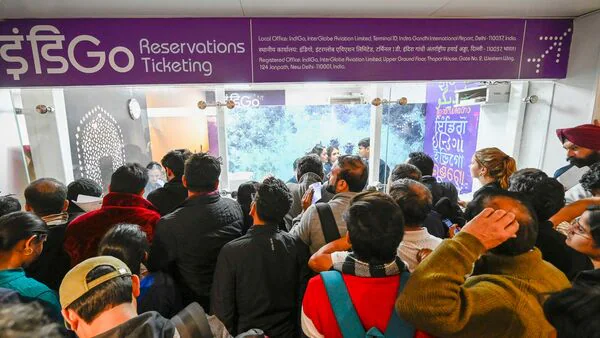
Railways: India’s Emergency ‘Cushion Transport System’
Railway authorities described their role as a stabilising force in national mobility:
“Whenever the skies are disrupted, the Indian Railways absorbs the shock. That’s why we call it the country’s cushion transport system.”
Railway infrastructure teams have enhanced:
●On-ground coordination
●Passenger helplines
●Real-time seat availability alerts
Thousands of stranded fliers are already shifting to trains as a safer, predictable alternative.
Mobility Analysis: A Wake-Up Call for India’s Aviation Sector
The IndiGo crisis has exposed India’s dependence on air travel without adequate operational buffers.
●Airlines need stronger workforce planning
●Crew fatigue rules must be balanced with operational needs
●Railways proved again why multimodal transport is essential
As one transport analyst put it:
“When the skies become unaffordable, the tracks become the nation’s heartbeat.”
For now, while planes stay grounded and fares stay sky-high, it is Indian Railways that is keeping the country moving — quietly, efficiently, and on schedule.