
In a sweeping reform set to transform India’s lending landscape, the Reserve Bank of India (RBI) has ordered all banks and financial institutions to update borrowers’ credit information every week, replacing the existing fortnightly schedule.
This change marks one of the most significant upgrades to India’s credit reporting framework in recent years, aimed at ensuring that lenders and borrowers operate on accurate, real-time financial data.
The new directive was issued via an RBI circular dated December 4, noting that with banks now heavily dependent on Credit Information Reports (CIRs) for loan sanctions, risk evaluation, and pricing, delayed or outdated credit data is no longer acceptable.
What Changes Now? Banks Must Report Credit Data Four Times a Month
Under the revised framework, banks will submit credit information on:
9th of every month
16th of every month
23rd of every month
Last day of the month (full data file)
Full Credit File Submission
On the month-end date, banks must send a complete credit file—including details of all active loans and accounts closed after the reporting period.
This must reach Credit Information Companies (CICs) by the 5th of the following month.
Incremental Updates
On the other three reporting dates, lenders must provide incremental data such as new loans, repayments, closures, and any updates in account status.
All submissions must be made within four days of the reporting date.
RBI says this will sharply improve the accuracy and timeliness of credit reports, enabling faster and fairer credit decisions.
Why This Matters: From Monthly to Weekly—A Faster, Cleaner Credit Ecosystem
Until 2024, banks reported credit data only once a month. Later, the frequency doubled to fortnightly. With today’s announcement, India moves into a weekly credit-data era, a major leap toward global best practices.
The RBI noted:
“The quality of credit information must be current and accurate. Any delay or discrepancy in CIRs can adversely impact a customer’s financial standing.”
By tightening the reporting cycle, the central bank aims to eliminate data lags, reduce mismatches, and ensure every loan decision is backed by the most updated financial snapshot of the borrower.
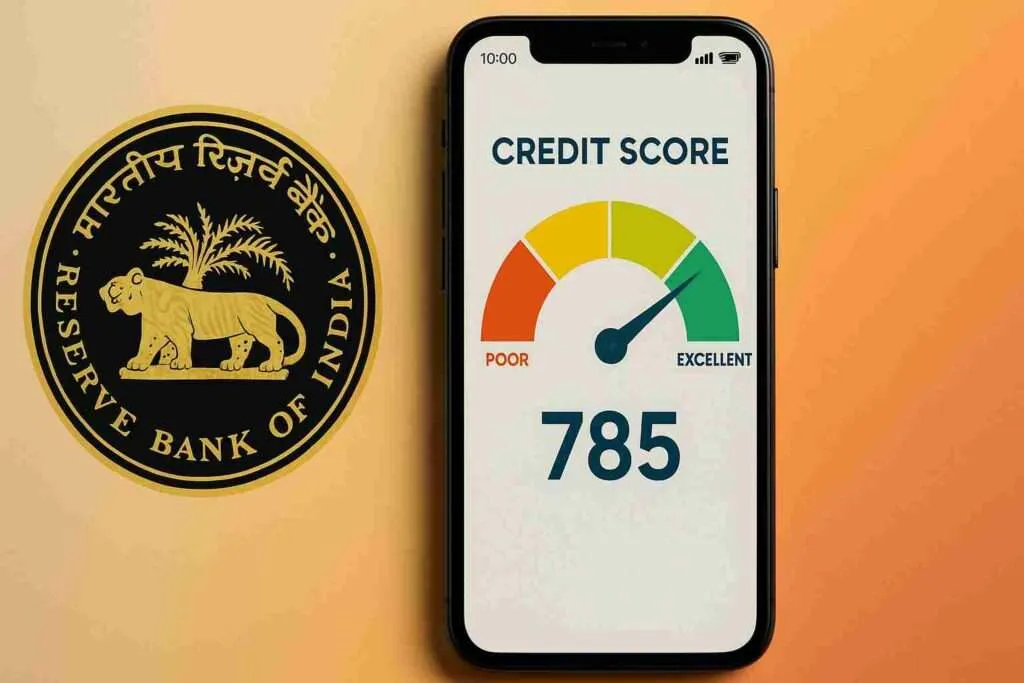
Big Relief for Borrowers: Faster Score Updates, Fewer Rejections
The reform is a significant win for consumers:
●Repayments will reflect sooner, which can quickly improve credit scores
●Errors can be corrected faster, reducing wrongful loan refusals
●Loan approvals may speed up, especially for retail and MSME borrowers
●Outdated data will no longer hurt a borrower’s financial profile
A senior analyst noted:
“Weekly reporting will drastically reduce data lag. It’s a game-changer for credit access, especially for small businesses and new borrowers.”
Banks and NBFCs Gain Too: Better Risk Detection, Enhanced Underwriting
●With more frequent data inflow, lenders will be able to:
●Detect early delinquencies
●Reduce exposure to high-risk accounts
●Maintain healthier loan books
●Improve pricing decisions based on real-time borrower behaviour
This also benefits fast-growing digital lenders and fintechs that rely on instant credit assessments.
Credit Bureaus to Be Held More Accountable
India’s four major CICs—CIBIL, Equifax, Experian, and CRIF High Mark—have been instructed to:
●Ensure zero duplication
●Maintain strict confidentiality
●Improve data integrity checks
●Align reporting formats for uniformity
Importantly, both banks and CICs will be jointly responsible for any data inaccuracies.
A Milestone in Building a Data-Driven Credit Economy
The RBI’s weekly reporting mandate is part of a broader push to modernise India’s credit ecosystem:
●Enhancing transparency
●Strengthening trust between borrowers and lenders
●Improving financial inclusion
●Supporting digital lending growth
●Making credit pricing more scientific and fair
With this landmark change, RBI has delivered a strong message:
A transparent credit system depends on timely and accurate information — and India is now moving decisively in that direction.
Borrowers get more power.
Banks get better data.
India gets a more reliable credit culture.