
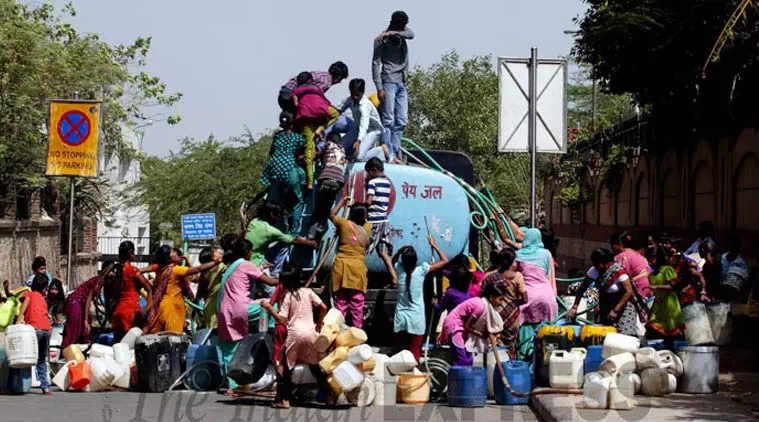
Facing mounting pressure on its limited water resources, the Delhi government is preparing to launch a large-scale survey of borewells and groundwater extraction across the capital. The move aims to accurately assess current water usage and frame a long-term, sustainable water usage policy as Delhi’s population and demand continue to rise sharply.
Officials say the proposed survey will be a critical planning exercise, focused on understanding how much groundwater is being extracted, where it is being drawn from, and how uncontrolled withdrawal can be regulated in the years ahead.
Why the Survey Matters
At present, the Delhi Jal Board (DJB) operates 10 water treatment plants, producing around 990–1,000 million gallons per day (MGD). An additional 135 MGD is sourced from tubewells. However, with surface water sources stretched thin and no major new sources expected in the near future, Delhi’s reliance on groundwater is steadily increasing.
According to government projections, Delhi’s population could reach nearly 29 million by 2041 and over 32 million by 2051. Correspondingly, the city’s drinking water demand is expected to rise to 1,418 MGD by 2041 and 1,566 MGD by 2051—numbers that far exceed current supply levels.
WAPCOS to Conduct the Study
To ensure a scientific and credible assessment, DJB has roped in WAPCOS, a central public sector undertaking, to conduct the groundwater survey. The study will map borewells, estimate extraction volumes, and identify zones where overuse has already reached alarming levels.
Officials believe the findings will help the government take targeted action against illegal or excessive groundwater withdrawal, while also guiding future conservation measures.
Urban Expansion Adds Pressure
Policy planners point out that upcoming urban initiatives—such as the Master Plan, Transit-Oriented Development (TOD) projects, and land pooling schemes by the Delhi Development Authority (DDA)—are likely to further increase population density and water demand.
“With urban growth accelerating and no new water sources in sight, groundwater will inevitably face greater stress unless its use is carefully planned and regulated,” a senior official said.
Toward a Long-Term Water Strategy
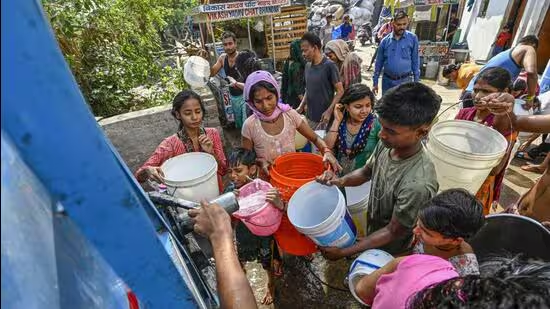
The proposed survey is expected to become the backbone of Delhi’s future water usage policy, focusing on sustainability, demand management, and protection of groundwater reserves. Experts say such data-driven planning is essential if Delhi is to avoid a severe water crisis in the coming decades.
As climate variability, population growth, and urban expansion converge, Delhi’s groundwater survey could mark a turning point in how the city manages its most precious resource.