
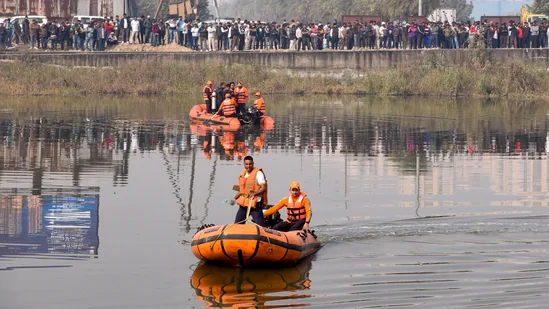
A tragic incident in Noida has once again raised serious concerns over safety at abandoned and under-construction sites. A young student lost his life after drowning in a water-filled pit near a construction area, turning what began as a casual outing into a heartbreaking disaster.
The incident took place in Sector 94 under the jurisdiction of Sector-126 police station, sending shockwaves across the city. The case has also revived painful memories of earlier similar accidents, highlighting a recurring safety lapse in urban infrastructure management.
What Happened: A Moment That Changed Everything
According to police officials, four students from Amity University had gone to an abandoned construction site near the Supernova building after finishing their exams. What was meant to be a relaxed picnic soon took a tragic turn.
One of the students, identified as Harshit Bhatt from Indirapuram, stepped into a water-filled pit at the site, reportedly to bathe. Within moments, he slipped into deeper water and began drowning.
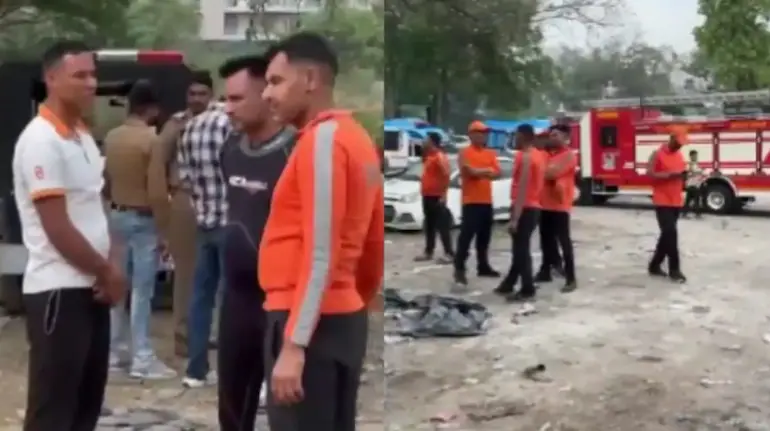
His friends immediately tried to rescue him, but the depth and conditions of the pit made it impossible. Emergency services were alerted, and police teams rushed to the spot.
Rescue Efforts and Confirmation of Death
Local divers were called in to assist with the rescue operation. After a tense search, Harshit was pulled out of the water and rushed to the hospital. However, doctors declared him dead on arrival.
Police confirmed that other students who entered the water during rescue attempts were safely brought out and are currently stable.
The sudden loss of a young life has left families, students, and residents in deep shock.
Old Wounds Reopened: A Pattern of Negligence?
This incident has once again brought attention to the lack of safety measures at construction and abandoned sites across Noida. Residents recall earlier tragedies, including the widely discussed “Yuvraj case” in Sector 150, where similar circumstances led to a fatal accident.
Despite past incidents, questions remain unanswered:
◆Why are such hazardous sites left open and unguarded?
◆Why are deep, water-filled pits not covered or secured?
◆Who is responsible for monitoring these zones?
The repetition of such tragedies suggests systemic gaps rather than isolated incidents.
Accountability Questions for Authorities
The spotlight is now firmly on the Noida Authority and local administration. Critics argue that basic safety protocols—such as fencing, warning boards, and site monitoring—are either missing or poorly enforced.
Urban development in rapidly growing cities like Noida has outpaced safety planning, leaving behind dangerous pockets that pose risks, especially to young people.
Authorities have assured that a detailed investigation is underway, but for many, this assurance comes too late.
 A Deeper Concern: Awareness and Risk Behavior
While administrative lapses are a major factor, the incident also raises questions about awareness and risk-taking behavior among youth.
Experts point out that abandoned sites often appear harmless but can be extremely dangerous due to:
●Unpredictable depth of water
●Slippery surfaces
●Lack of visibility beneath the surface
This tragedy highlights the urgent need for both stricter enforcement and greater public awareness.
How Many More Lives?
The death of Harshit Bhatt is not just another accident—it is a warning. A warning about ignored risks, incomplete safety measures, and the cost of negligence.
As Noida continues to grow into a modern urban hub, ensuring safety in every corner of the city must become a priority, not an afterthought.
Because every such incident leaves behind one haunting question—
How many more lives will it take before action is finally taken?