

Delhi’s favourite healthy snack—roasted chickpeas (bhuna chana)—has turned into a major public health threat after food safety authorities uncovered dangerous adulteration across several busy markets including Lajpat Nagar. Officials have confirmed the presence of Auramine O, a toxic industrial dye linked to cancer, neurological disorders and severe organ damage.
During large-scale raids conducted by the Food Safety and Standards Authority of India (FSSAI) and Delhi’s Food Safety Department, nearly 200 samples of roasted chickpeas were collected. Shockingly, 40% tested positive for Auramine O, a synthetic yellow dye normally used to colour textiles, leather and paper—never food.
A Poison in Disguise
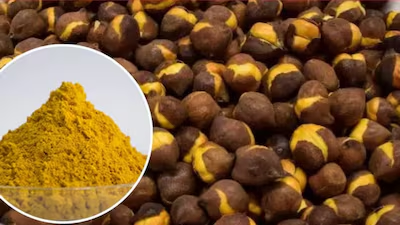
Auramine O gives chickpeas a bright yellow shine and extra crispness, making them attractive to buyers. But behind that tempting appearance lies a chemical powerful enough to damage the liver, kidneys, digestive system, and even trigger mutations linked to cancer.
The World Health Organization’s International Agency for Research on Cancer (IARC) classifies Auramine O as a Group 2B carcinogen—meaning it may cause cancer in humans.
Experts warn that the dye is extremely dangerous for:
Children
Pregnant women
Elderly people
Individuals with existing health conditions
Consuming such adulterated snacks can lead to long-term neurological disorders, stomach damage, and higher cancer risk.
Political Outcry & Official Crackdown
Rajya Sabha MP Priyanka Chaturvedi has demanded immediate action, writing to Union Ministers JP Nadda and Chirag Paswan, accusing FSSAI of “failing in its duty” and calling the adulteration a “crime against millions of citizens.”
Authorities have launched a full-scale crackdown:
15 FIRs filed
50 vendors’ licenses suspended
10 adulterators fined ₹5 lakh each
Nationwide orders issued for further testing and surveillance
A Massive Market Under Threat
Delhi sells 50–60 tonnes of roasted chickpeas every day, making it a Rs 400-crore annual industry. Thousands of small vendors depend on it—but adulteration threatens both lives and livelihoods.
How to Identify Adulterated Chickpeas
Warm water test: Soak for 10 minutes. If water turns yellow, it’s contaminated.
Smell & taste: Chemical smell or bitter aftertaste is a red flag.
Appearance: Too bright, shiny, or oversized chickpeas are suspicious.
Pressure test: If it turns to yellowish powder, avoid it.
As authorities intensify checks, consumers are urged to stay alert and avoid low-priced, unnaturally coloured roasted chickpeas sold in open markets.