
In a powerful display of digital influence, public backlash on social media has led to two significant policy reversals in Uttar Pradesh. Within days, authorities were compelled to withdraw an order affecting schools in Ghaziabad and cancel a controversial agreement with Puch AI.
The developments highlight how online voices are increasingly shaping governance decisions in real time.
Ghaziabad School Order Withdrawn After Backlash
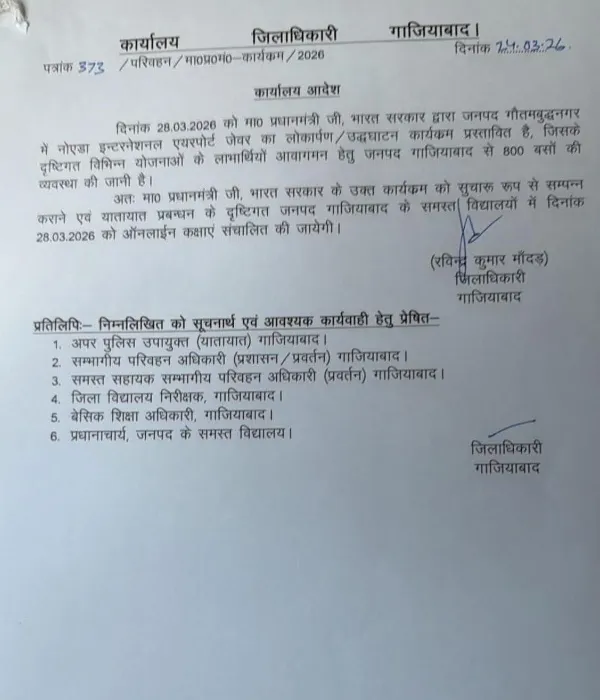
The first controversy erupted when the Ghaziabad administration ordered schools to conduct online classes on March 28. The decision was taken to arrange transportation for attendees heading to the inauguration of the Noida International Airport.
However, the move did not sit well with parents, students, and educators. Social media platforms were quickly flooded with criticism, with many questioning why academic schedules were being disrupted for a government event. Concerns over inconvenience, misuse of school resources, and lack of planning dominated the online discourse.
As the criticism intensified, authorities acted swiftly. The order was withdrawn, and schools were allowed to function normally—marking a clear win for public sentiment.
Voices from X (Twitter)
◆“Why should students suffer for a political event? This is unacceptable. #Ghaziabad”
— Amit Sharma (@AmitWrites)
◆“Using school buses and forcing online classes shows poor planning. Fix governance, not education schedules.”
— Neha Verma (@NehaSpeaks)
◆“Exams are near and you want kids to stay home for an inauguration? Ridiculous decision!”
— Rohit Gupta (@RohitG_Official)
Facebook Reactions
◆“My child has practical exams. How can authorities suddenly shift classes online for such reasons?”
— Priya Singh (Parent, Ghaziabad)
◆“This is misuse of school infrastructure. Education should be priority, not events.”
— Manoj Agarwal (Local Resident)
◆“Good that people are raising voice. Otherwise these decisions keep happening silently.”
— Kavita Mishra (Teacher)
Puch AI Deal Cancelled Amid Transparency Concerns
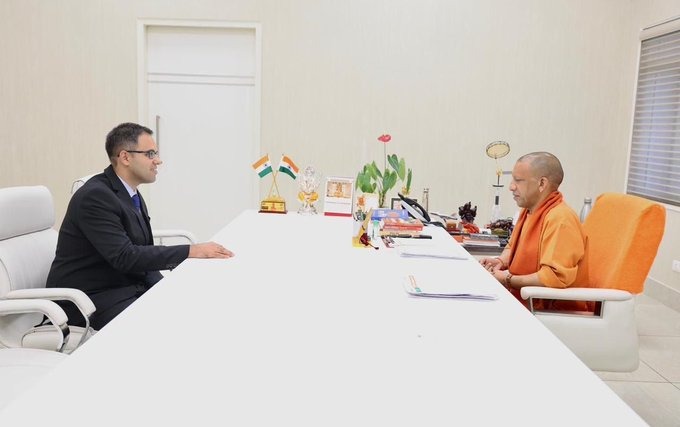
In a parallel development, the Uttar Pradesh government also withdrew from its reported agreement with Puch AI. The deal came under scrutiny after users raised concerns online about transparency, data privacy, and the broader implications of such partnerships.
The lack of clarity triggered widespread debate. Citizens questioned how data would be handled and whether adequate safeguards were in place. As discussions gained momentum, pressure mounted on the administration.
Eventually, the government decided to cancel the deal, reinforcing the growing impact of public opinion in decision-making.
Voices from X (Twitter)
◆“Before signing AI deals, govt must explain how citizen data will be protected.”
— Ankit Jain (@AnkitTech)
◆“No clarity, no transparency—why was this deal even considered?”
— Sonal Kapoor (@Sonal_Kapoor)
◆“Tech partnerships are fine, but not at the cost of privacy. People deserve answers.”
— Vikas Mehta (@VikasPolicy)
Facebook Reactions
◆“We need transparency in every government tech deal. Data safety is not a small issue.”
— Rahul Srivastava (Entrepreneur)
◆“If public questions are not answered, cancelling the deal is the right step.”
— Pooja Tiwari (Social Worker)
◆“Government should consult experts before signing such agreements.”
— Sandeep Kulkarni (IT Professional)
Social Media Emerges as a Real-Time Accountability Tool
These back-to-back reversals underline a larger shift in governance. Social media is no longer just a platform for expression—it has become a powerful accountability mechanism. Public opinion, when amplified online, is now capable of influencing administrative actions almost instantly.
For citizens, this reflects increasing empowerment in the digital age. For governments, it signals the need for greater transparency, responsiveness, and careful decision-making.
A New Era of Participatory Governance
The events in Uttar Pradesh demonstrate how digital engagement is redefining the relationship between citizens and authorities. Decisions are no longer confined to offices—they are being debated, challenged, and reshaped in the public domain.
As India’s digital ecosystem continues to grow, such instances are likely to become more common. The message is clear: informed and vocal citizens can drive change—and governments must stay aligned with public expectations.