
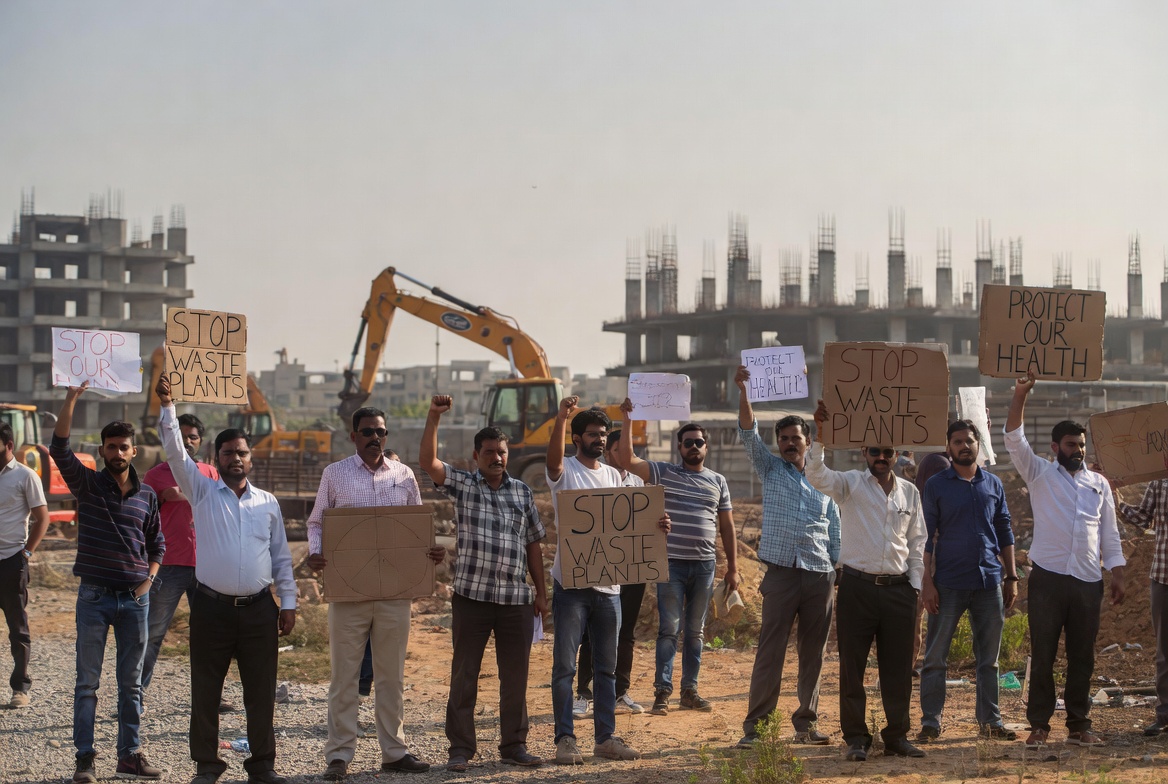
Gurugram’s rapidly developing Dwarka Expressway corridor witnessed a wave of protests as residents and villagers united against a proposal to establish construction and demolition (C&D) waste yards near residential areas. Demonstrators warned that the move threatens public health, environmental safety, and the region’s long-promised vision as a premium urban hub.
People from multiple housing societies and nearby villages gathered to voice strong opposition, saying the proposed sites are too close to homes, schools, and public spaces. Many residents argued that the area was marketed as a high-quality residential zone with green infrastructure — not as a location for waste dumping and processing.
“Lake City” Vision vs Ground Reality
Protesters expressed anger over what they described as a betrayal of development promises. Buyers were earlier assured of a world-class corridor with parks, lakes, and modern civic amenities. Instead, they now fear the emergence of large waste yards that could bring dust, foul smell, heavy truck movement, and long-term environmental damage.
Residents of premium housing societies said they had invested life savings in the area for clean air and peaceful living. They warned that locating waste facilities near dense residential clusters could expose children, elderly residents, and vulnerable populations to serious health risks.
Villages and Societies Present United Front
Significantly, the protest drew participation from both urban RWAs and traditional village communities, reflecting widespread concern across social groups. Representatives from several sectors along the expressway joined hands with village leaders, creating rare unity on a civic issue.
Community leaders demanded relocation of the proposed facilities to non-residential zones or designated industrial areas where environmental safeguards can be implemented more effectively.
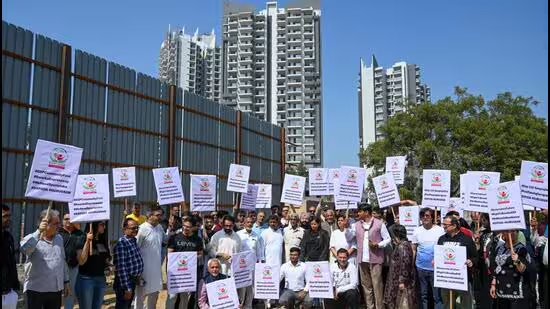
Government Calls It a Complex Challenge
Authorities acknowledged the difficulty of finding suitable land for waste processing in a densely populated city. Officials noted that waste must be handled somewhere within the region and cannot simply be shifted to another city. However, they assured that consultations would be held before any final decision.
Ultimatum and Possible Legal Battle
At the end of the protest, a joint delegation of residents and villagers announced plans to meet senior political leaders and civic officials. They gave authorities a one-week deadline to reconsider the proposal and shift the sites away from residential neighbourhoods.
If their demands are not met, protesters warned they would approach the National Green Tribunal and escalate the agitation.
As Gurugram expands at breakneck speed, the dispute highlights a growing urban dilemma: how to balance infrastructure needs with livability. For now, the battle over waste yards on the Dwarka Expressway has become a flashpoint in the city’s development story — one that could shape the future of this flagship corridor.