
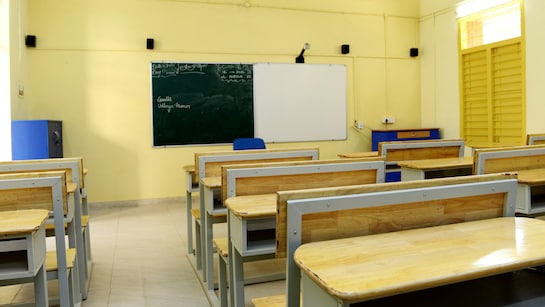
governance in education, the Delhi government is set to appoint a specialised professional agency to digitally map all government school infrastructure across the city. The initiative aims to create a real-time digital profile of every school campus to monitor building safety, facility upgrades, and maintenance more effectively.
Why Digital Mapping is Being Introduced
Officials said the decision was taken to ensure that what is recorded on paper actually reflects ground reality. Instead of routine manual inspections, the digital system will enable continuous tracking of infrastructure issues such as crumbling classrooms, leaking roofs, toilets, drinking water facilities, electricity, fire safety systems and more.
Pilot Project Success Leads to Citywide Rollout
A pilot project for digital mapping was successfully tested in a government school in Narela, prompting the government to scale the model to cover over 1,000 government schools in the capital. Each campus will undergo a thorough digital assessment as part of the new system.
How the Digital Mapping Will Work
The selected specialised agency will use advanced tools like:
◆Drone-based surveys
◆GPS-enabled tagging
◆360-degree imaging
These technologies will feed data into a centralised digital platform that tracks structural integrity, facility quality, safety features and timelines for upgrades.
Officials said the system will automatically flag gaps by comparing live data with benchmark standards set by bodies like the CBSE and National Disaster Management Authority. Alerts will be generated where deviations are detected, eliminating dependence on ad-hoc school inspections.

Improving Transparency and Accountability
Educational experts welcomed the initiative, saying it will help authorities quickly identify schools that lack essential infrastructure or safety features and target investments where they are most needed. The system is expected to improve transparency, strengthen accountability of contractors and administrators, and ensure resources are used efficiently.
Students to Assist Field Surveys
To support data collection, undergraduate engineering students and Class XII pass-outs will be involved in field surveys. Their role will include capturing footage, conducting room-by-room assessments, and uploading data to the digital platform. Authorities said this hands-on participation will give students real-world exposure to infrastructure evaluation and urban planning techniques.