

In a giant leap for India’s space ambitions, ISRO has revealed game-changing details of Chandrayaan-4, the country’s first-ever lunar sample-return mission and its most complex space operation to date. From multiple spacecraft, dual launches, and in-space docking to a daring lift-off from the Moon, this mission will test technologies that will shape India’s human Moon landing programme.
Why Chandrayaan-4 Needs TWO Launches
Even the upgraded LVM3, India’s most powerful rocket, cannot carry the massive 10,000+ kg Chandrayaan-4 mission stack in a single shot. Instead, ISRO has opted for an intelligent two-launch strategy—something only a few space powers have ever attempted.
Launch 1: Carries the lander, ascender, and surface science systems
Launch 2: Carries the re-entry capsule and large propulsion module
This split approach solves three big challenges:
1. Lifts heavier payloads without waiting for a bigger rocket
2. Allows independent development—delays in one module won’t affect the other
3. Reduces overall mission risk—a failure in one launch doesn’t doom the entire mission
Once both parts reach orbit, India will attempt something historic—autonomous docking in space, a technology mastered only by the US, Russia, and China.
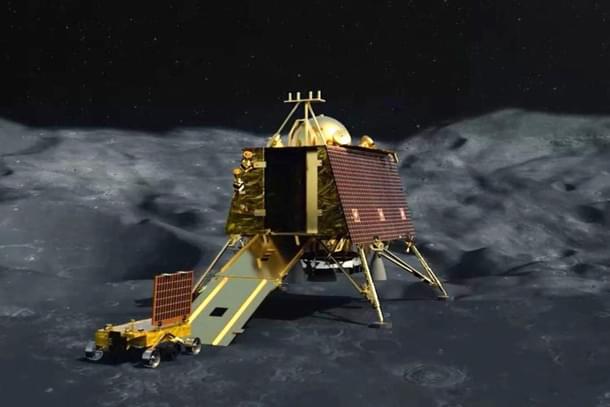
The Journey to the Moon: A Space Engineering Ballet
After the two spacecraft dock in Earth orbit, the massive propulsion module will fire up and push the combined stack toward the Moon. Once its work is done, it detaches and drifts away.
When the spacecraft enters lunar orbit:
1. The lander + ascender detach together
2. They begin a precision descent to the south polar region
3. A robotic arm collects lunar soil & rock samples
4. The ascender module blasts off from the lunar surface—a historic first for India
India’s First Lift-Off From Another World
The ascender will rendezvous and dock with the orbiting re-entry module. ISRO will perform docking twice in this mission—an essential capability for future astronaut missions.
The lunar samples will then be transferred into the Earth-return capsule, which begins its journey home for a guided splashdown in the ocean, where recovery teams will retrieve it.
A Critical Step Toward India’s Human Moon Mission
ISRO chief S. Somanath has emphasized that Chandrayaan-4 is more than just a science mission—it’s a full rehearsal for human lunar exploration. Prime Minister Narendra Modi has already set the national goal: Indian astronauts on the Moon by 2040.
To get there, India must master:
●In-space docking
●Multi-launch coordination
●Lunar takeoff
●Sample handling
●Precision re-entry and ocean recovery
Chandrayaan-4 tests all of these.
India Prepares to Join an Elite Club
So far, only three nations—the US, the Soviet Union, and China—have ever brought back samples from the Moon.
With Chandrayaan-4, India is set to become the fourth country in history to achieve this milestone.
This mission isn’t just another chapter in India’s lunar programme—it is the blueprint for the country’s next space age.