
In a major global assessment released by U.S. News & World Report, the United States has once again been declared the world’s most powerful nation in 2025, followed closely by China and Russia, reinforcing the existing global power balance at a time of heightened geopolitical tensions.
The annual rankings, which evaluate military strength, economic influence, global alliances, political leadership, technology dominance, and cultural impact, offer a clear picture of how nations shape international affairs today.
India Climbs to Rank 12 — A Rising Global Power
India, one of the fastest-growing major economies, has secured the 12th spot, ahead of several developed nations including:
Canada
Australia
Italy
Singapore
Netherlands
Sweden
South Africa
This ranking highlights India’s expanding role in world politics and its accelerating rise as a strategic, economic, and technological powerhouse.
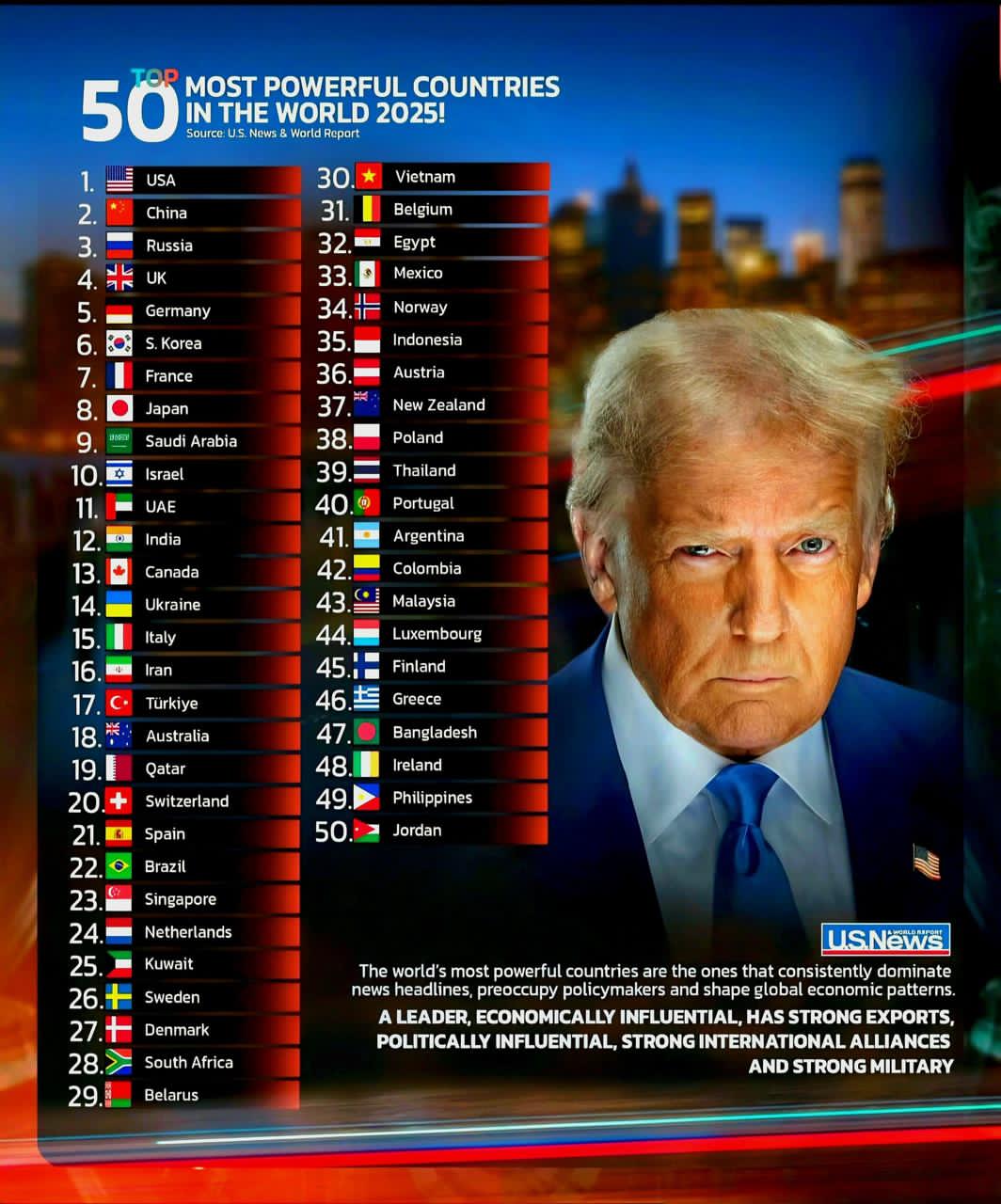
Who Rules the Top 10 in 2025?
The list is dominated by traditional global giants:
1. United States
2. China
3. Russia
4. United Kingdom
5. Germany
6. South Korea
7. France
8. Japan
9. Saudi Arabia
10. Israel
The presence of Saudi Arabia, Israel, and the UAE (ranked just outside top 10) reflects the growing geopolitical weight of the Middle East.
Why India’s Rank Matters
According to the report, powerful countries are those that:
●Influence global political decisions
●Shape international economic trends
●Possess strong militaries
●Lead on critical technologies
●Maintain powerful alliances
India meets these parameters through:
●Rapid economic growth
●Military modernisation & defence partnerships
●Leadership in Global South diplomacy
●Successful G20 Presidency
●Digital governance & tech innovation (Aadhaar, UPI, ONDC)
●Growing role in Indo-Pacific strategy
Other Key Rankings
Bangladesh – 47
Philippines – 49
Jordan – 50
Vietnam, Belgium, Norway also feature strongly due to economic and strategic advancements.
What This Ranking Means for the World
As global dynamics shift — from AI rivalry to energy conflicts — the 2025 rankings reflect the new balance of power shaping the 21st century. With India rising steadily and other regional players gaining ground, the geopolitical landscape is becoming more competitive and multipolar than ever.