

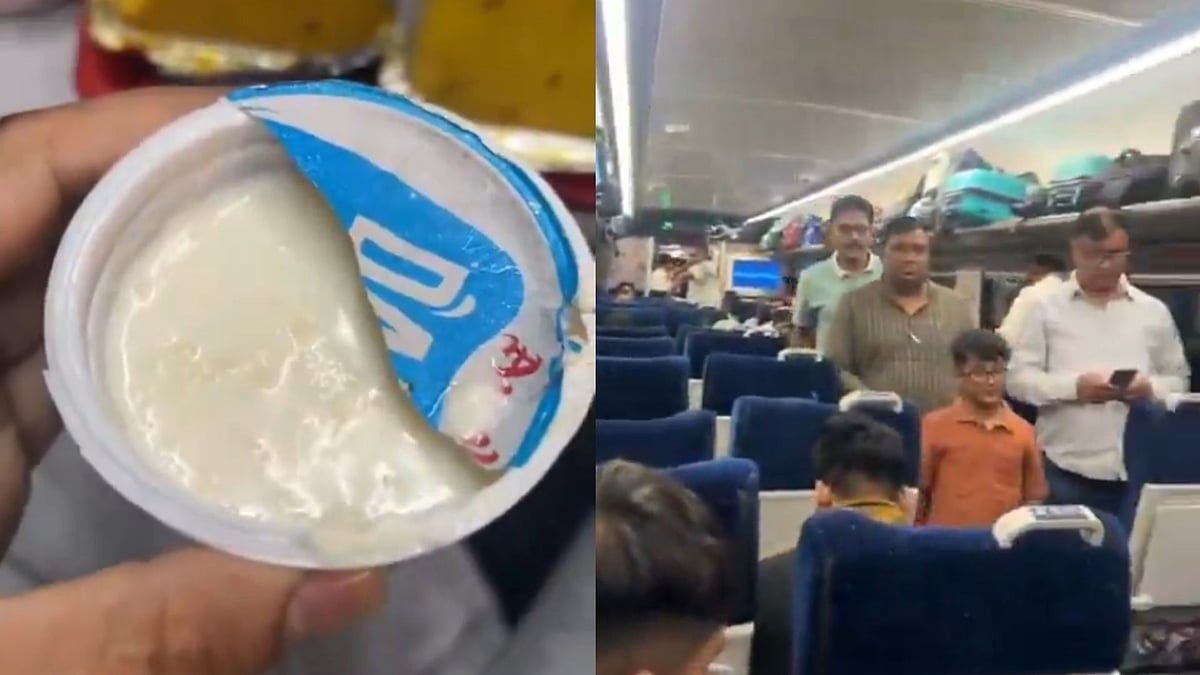
A serious food safety concern has emerged aboard the Vande Bharat Express after a passenger alleged that worms were found in the curd served during the journey. The incident, which occurred on train number 21896 running between Patna and Tatanagar, quickly gained attention after videos of the complaint went viral online.
The footage showed railway officials inspecting the meal at the passenger’s seat. Using a torch, they examined the curd closely while the passenger pointed out visible worms on the tray. The rest of the food items were also seen placed alongside the contaminated dish, raising concerns about overall hygiene standards.
Viral Video Sparks Passenger Outrage
As the inspection unfolded, several co-passengers gathered around, expressing shock and anger. Some demanded immediate access to a complaint book, while others encouraged the passenger to share the video online to highlight the issue.
The visuals triggered widespread backlash on social media, putting pressure on authorities to respond quickly.
Swift Action by Ministry of Railways
Following the viral incident, the Ministry of Railways confirmed that strict action had been taken. In an official statement, authorities said the complaint was treated with seriousness and investigated promptly.
The penalties announced include:
●Rs 10 lakh fine imposed on IRCTC
●Rs 50 lakh penalty on the service provider
●Termination of the catering contract
The ministry emphasised that passenger safety and food quality remain top priorities.
Bigger Concerns Around Train Catering
The incident has once again raised questions about food quality and hygiene in railway catering services, especially on premium trains like Vande Bharat.
Passengers expect high standards on such services, and incidents like this not only damage trust but also highlight the need for stricter monitoring and accountability in food supply chains.
Trust and Accountability in Public Services
While the swift penalties signal a strong response, the episode underlines a recurring issue—ensuring consistent quality across large-scale public catering operations.
For passengers, the message is clear: vigilance and reporting matter. For authorities, it is a reminder that maintaining trust requires not just action after incidents, but prevention before they occur.