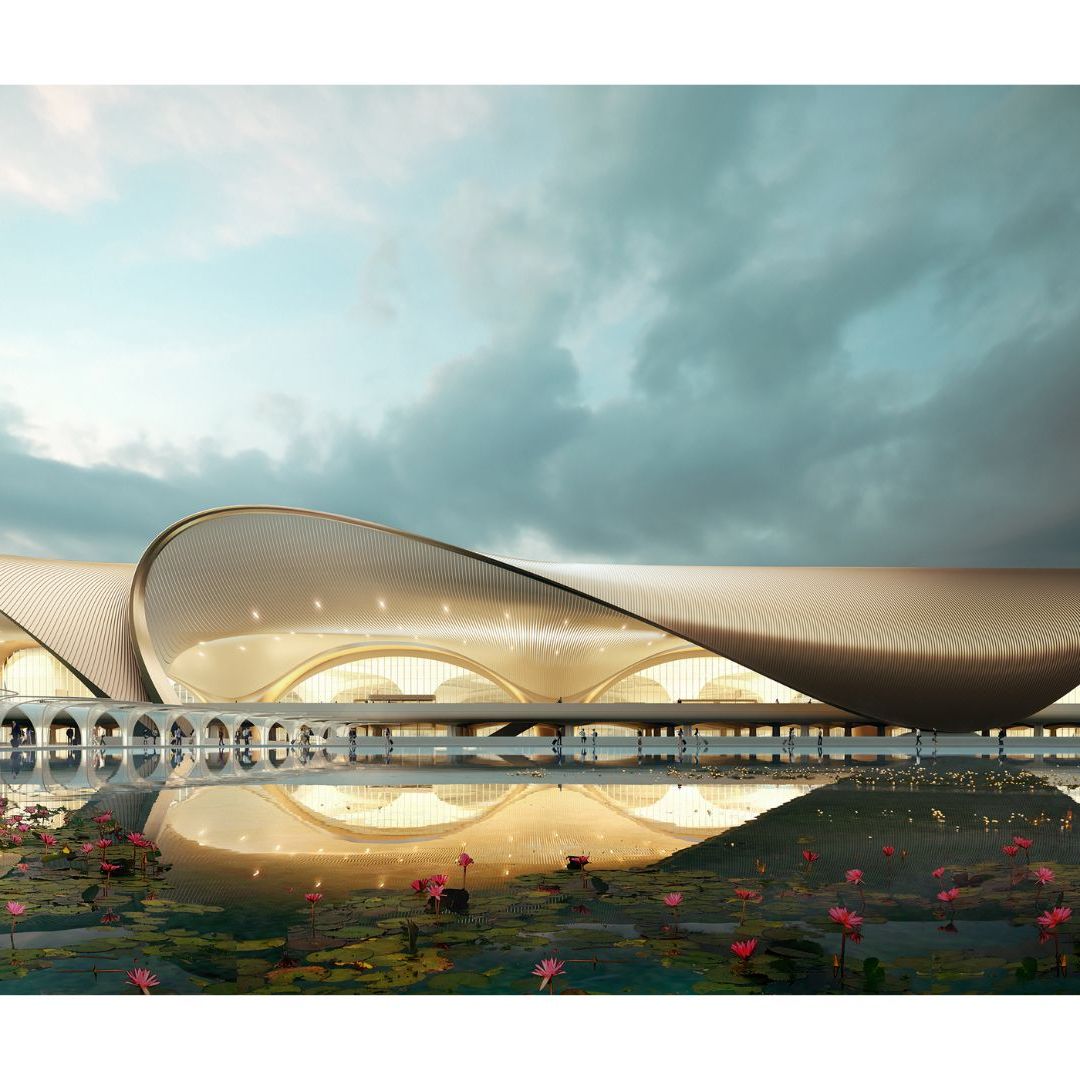
India’s newest aviation marvel, the Navi Mumbai International Airport (NMIA), has officially taken off — and it’s nothing short of a work of art. Designed by the world-renowned Zaha Hadid Architects (ZHA) and developed under Adani Airports Holdings, the ₹19,650-crore project symbolizes India’s blend of tradition, technology, and transformation.
A Lotus in the Sky
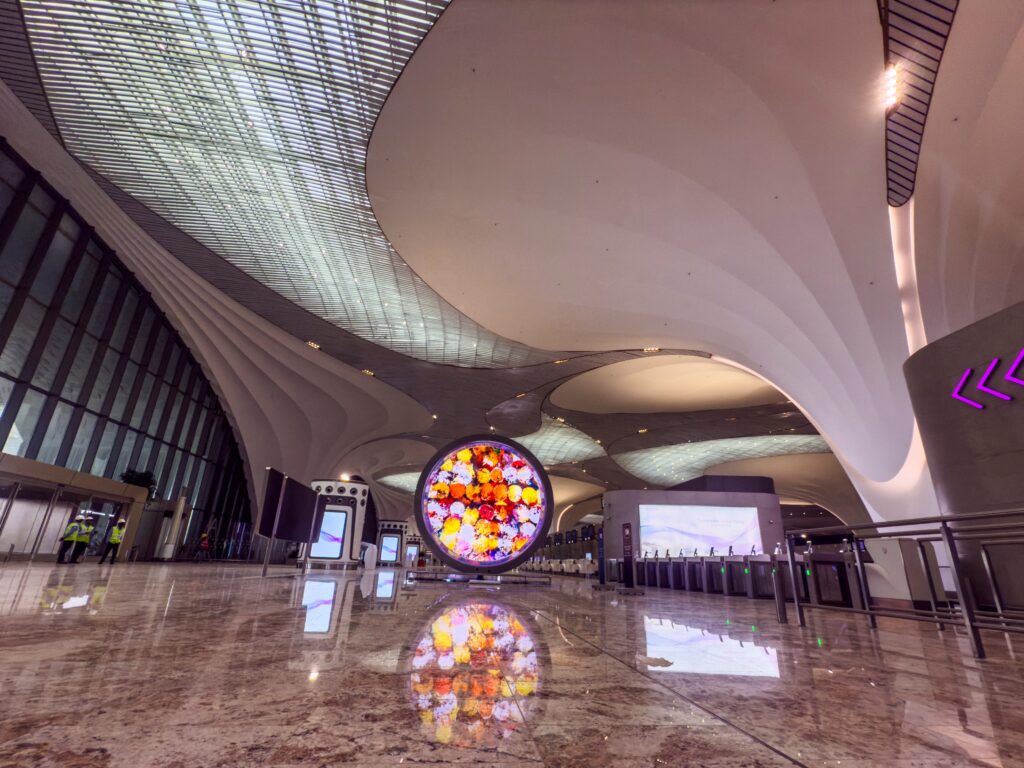
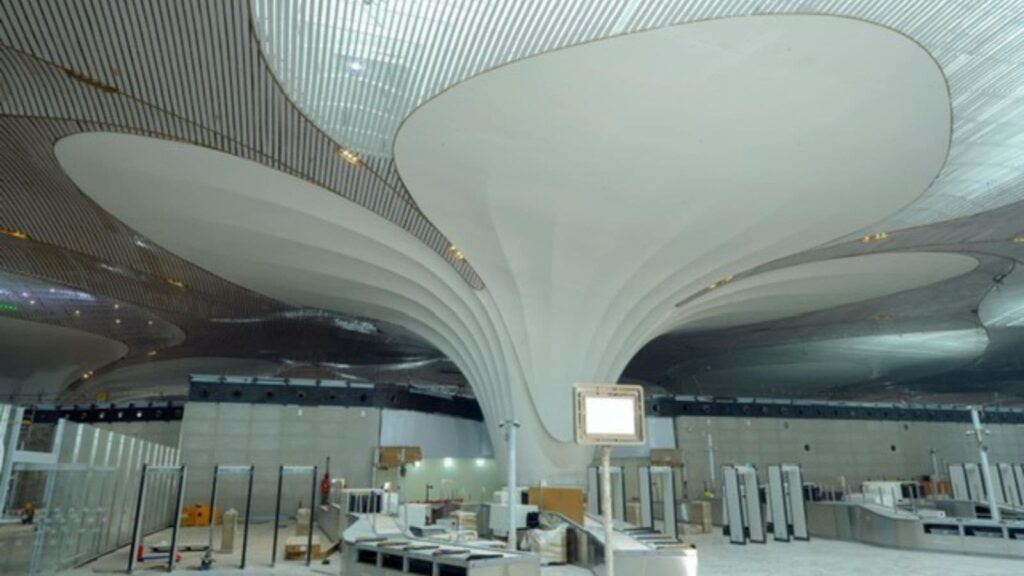
Inspired by India’s national flower — the lotus, the airport’s futuristic steel-and-glass design embodies purity, renewal, and progress. Its roof appears to float gracefully above the concourse, supported by petal-like sculptural columns that fill the space with soft, natural light.
ZHA’s design transforms the lotus into living architecture — where 12 petal columns and 17 mega-columns not only serve as visual symbols but are engineered to withstand earthquakes and high winds. The result is a structure that’s both symbolically Indian and globally iconic.
“The Navi Mumbai Airport reflects India’s future — modern, efficient, and deeply rooted in cultural identity,” says ZHA’s design statement.
Phase 1: Ready for 20 Million Flyers
In its first operational phase, the airport features:
◆A 3,700-metre runway
◆A terminal with 88 check-in counters (66 staffed, 22 self-service)
◆Three operational zones: Alpha, Bravo, and Charlie
◆Capacity to handle 20 million passengers annually
With future expansions planned, the airport is expected to accommodate up to 90 million passengers per year, with multiple runways and terminals — placing it among Asia’s busiest airports.
A Seamless Passenger Experience
Every element of NMIA’s interior has been designed with passenger ease in mind — clear wayfinding, ample daylight, travelators, intuitive signage, and a seamless flow between lounges, retail zones, and boarding gates. The design prioritizes comfort and clarity over chaos, ensuring a smooth experience for travelers.
Connecting the Metropolis
Spread across 1,160 hectares in Ulwe, about 37 km from South Mumbai, the airport is envisioned as a multi-modal transport hub with integrated road and rail networks, connecting seamlessly with Mumbai’s existing infrastructure.
Future plans include rail shuttles and coastal road links to improve connectivity between Navi Mumbai and the Chhatrapati Shivaji Maharaj International Airport (CSMIA).
A Decade in the Making
Originally conceived under GVK and CIDCO, the airport’s design competition was won by ZHA in 2018. After transitioning to Adani Airports Holdings, the project accelerated toward completion with advanced sustainability measures and smart infrastructure integration.
A Symbol of India’s Growth
Beyond architecture, the Navi Mumbai International Airport is a statement — a representation of India’s ambition to build world-class infrastructure that marries efficiency with emotion. The lotus-inspired terminal stands not just as a gateway to Mumbai, but as a beacon of India’s evolving identity — rooted in heritage, yet ready for the skies of tomorrow.