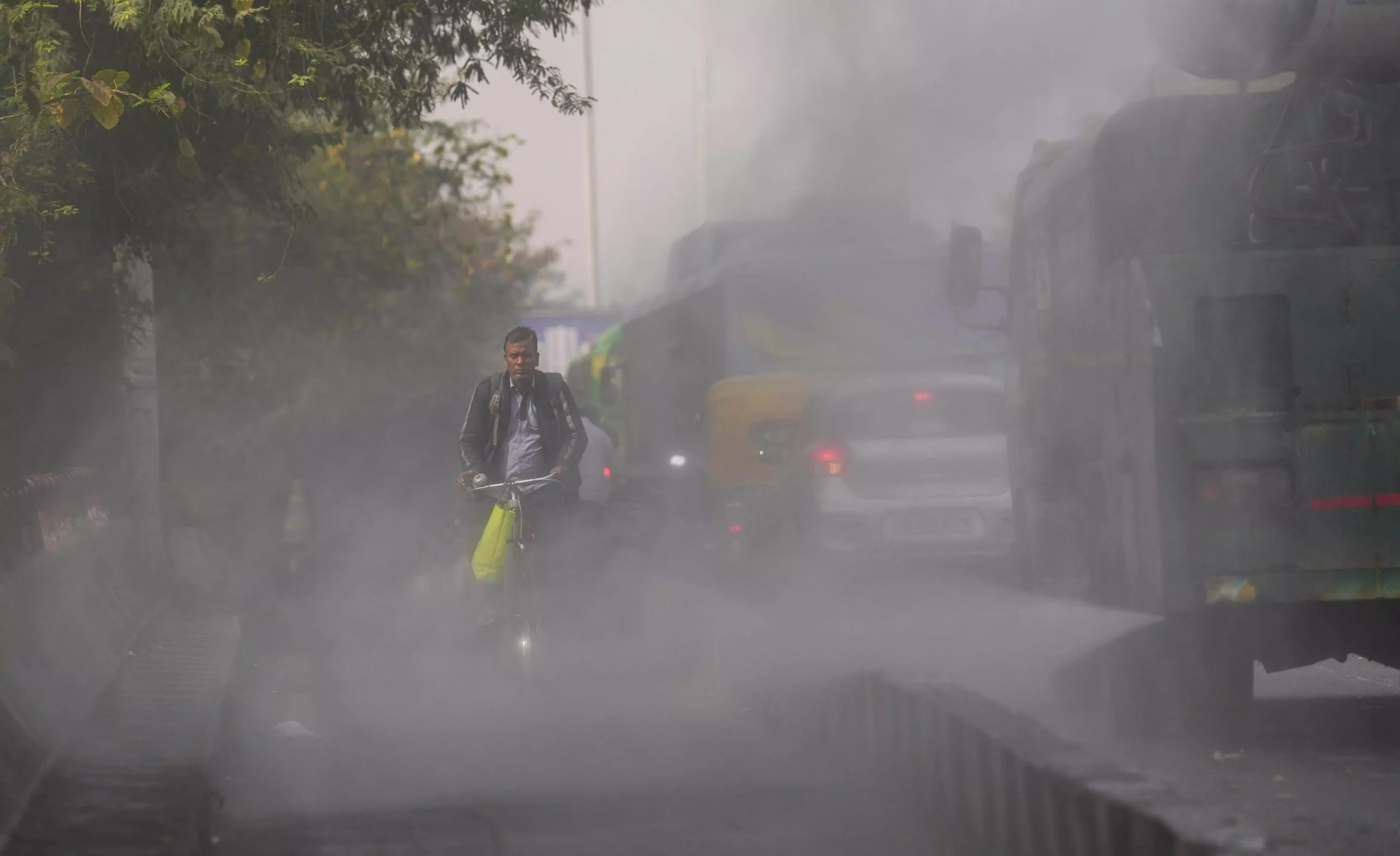
The National Capital Region has once again slipped into a full-blown air pollution crisis, prompting authorities to impose the strictest emergency curbs under GRAP Stage-IV after air quality levels surged beyond the ‘Severe Plus’ category. With the AQI crossing the alarming 450 mark, Delhi-NCR is witnessing conditions that health experts describe as “dangerously unbreathable.”
The Commission for Air Quality Management (CAQM) enforced Stage-IV restrictions with immediate effect on Saturday evening, as multiple monitoring stations—including Anand Vihar, RK Puram, and Bawana—recorded AQI readings between 480 and 490, placing the region among the most polluted urban zones in the world.
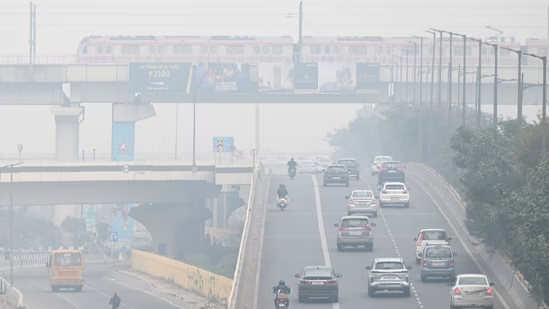
Iconic landmarks such as India Gate, Kartavya Path, and Connaught Place remained engulfed in thick grey smog throughout the day, with visibility dropping sharply and residents reporting eye irritation, throat discomfort, and breathing difficulties.
Hospitals Report Sharp Rise in Respiratory Illnesses
The deteriorating air quality has triggered a visible public health emergency. Leading hospitals across Delhi have reported a 20–30% rise in pollution-related cases, particularly among children, senior citizens, and those with pre-existing conditions.
Dr. Avi Kumar, senior pulmonologist at Fortis Hospital, Okhla, said the surge in patients is deeply concerning. “We are seeing a significant increase in asthma attacks, persistent cough, chest tightness, and breathlessness—even in people with no prior respiratory history. Prolonged exposure to such air is forcing many patients onto long-term inhalation and steroid therapy,” he warned.
Emergency wards have also seen higher admissions related to cardiac stress and fatigue, conditions known to worsen with prolonged exposure to toxic air.
What GRAP Stage-IV Brings Into Effect
Stage-IV represents the highest level of restrictions under the Graded Response Action Plan and is invoked only during extreme pollution episodes. The measures now in force include:
●Complete ban on construction and demolition activities, except for critical infrastructure projects
●Shutdown of non-essential industries operating on polluting fuels
●Entry ban on diesel light commercial vehicles (LCVs) in Delhi-NCR, except for essential services
●Suspension of stone crushers, brick kilns, and hot mix plants
●Advisory for work-from-home for government and private offices
●Schools advised to suspend outdoor activities and shift temporarily to online classes
Authorities have also intensified road sweeping, water sprinkling, and anti-dust measures, while deploying additional enforcement teams to ensure compliance.
Weather Conditions Likely to Worsen Situation
The India Meteorological Department (IMD) has warned that weather conditions offer little immediate relief. With light winds and moderate fog expected over the next two days, pollutants are likely to remain trapped near the surface due to a persistent temperature inversion layer, further aggravating air quality.
Experts caution that unless wind speeds increase or rainfall occurs, pollution levels may remain in the ‘Severe’ zone.
A Crisis Beyond Winter
Environmental analysts stress that Delhi’s air emergency is no longer seasonal but systemic. Vehicular emissions, industrial pollution, construction dust, and crop residue burning continue to combine with weak enforcement and fragmented governance.
Despite annual GRAP interventions, long-term solutions remain elusive.
The CAQM has urged citizens to avoid outdoor activities, skip morning walks, use N95 masks, and reduce private vehicle usage. However, experts argue that individual precautions alone cannot offset structural failures.
As Delhi-NCR gasps for clean air yet again, the crisis stands as a stark reminder that without coordinated regional planning, sustainable transport policies, and strict year-round enforcement, India’s capital risks normalising what should be treated as a recurring public health emergency.