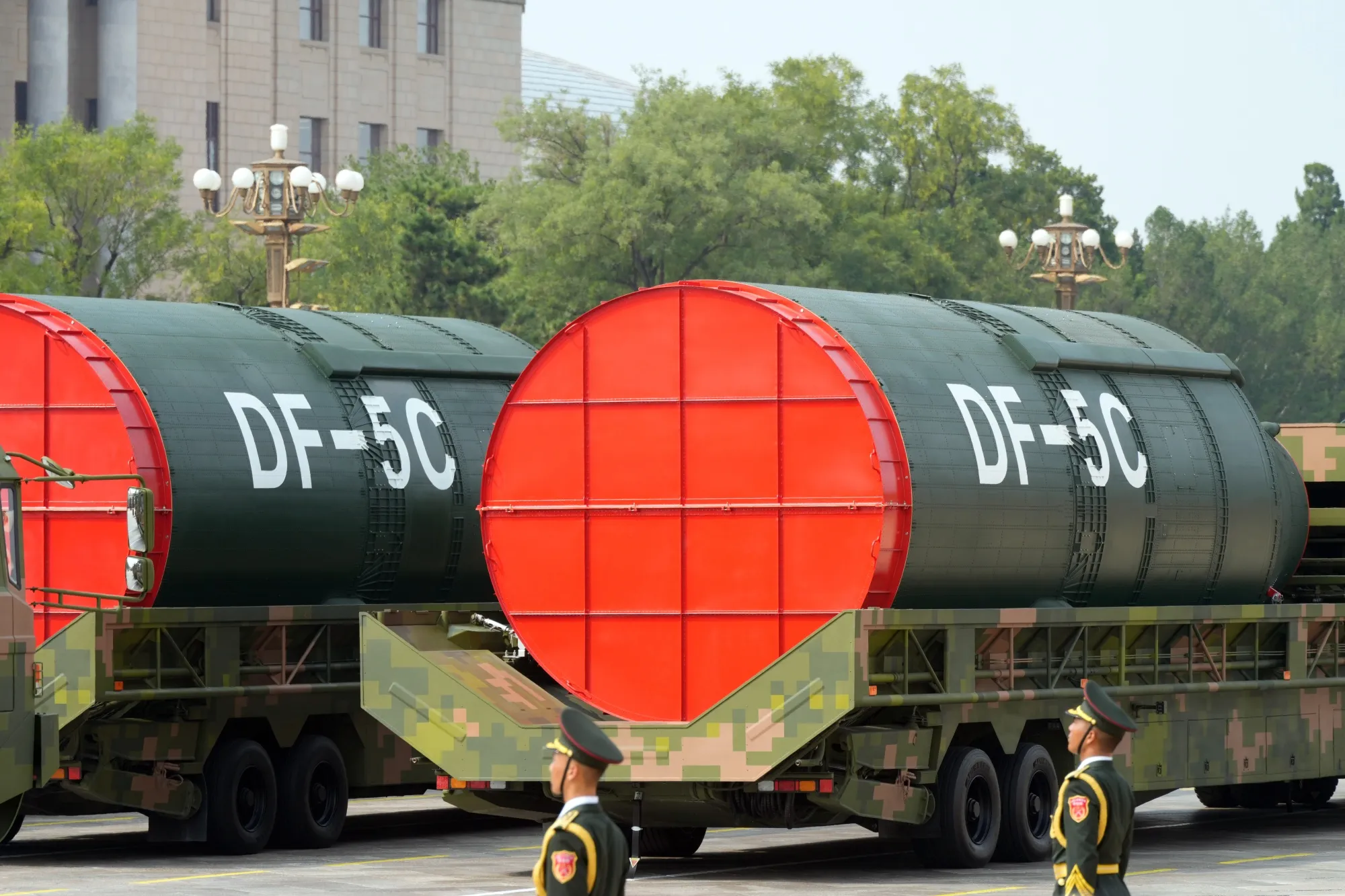
China has taken a major step in strengthening its nuclear strike capability, with more than 100 intercontinental ballistic missiles (ICBMs) now operationally deployed near its northern border with Mongolia, according to a new draft assessment by the U.S. Department of Defense.
The Pentagon report, cited by Reuters, signals a sharp escalation in Beijing’s nuclear preparedness and has raised serious concerns within U.S. strategic and defence circles. The assessment suggests that China is moving steadily towards a much larger, more sophisticated nuclear force, capable of reshaping global deterrence dynamics.
Missile Silos Now Operational
While satellite imagery over recent years had revealed the construction of large missile silo fields in northern China, this is the first confirmed U.S. assessment estimating how many of those silos are actively loaded with nuclear-capable missiles.
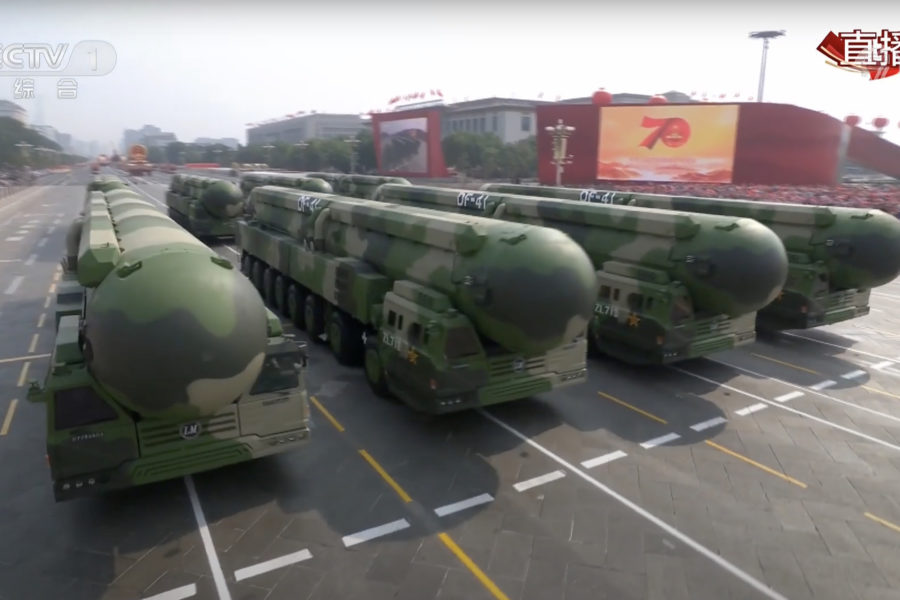
According to the report, the deployed weapons belong to the DF-31 series, solid-fuel ICBMs capable of delivering nuclear warheads across intercontinental distances. These missiles are believed to be distributed across three major silo complexes, forming a critical pillar of China’s long-term nuclear strategy.
Fastest-Growing Nuclear Arsenal
U.S. defence analysts now describe China as the world’s fastest-expanding nuclear power. The report estimates that Beijing currently possesses around 600 nuclear warheads, a number projected to cross 1,000 by 2030 if current expansion continues.
Such growth would place China closer to the nuclear stockpiles of the United States and Russia, fundamentally altering the balance of strategic power.
Strengthening Second-Strike Capability
Experts say the extensive missile silo network is designed to guarantee China a credible second-strike capability — the ability to retaliate with nuclear force even after absorbing a first attack.
The Pentagon assessment highlights China’s multi-layered approach, combining:
●Fixed silo-based ICBMs
●Road-mobile missile launchers
●Next-generation long-range missile systems
●Several silos are believed to be deliberately left empty, a deception tactic meant to complicate enemy targeting and increase uncertainty during a potential conflict.
Arms Control Talks at a Standstill
The report also flags Beijing’s reluctance to engage in nuclear arms control discussions. Despite repeated calls from U.S. President Donald Trump for a broader nuclear framework involving China, Russia and North Korea, American officials say there is little indication that Beijing is willing to participate.
China has previously dismissed such assessments as exaggerated and politically motivated, insisting its nuclear posture remains defensive.
Beyond Regional Deterrence
Although the Pentagon report does not specify targets, analysts believe the scale and placement of the missile silos suggest China’s ambitions now extend far beyond regional deterrence in the Asia-Pacific.
Instead, the expansion reflects a push toward global power projection, reinforcing China’s position as a major nuclear force at a time when global stability is already under pressure due to the Russia-Ukraine war and North Korea’s missile programme.
Strategic Implications Ahead
Security experts warn that China’s accelerating nuclear build-up could undermine existing arms-control frameworks and intensify great-power competition in the coming decade.
As geopolitical tensions rise, Beijing’s expanding nuclear footprint is fast becoming one of the most critical challenges shaping the future of global security.