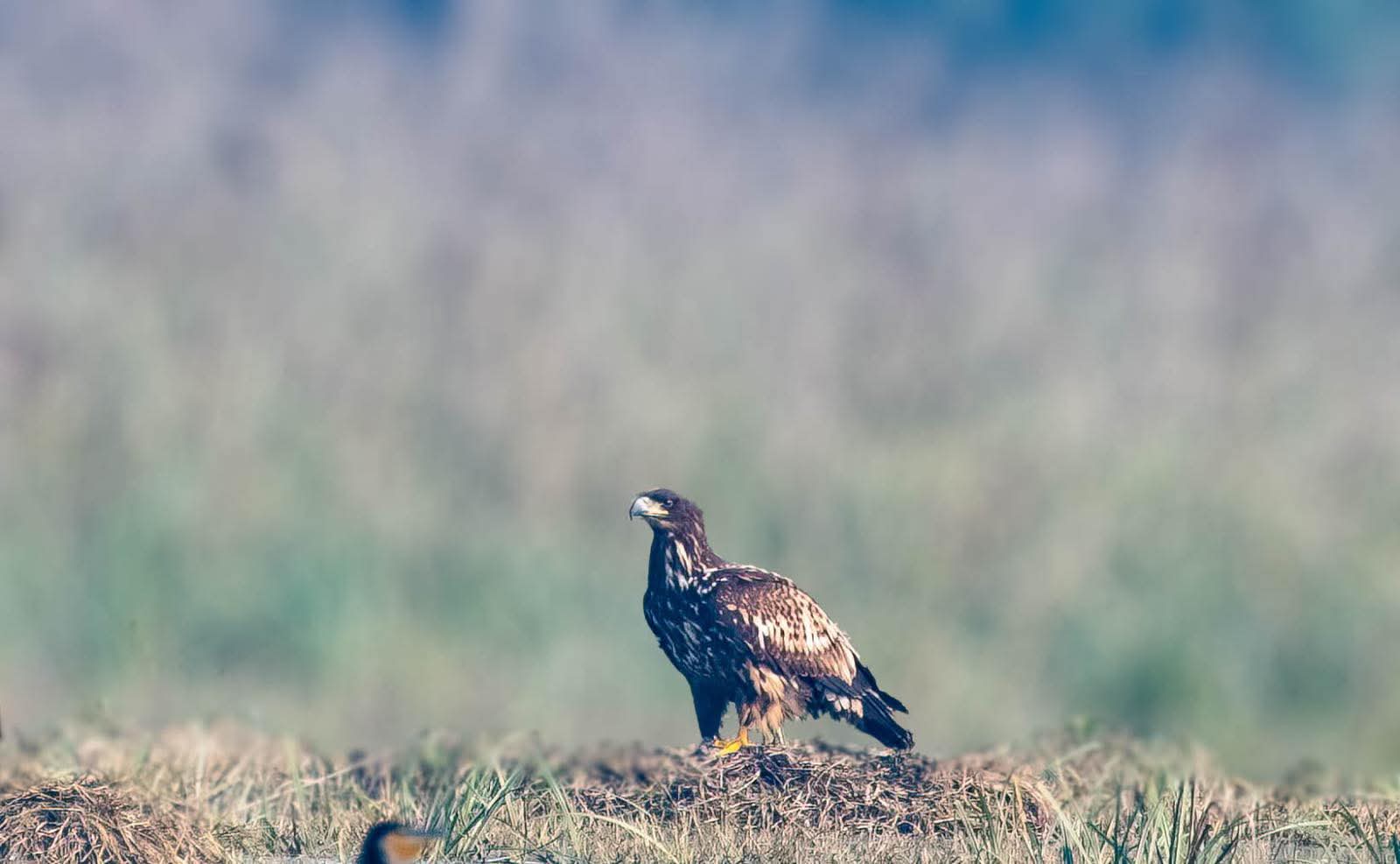
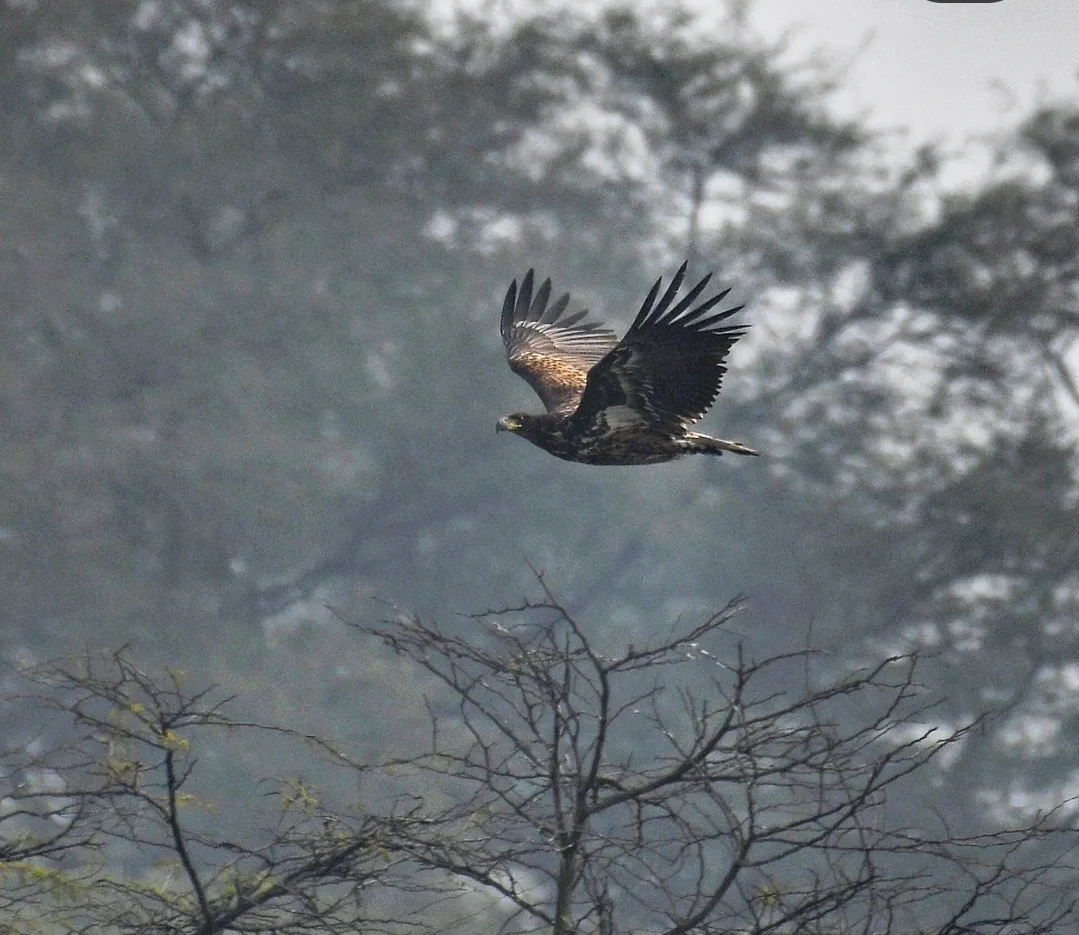
Winter birdwatching in Delhi-NCR has received a major boost after a rare juvenile White-tailed Eagle was spotted at Sultanpur National Park in Gurugram. The sighting of the majestic bird, considered India’s largest eagle, has created excitement among birders, wildlife photographers, and nature enthusiasts across the region.
Sultanpur National Park becomes the centre of attention
Sultanpur National Park, already known as an important winter habitat for migratory birds, has drawn renewed attention following the sighting. Birders have been seen visiting the park in large numbers, hoping to catch a glimpse of the eagle. The presence of such a rare species has highlighted the ecological importance of NCR’s wetlands.
Why the White-tailed Eagle is special
The White-tailed Eagle is among the largest birds of prey in the world, known for its massive wingspan and powerful build. Sightings of this species in northern India are extremely rare, making the appearance of a juvenile eagle even more significant. Wildlife experts have stated that such sightings indicate healthy wetland ecosystems capable of supporting large predators.
Gen Z birders lead the winter birdwatching trend
Interestingly, a large number of young birders and students have been seen participating in birdwatching this season. Social media platforms have been filled with photographs, videos, and discussions about the eagle sighting. Many Gen Z nature lovers have been exploring nearby wetlands instead of travelling far, reflecting a growing interest in local biodiversity.
Birdwatching gains popularity as a winter activity
Winter birdwatching has been steadily gaining popularity in Delhi-NCR over the past few years. The region’s lakes, wetlands, and protected areas attract migratory birds from Central Asia and Europe. Experts have noted that easy access to parks like Sultanpur has helped more people connect with wildlife.
Environmental awareness gets a positive push
Conservationists believe that such rare sightings play an important role in raising awareness about environmental protection. When people witness biodiversity up close, interest in conservation increases naturally. The eagle sighting has sparked conversations about wetland preservation, pollution control, and responsible tourism.
Wetlands face challenges despite rich biodiversity
Despite the excitement, experts have warned that NCR wetlands continue to face threats from urban expansion, pollution, and encroachment. Reduced water levels and habitat disturbance have impacted bird populations in several areas. The presence of a top predator like the White-tailed Eagle has been seen as a reminder of what could be lost if conservation efforts weaken.
Hope rises for nature-led urban engagement
The sighting has offered a rare moment of joy and hope for nature lovers in NCR. Families, students, and photographers have been seen engaging with nature in a positive way. Experts believe that such moments can inspire long-term interest in wildlife and environmental responsibility.
A moment that connects the city with nature
As winter progresses, birders remain hopeful that more rare sightings will follow. For now, the White-tailed Eagle has become a symbol of NCR’s hidden natural wealth, reminding residents that even in a crowded urban region, nature still finds a way to surprise and inspire.