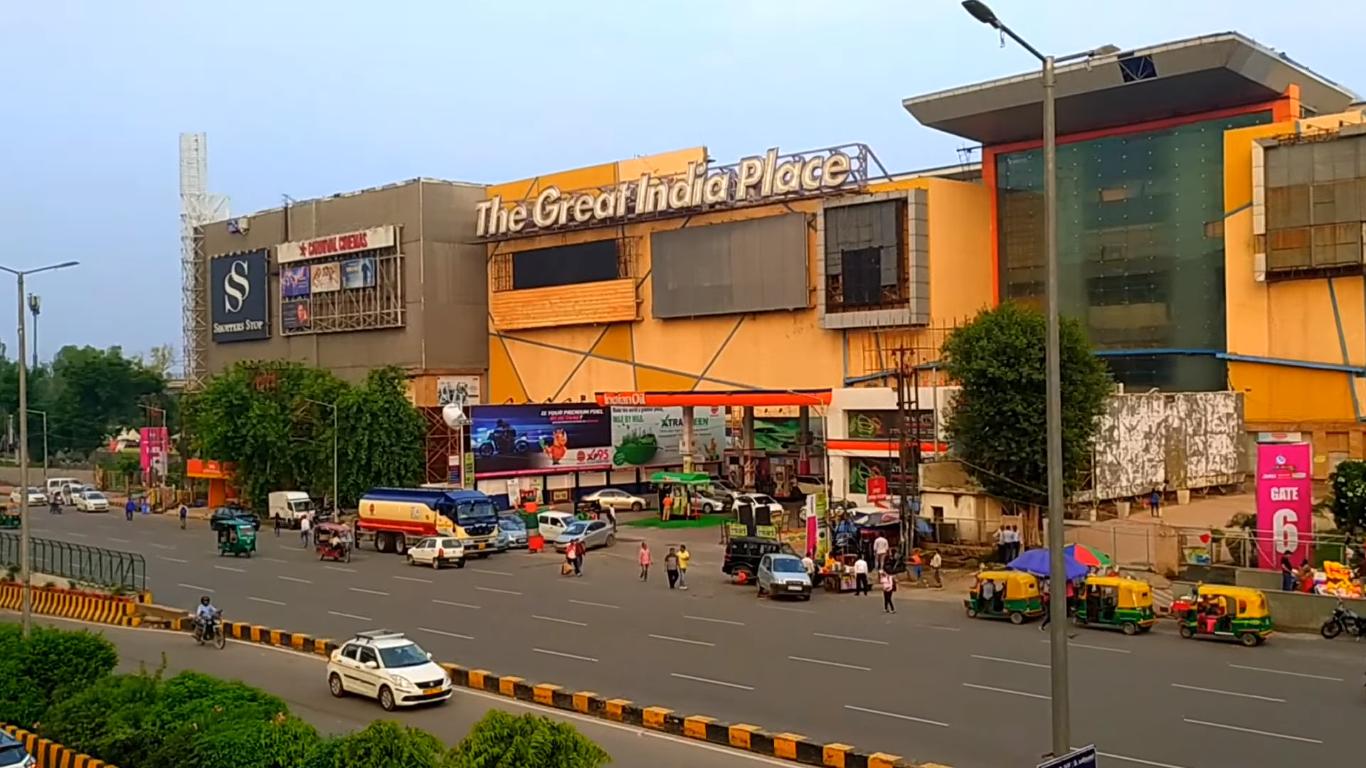
For a generation that grew up in Delhi-NCR in the late 2000s, a weekend plan often needed just three words: “Let’s go GIP.”
Nearly two decades after its launch, The Great India Place in Noida is once again in public conversation — this time not as a retail landmark, but as a case study in decline. Viral Instagram reels show dimly lit corridors, closed storefronts and food courts sparsely populated. Reddit threads are full of nostalgia and bewilderment.
How did one of North India’s largest and most recognisable malls end up here?
The answer lies in a combination of structural design decisions, aggressive competition, financial stress, and the post-pandemic reset of Indian retail.
The Rise: When GIP Was Noida’s Identity
When GIP opened in 2007, organised retail in India was still consolidating. The mall was developed by Unitech Group in partnership with the Appu Ghar Group under Entertainment City Limited. The broader Entertainment City project spanned nearly 150 acres on a long-term lease from the Noida Authority.
With over 6.5 million square feet of retail space across six floors and more than 230 outlets, GIP positioned itself as a one-stop family destination. It combined fashion, electronics, jewellery, food courts, multiplexes, bowling alleys and easy metro connectivity.
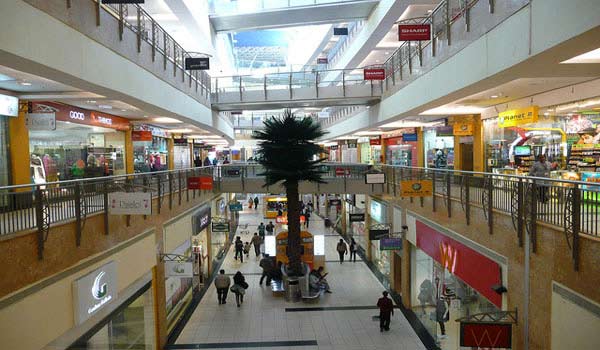
Its adjacency to Worlds of Wonder, KidZania, Gardens Galleria and Decathlon turned the area into a full-day entertainment zone. For many residents of Noida and East Delhi, it removed the need to travel to South Delhi for branded shopping.
At its peak, the mall reportedly attracted footfalls of up to 30,000 visitors a day. Brands like Pantaloons, Shoppers Stop, Adidas, Nike, Big Bazaar, Reliance Digital, Titan and Tanishq became anchors. For families, it wasn’t just retail — it was routine.
GIP was less a mall and more a marker of Noida’s arrival as a self-contained urban centre.
Structural Fault Lines Beneath the Success
Yet, even during its peak years, GIP’s business model carried vulnerabilities.
Unlike newer malls where developers retain ownership and lease spaces to maintain tight control over tenant mix, significant portions of GIP’s retail units were sold to individual investors. This fragmented ownership structure complicated long-term planning.
When tenants exited, replacing them required coordination across multiple stakeholders. Vacancy cycles stretched longer. Cohesive rebranding or floor-wide redesigns became harder to execute.
For a while, strong footfall masked these weaknesses. But the competitive landscape was changing.
2017: The Competitive Disruption
The opening of DLF Mall of India in 2017 marked a turning point.
Larger, newer and more curated, DLF Mall introduced international zoning concepts — separating fashion, entertainment, dining and family zones with precision. It brought in premium global brands and maintained aggressive upkeep and experiential marketing.
For younger shoppers, the shift was immediate. Retail had evolved from transactional shopping to curated lifestyle spaces. GIP, with its early-2000s architecture and ageing interiors, began to feel dated.
Footfalls gradually thinned — not dramatically at first, but steadily.
Pandemic Shock and Financial Stress
The Covid-19 pandemic accelerated trends that were already underway.
Prolonged lockdowns and capacity restrictions drained revenues. Several anchor brands either downsized or exited permanently. Entire sections of the mall began to display shuttered storefronts.
Behind the scenes, Entertainment City Limited’s financial stress deepened. By 2023, reports suggested debt exceeding ₹1,000 crore, largely owed to public sector banks. Promoters invited expressions of interest to sell the broader 147-acre Entertainment City complex, including GIP, Worlds of Wonder and Gardens Galleria.
Speculation mounted around a potential acquisition by DS Group, with reports suggesting a valuation in the range of ₹2,000 crore. No transaction, however, materialised. The asset remained in limbo — operational, but uncertain.
The ED Attachment and Perception Costs
In 2024, the mall’s troubles resurfaced when the Enforcement Directorate attached properties worth approximately ₹291 crore linked to International Recreation and Amusement Ltd, an operator with assets within the complex.
The case related to alleged money laundering and investor cheating in an unrelated real estate scheme. While it did not shut the mall or alter its ownership structure, it amplified reputational concerns.
For retail brands evaluating expansion, perception can be as decisive as footfall data. Uncertainty discourages long-term commitments.
The Viral Optics
Today’s conversation about GIP is being shaped less by financial filings and more by smartphone cameras.
Viral Instagram reels show deserted walkways and dim escalators. The imagery has been powerful precisely because it contrasts sharply with collective memory.
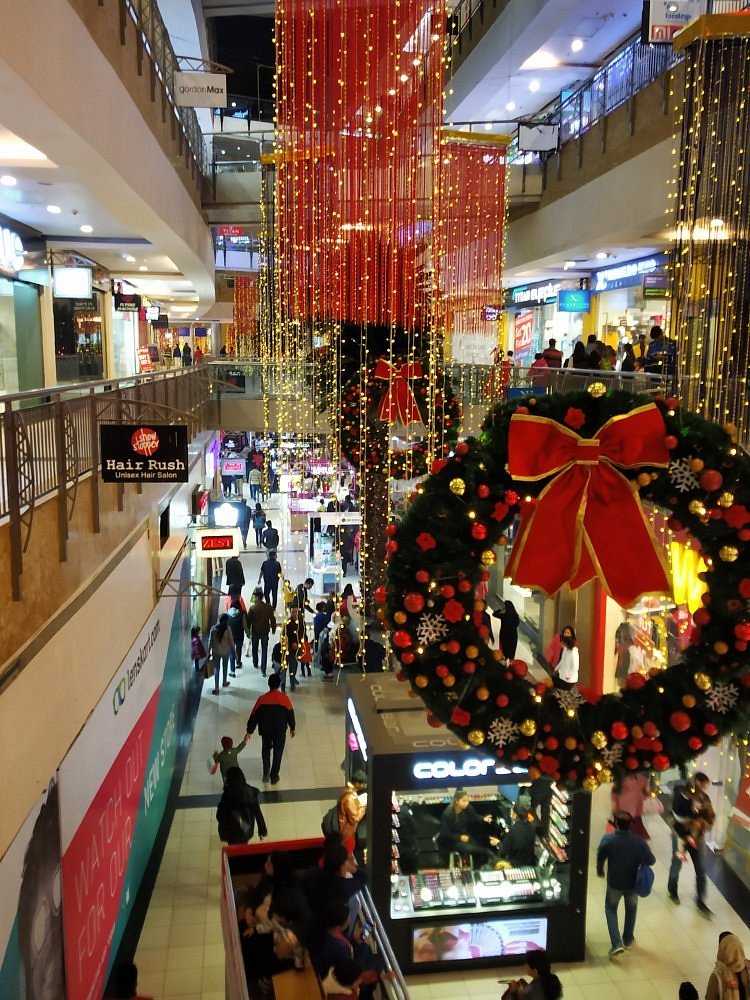
Social media thrives on before-and-after narratives. GIP provides one.
But the “ghost mall” tag, while evocative, is not entirely accurate.
The Present Reality: Uneven Decline, Not Closure
The mall is operational. Over 200 brands continue to function, largely concentrated in value fashion, electronics and food outlets. Stores such as Zudio, Reliance Trends, Adidas, McDonald’s and Miraj Cinemas continue to draw weekend crowds.
Footfalls are uneven — quieter on weekdays, moderately active on weekends. Certain wings appear significantly emptier than others. The mall has not shut down; it has shrunk in vibrancy.
It represents a broader phenomenon: the lifecycle of first-generation Indian malls that rose rapidly but struggled to reinvent.
A Case Study in Retail Evolution
GIP’s story reflects structural shifts in Indian retail:
-
Transition from ownership-heavy to leasing-led mall models
-
Rising competition within concentrated urban clusters
-
Consumer shift toward experiential and curated spaces
-
Pandemic-induced consolidation
-
Financial leverage limiting reinvestment
-
Reputation risks in a sensitive investment climate
Retail in NCR is no longer about scale alone. It is about experience, refresh cycles, digital integration and curated brand mix. Without continuous reinvestment, large-format malls age quickly.
The Road Ahead
GIP’s location remains strategic. The land value within the Entertainment City cluster is significant. Emotional recall among NCR residents remains strong.
A unified ownership model, capital infusion, or repositioning toward mixed-use development — combining retail with events, hospitality, co-working and lifestyle experiences — could alter its trajectory.
Absent decisive restructuring, however, gradual marginalisation is likely.
The Great India Place once symbolised Noida’s retail confidence. Its current phase is less about abandonment and more about transition — a reminder that in India’s fast-evolving urban landscape, scale guarantees nothing, and reinvention is not optional.
For now, GIP stands as both memory and warning — a mall suspended between nostalgia and necessity.