Serious concerns have emerged over the safety of tap water in Delhi after a recent testing exercise found bacterial contamination in several neighbourhoods. According to laboratory results, nearly 44% of the tap water samples collected across the city contained harmful bacteria, raising fears of possible sewage contamination in parts of the capital’s water distribution network.
The testing was conducted at 18 locations across Delhi in collaboration with researchers from the Shri Ram Institute for Industrial Research. The investigation aimed to examine the quality of water supplied through household taps, particularly in areas where residents had previously reported complaints about dirty or foul-smelling water.
Out of the 18 samples tested, eight samples showed the presence of E. coli or total coliform bacteria, both of which are strong indicators that sewage or faecal contamination may have entered the water supply system.
Contamination Mostly Found in Household Tap Connections
Interestingly, officials noted that all contaminated samples were taken from household tap connections, suggesting that the issue may lie within local pipeline networks rather than the main water treatment plants.
Among the worst affected areas were Rajouri Garden in West Delhi, Mayur Vihar Phase-3, and Chilla village in East Delhi, where bacterial contamination levels were particularly high.
Experts say such contamination usually occurs when damaged pipelines allow sewage water to mix with drinking water lines, particularly in areas where infrastructure has become old or poorly maintained.
However, tests also showed that several areas in Central and South Delhi recorded clean water samples, indicating that the problem may be localised rather than citywide.
Public Water Sources Found Safe
One surprising finding from the investigation was that public water sources appeared to be safe.
Samples collected from the following locations showed no bacterial contamination:
●A water vending machine at Connaught Place
●A sweets shop in Kamla Nagar
●A water cooler at Hindu Rao Hospital
●A tanker supplied by the Delhi Jal Board in Chilla village
These results suggest that the treated water leaving Delhi’s treatment plants is generally safe, and that contamination may be happening within local pipeline networks inside residential areas.
Testing Conducted After Indore Water Tragedy
The testing exercise was carried out following a tragic water contamination incident in Indore in December last year.
In that incident, sewage reportedly entered the drinking water pipeline in the Bhagirathpura area due to a leak. The contamination resulted in 15 deaths and more than 250 people falling seriously ill, highlighting how dangerous water infrastructure failures can be.
The Delhi testing initiative was intended to examine whether similar risks might exist in the national capital.
Extremely High Contamination Levels in Some Areas
The laboratory results revealed alarmingly high levels of bacterial contamination in certain neighbourhoods.
Some of the highest contamination readings included:
◆Rajouri Garden: 920 CFU per 100 ml of total coliform bacteria and 270 CFU of E. coli
◆Chilla Village: 870 CFU coliform and 230 CFU E. coli
◆Mayur Vihar Phase-3: 620 CFU coliform and 200 CFU E. coli
For comparison, the Central Pollution Control Board states that even water used for bathing in rivers should contain less than 500 coliform units per 100 ml.
This means some of the contaminated samples in Delhi were not even suitable for bathing, let alone drinking.
Residents Report Dirty and Discoloured Tap Water
Residents in several neighbourhoods have long complained about poor water quality.
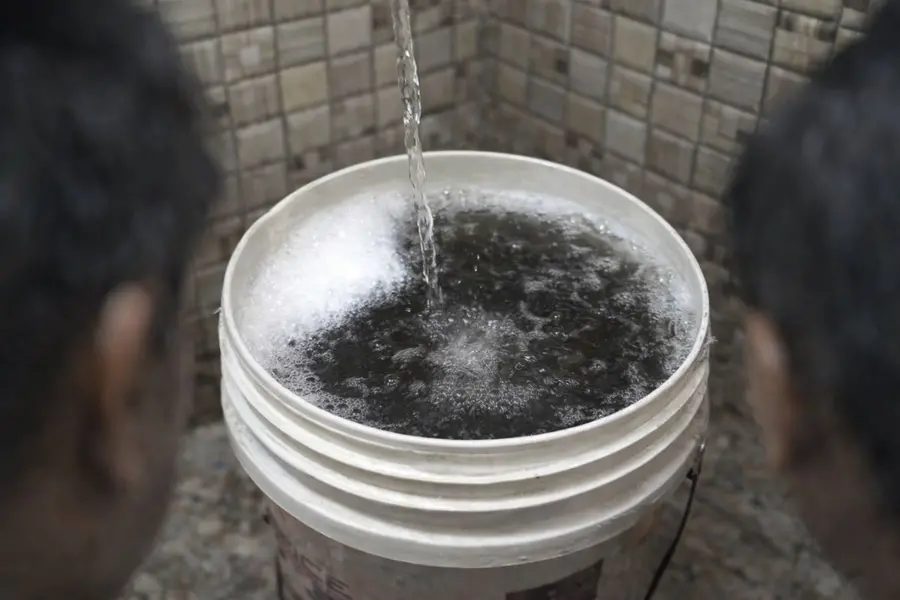
In some areas, people report receiving yellow, grey or even black water from their taps, sometimes accompanied by a foul smell.
For households that depend entirely on tap water for daily activities such as cooking, washing and drinking, these issues have created serious concerns about public health.
Although many homes use water purifiers, experts say purifiers alone may not always eliminate the risks posed by heavily contaminated water.
Ageing Pipeline Network Identified as Key Risk
Experts say the contamination problem could be linked to the ageing water infrastructure in Delhi.
The capital’s water distribution network stretches across more than 15,400 kilometres of pipelines, supplying treated water from nine treatment plants.
However, infrastructure data indicates that:
●Over 5,200 km of pipelines are more than 30 years old
●Around 2,700 km are between 20 and 30 years old
As pipelines age, they become vulnerable to corrosion, cracks, leaks and pressure fluctuations, all of which can allow sewage water to enter the drinking water system.
When water supply stops temporarily, negative pressure inside pipes can draw sewage through cracks, leading to contamination.
Experts Warn of Infrastructure Gaps
Water policy experts say the findings highlight deeper systemic issues in the city’s water infrastructure.
Environmental activist Pankaj Kumar pointed out that water and sewer pipelines often run close to each other underground. If either pipe develops cracks, cross-contamination becomes possible.
“The results clearly indicate a problem in our system. Though it does not mean our entire water supply system is compromised, it most likely indicates that pipelines are corroding at places and sewer water is entering the water supply,” Kumar said.
He also noted that such contamination contradicts the goal of providing safe tap water under the Jal Jeevan Mission.
Areas with Repeated Complaints
In several areas of West Delhi where testing was conducted, all locations showed contamination.
These included:
●Janakpuri
●Rajouri Garden
●Budhela village in Vikaspuri
Residents in these neighbourhoods have repeatedly reported problems with poor water quality.
Experts believe authorities need to conduct urgent pipeline inspections and repairs in areas where complaints are frequent.
Need for Urgent Infrastructure Reforms
The findings have intensified calls for large-scale upgrades to Delhi’s water infrastructure.
Experts suggest several measures that could help reduce contamination risks:
●Replacement of ageing pipelines
●Installation of smart water monitoring systems
●Separation of water and sewage pipelines
●Regular inspection of high-risk zones
●Rapid repair of leaks and cracks
Urban planners also emphasise the importance of modernising water infrastructure in fast-growing cities.
Not a Citywide Crisis Yet, but Warning Signs Exist
Despite the alarming findings, researchers say the results do not indicate a complete breakdown of Delhi’s water supply system.
Out of the 18 samples tested, 10 were found to be safe, showing that treated water quality remains acceptable in many parts of the city.
However, the fact that nearly half the samples failed safety standards raises serious questions about the reliability of tap water in certain neighbourhoods.
Experts warn that unless infrastructure upgrades are prioritised, such localised contamination could eventually become a much larger public health challenge.