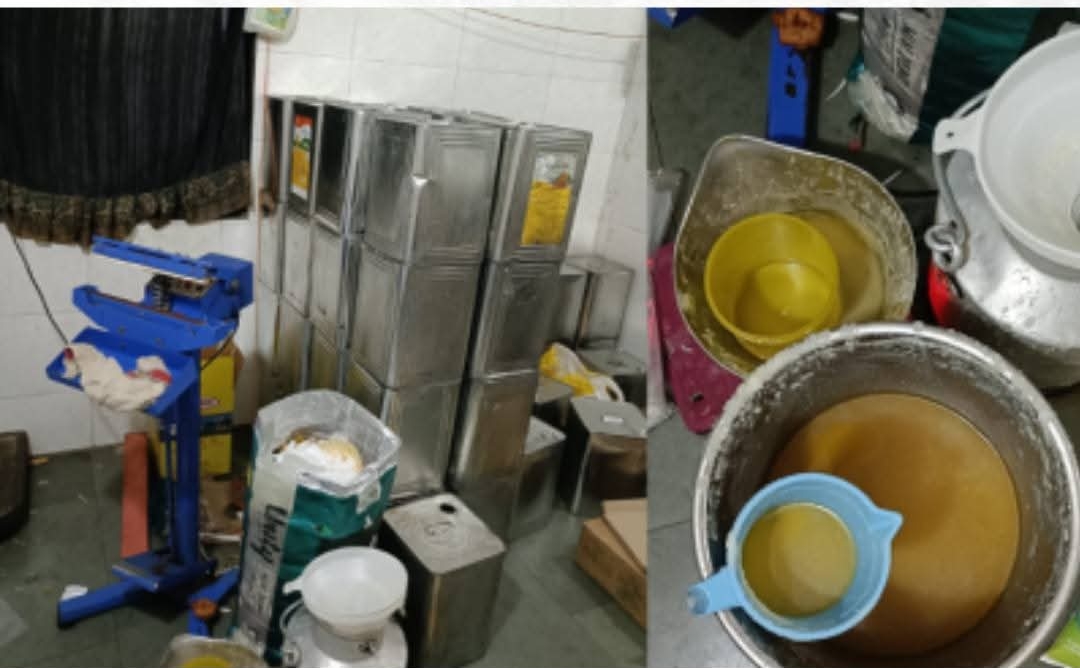
A major food adulteration racket has been uncovered in Surat, where authorities seized fake ghee worth crores of rupees, exposing a large-scale illegal operation.Initial investigation suggests that the seized product contained negligible real ghee content, with reports indicating that less than 2% may have been actual ghee, raising serious concerns about consumer safety.
What Was Inside the Fake Ghee?
Officials believe the counterfeit ghee was prepared using vegetable oils, synthetic flavors, and chemical additives to mimic the taste, smell, and texture of real ghee.Such adulteration is not new. In past cases across India, fake ghee has been found to contain:
●Palm oil or vanaspati (cheap substitutes)
●Artificial butter flavoring chemicals
●Coloring agents to resemble desi ghee
While not every adulterant is immediately toxic, long-term consumption of such products can contribute to digestive issues, heart risks, and overall poor nutrition.
Health Risk: What Experts Say
Medical experts warn that adulterated edible products can:
●Increase bad cholesterol due to low-quality fats
●Contain residues of harmful chemicals or solvents
●Lead to long-term health complications if consumed regularly
However, claims like “direct cancer risk” depend on the exact chemicals used and require scientific testing to confirm.
India’s Larger Food Adulteration Problem
This case reflects a broader issue. According to data from Food Safety and Standards Authority of India:
●A significant percentage of food samples tested annually are found substandard or adulterated
●Edible oils, milk products, and spices are among the most commonly adulterated items
●Festive seasons often see a spike in fake ghee and sweets
This makes adulteration not just an isolated crime, but a systemic challenge.
Organized Supply Chains Under Scanner
Authorities suspect that the Surat case is part of a larger distribution network, where fake ghee is produced in bulk and supplied to local markets at lower prices.
Such networks often operate by:
●Using low-cost raw materials
●Packaging products to resemble branded or pure ghee
●Targeting price-sensitive markets
Investigations are now focused on tracing how far these products were circulated.
Why This Case Matters
Ghee is a staple in Indian households — used daily in cooking, puja, and traditional diets. When such a basic food item is compromised, it shakes consumer confidence at a deeper level.This case highlights not just fraud, but a breach of trust in essential food supply chains.
A Wake-Up Call for Consumers and Authorities
The Surat seizure is a reminder that food safety vigilance cannot be relaxed. While authorities are expected to intensify inspections, consumers also need to stay cautious about sourcing and quality.
Because in today’s market, the real concern is not just what we eat —
but how confidently we can trust it.