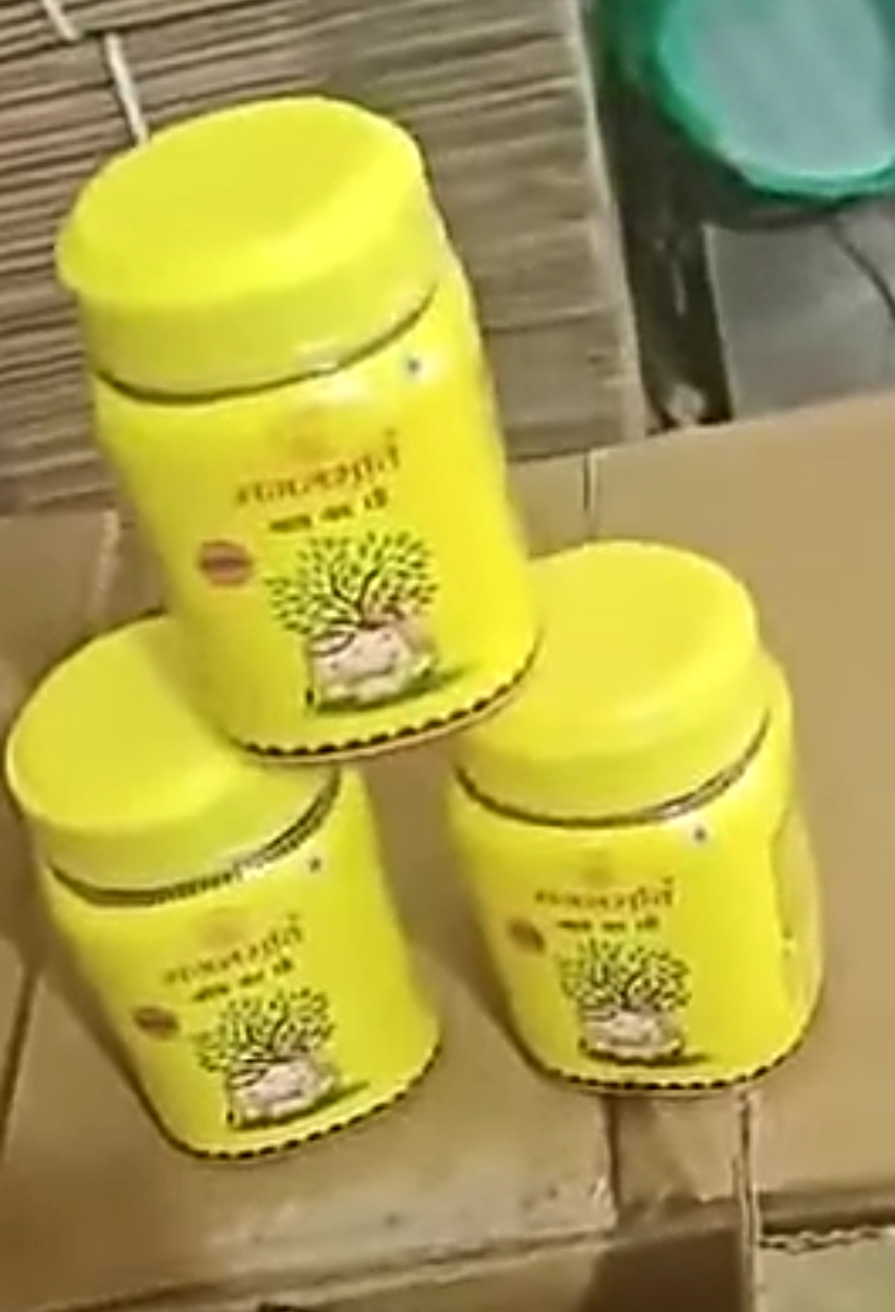
In a fresh case of food adulteration, authorities in Nikol have seized around 400 kg of suspected fake ghee, uncovering a disturbing practice of selling adulterated products under the guise of purity.According to officials, the fake ghee was being manufactured by mixing palm oil and other substances, then packaged and marketed as pure cow ghee.
Sold Under ‘Manglamurti’ Name to Mislead Consumers
Investigations revealed that the product was being prepared and distributed under the ‘Manglamurti’ brand name, making it appear authentic and trustworthy to buyers.Consumers, unaware of the adulteration, were likely purchasing and consuming the product believing it to be pure, high-quality cow ghee.
Adulteration Reaches Household Kitchens
The case highlights a growing concern — fake food products are no longer limited to isolated markets but are reaching everyday households.Ghee, a staple in Indian kitchens and often associated with health and tradition, is now becoming a target for adulteration, raising serious questions about food safety.
Health Risks Cannot Be Ignored
Experts warn that consuming such adulterated products can have long-term health consequences, as palm oil-based mixtures lack the nutritional value of real ghee and may contain unsafe additives.Regular consumption of such products can impact digestion, heart health, and overall well-being.
Stay Alert, Check Before You Consume
This incident is yet another reminder that not everything sold as “pure” is truly genuine.Consumers are advised to remain cautious, verify product sources, and avoid blindly trusting branding when it comes to essential food items.