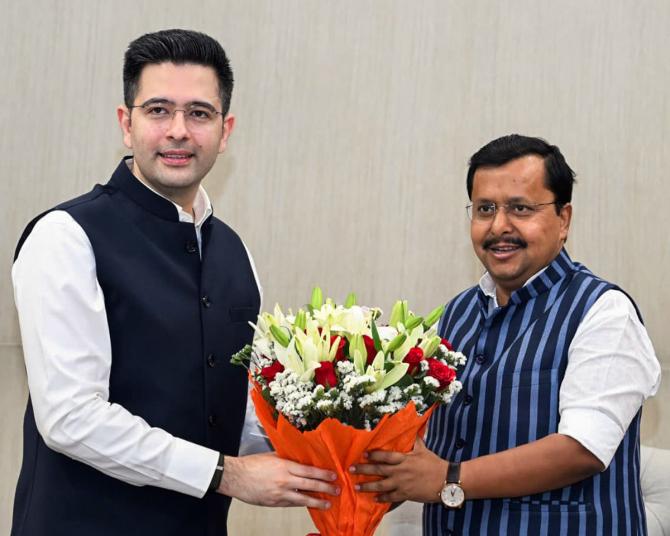
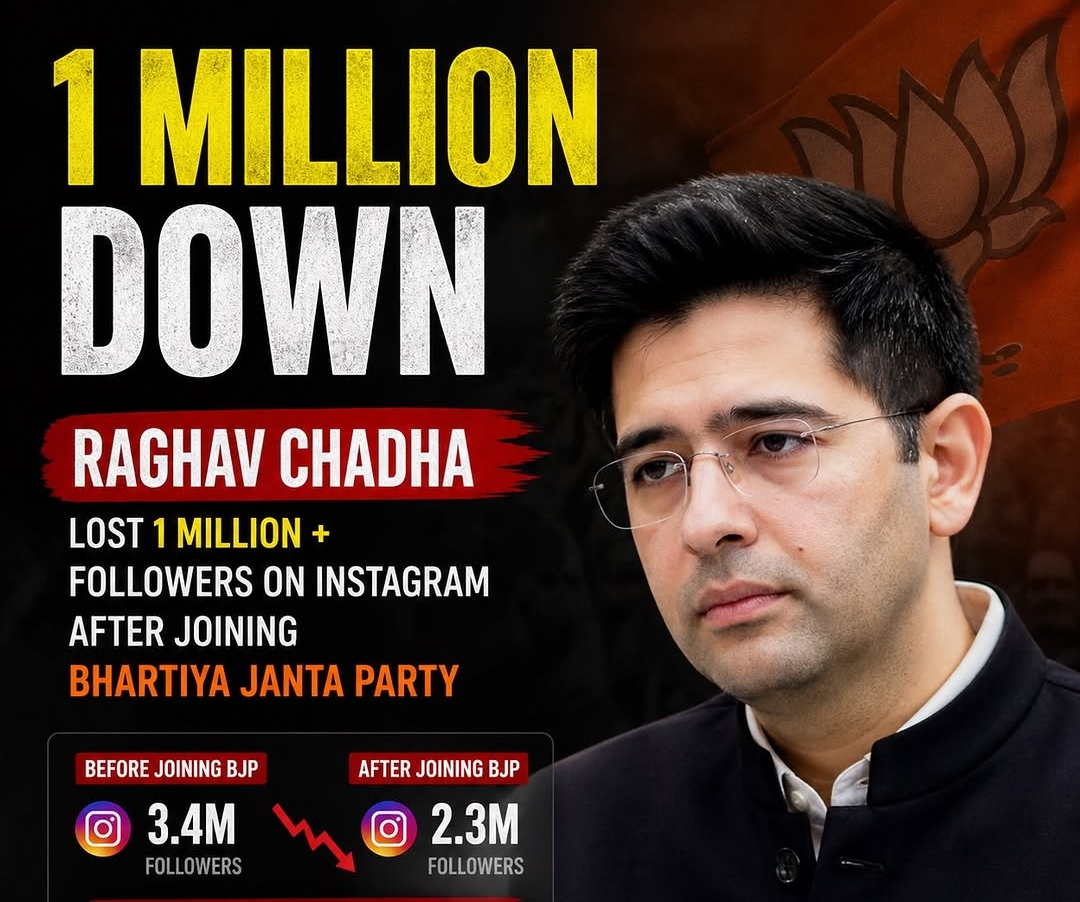
In a dramatic digital fallout, Raghav Chadha has reportedly lost over 1 million followers on Instagram, triggering a wave of debate, backlash, and intense reactions across social media platforms. The sudden decline in followers comes amid reports suggesting that he has joined the Bharatiya Janata Party (BJP), a development that has shocked many of his supporters, especially among younger audiences.Once seen as a Gen Z political icon, Chadha’s online image appears to have taken a major hit within hours, highlighting the volatile nature of digital popularity in today’s political landscape.
Online Backlash Intensifies as Narrative Spreads
As reports of his alleged political shift gained traction, social media platforms witnessed an immediate and intense reaction. Users not only unfollowed his account in large numbers but also flooded comment sections with criticism, disappointment, and, in many cases, outright hostility.The backlash reflects how strongly digital audiences, particularly younger users, connect with political identities. For many followers, the perceived shift in allegiance was seen as a break from expectations, leading to a swift and visible response.
Gen Z Reaction: Loyalty, Identity, and Instant Judgement
Raghav Chadha’s popularity among younger audiences has always been a defining aspect of his public persona. His communication style, visibility on social media, and political positioning helped him build a strong digital base.However, the same audience that once supported him has now demonstrated how quickly sentiment can change. In the age of instant information, loyalty is often tied to perception, and even a single narrative shift can lead to rapid disengagement.This episode underscores a larger trend —
Gen Z audiences are not passive observers; they actively shape and respond to political narratives in real time.
Silence and Speculation Fuel the Fire
Despite the scale of the reaction, there has been limited official clarification addressing the situation in detail. This has allowed speculation to grow unchecked, further amplifying the backlash.In the digital age, silence often creates space for assumptions, and once a narrative gains momentum, it becomes difficult to control. The absence of immediate, clear communication has played a role in intensifying the situation.
Politics in the Age of Social Media Metrics
The incident highlights how political influence is increasingly measured not just through traditional means, but also through digital metrics like followers, engagement, and online sentiment.A loss of over 1 million followers is not just a number —
it is a reflection of public mood, perception, and shifting support.This also raises an important question:
Is social media popularity a true indicator of political strength, or simply a reflection of momentary sentiment?
Conclusion: A Case Study in Digital Perception Power
The sudden drop in Raghav Chadha’s followers marks one of the most striking examples of how quickly public perception can shift in the digital era.
Whether the reported political move proves accurate or evolves further, the impact is already visible. The episode serves as a reminder that in modern politics, narratives can shape reality — sometimes even before facts are fully established.For now, the focus remains on how the situation unfolds and whether the digital backlash translates into broader political consequences.