

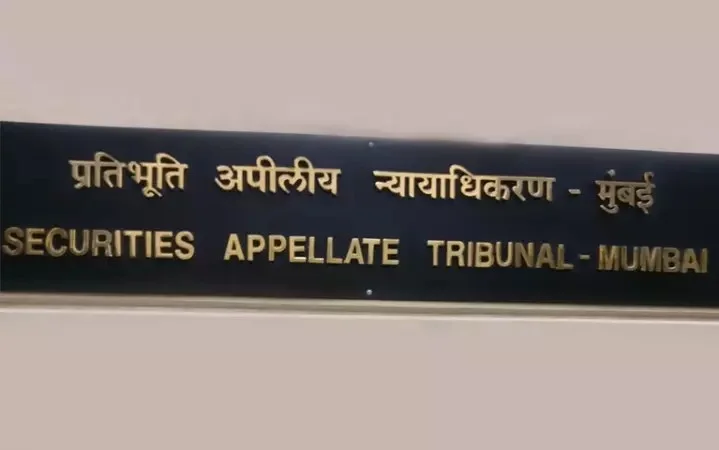
Mumbai: The Securities Appellate Tribunal (SAT) has taken a stern view of the Multi Commodity Exchange of India (MCX), setting aside a ₹1.49 crore penalty imposed on Ventura Securities Limited and directing the exchange to immediately refund ₹1.76 crore, including applicable Goods and Services Tax (GST). The tribunal also imposed costs of ₹1 lakh on MCX, observing that the exchange had levied a penalty far exceeding the maximum permissible limit of ₹2 lakh prescribed under a circular issued by the Securities and Exchange Board of India (SEBI).
A bench headed by Justice PS Dinesh Kumar, with Technical Members Meera Swarup and Dr Dheeraj Bhatnagar, held that such conduct by an exchange functioning as a first-line regulator could not be countenanced. The tribunal also rejected MCX’s request to refrain from imposing costs.
Penalty Order Dated September 28 Challenged
The dispute arose from an order passed by MCX’s Member Committee on September 28, 2026, imposing a penalty of ₹1.49 crore on Ventura Securities for an alleged violation of client-level open position limits.
According to Ventura, the allegation was that one of its clients had exceeded the permissible open position limit in natural gas options. While the prescribed limit was 2%, the client’s position had allegedly reached 27%. Ventura challenged the order before SAT, questioning both the legality of the penalty and the amount imposed.
The brokerage argued that the penalty was inconsistent with the applicable regulatory framework. Citing a SEBI circular dated September 9, 2026, Ventura submitted that the maximum permissible penalty in such a case was ₹2 lakh. MCX did not dispute this submission during the proceedings.
Questions Raised Over Committee Member’s Signature
Ventura Securities also highlighted a procedural irregularity in the penalty order. The brokerage pointed out that SV Krishnamohan, an independent external expert whose signature appeared on the order, had ceased to be a member of the committee on March 20, 2026.
However, the penalty order was issued more than six months later, on September 28, with his signature still appearing on the document.
MCX acknowledged the discrepancy, describing the inclusion of Krishnamohan’s signature as a bona fide error. The exchange requested that the matter be remitted for reconsideration.
However, SAT held that the penalty order was legally unsustainable and set it aside. The tribunal’s intervention came after considering the procedural concerns raised by Ventura and the issue of the penalty exceeding the limit prescribed under the SEBI circular.
Ventura also argued that MCX had failed to issue any alert regarding the alleged breach of open position limits. It maintained that even if the violation were assumed to have occurred, the penalty of ₹1.49 crore was far beyond the maximum limit of ₹2 lakh prescribed by SEBI. MCX did not contest these submissions.
₹1.76 Crore Deducted on October 14
During the proceedings, SAT noted that MCX had already debited ₹1.76 crore from Ventura Securities’ account on October 14. The amount comprised the penalty of ₹1.49 crore and the applicable GST.
After finding the penalty order legally unsustainable, the tribunal directed MCX to immediately refund the entire amount to Ventura Securities.
MCX subsequently requested the bench not to impose costs. However, the tribunal rejected the plea and imposed costs of ₹1 lakh on the exchange. The decision underscored that exchanges exercising regulatory functions must act within the limits prescribed by the applicable legal and regulatory framework.
The case was argued by advocates Rushin Kapadia, Sumit Agrawal, Kavish Garach and Saumya Singh Thakur of Regstreet Law Advisors on behalf of Ventura Securities. Advocates Anubhav Ghosh, Vivek Shah and Paras Taneja of Trilegal represented MCX.
The ruling highlights the importance of regulatory compliance in the functioning of commodity exchanges. It also establishes that penalties imposed by exchanges remain subject to scrutiny by the appellate tribunal and must conform to the applicable SEBI framework.
By setting aside the ₹1.49 crore penalty, directing an immediate refund of ₹1.76 crore and imposing ₹1 lakh in costs, SAT reinforced the principle that exchanges acting as first-line regulators must exercise their powers within prescribed legal limits.

