

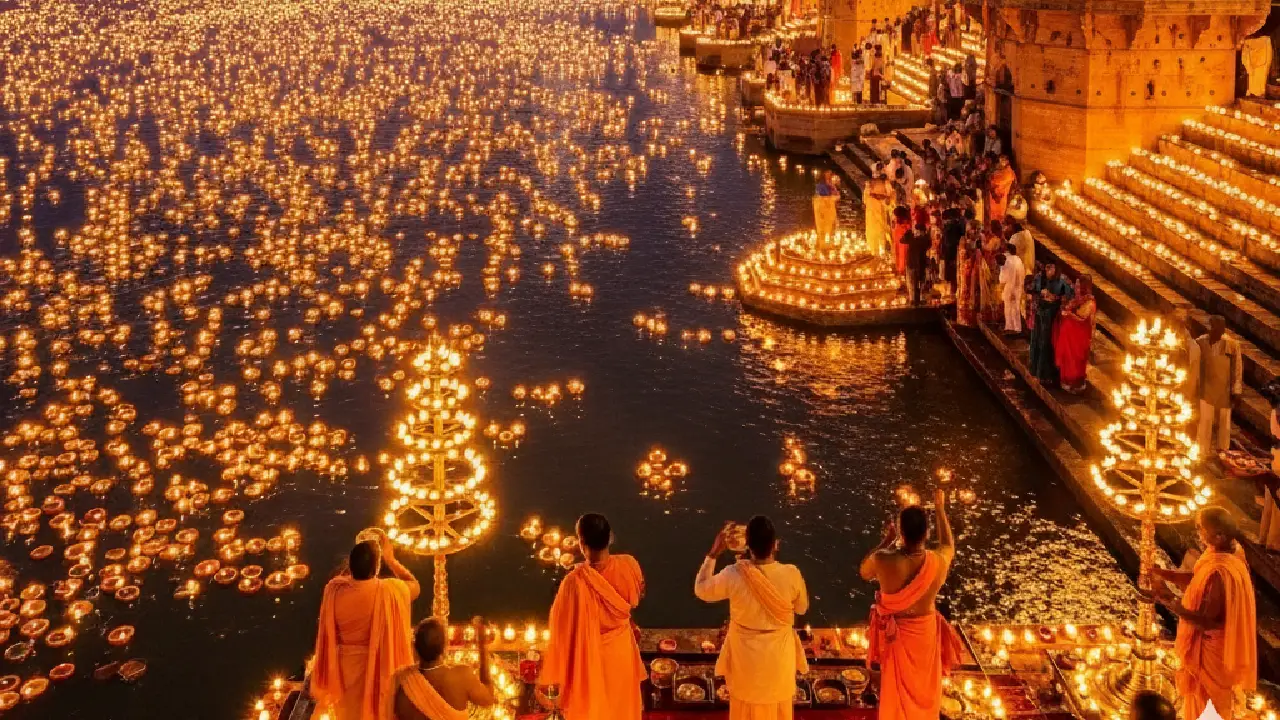
Varanasi, one of India’s most revered spiritual destinations, prepares for a spectacular transformation every year on Kartik Purnima. As darkness falls, thousands of earthen lamps illuminate the ghats of the River Ganga, temples and historic riverfront buildings, turning the ancient city of Kashi into a breathtaking display of light and devotion. This celebration is known as Dev Deepawali, popularly described as the ‘Diwali of the Gods’.
Unlike the usual Diwali celebrations, which take place on Amavasya, Dev Deepawali is observed on the full-moon night of Kartik Purnima, approximately 15 days after Diwali. The festival is particularly significant in Varanasi because of the city’s deep association with Lord Shiva and the sacred River Ganga. In 2026, Dev Deepawali falls on November 24, according to the Incredible India tourism portal.
The Mythological Story Behind Dev Deepawali
The religious significance of Dev Deepawali is associated with the legend of Tripurasura and Lord Shiva. According to Hindu mythology, Tripurasura was a powerful demon whose three fortified cities became a source of trouble for the gods. After the gods sought help, Lord Shiva fought the demon and destroyed the three cities with a single arrow.
Following this victory, Lord Shiva came to be worshipped as Tripurari, the destroyer of Tripura. The occasion symbolises the triumph of good over evil and the restoration of righteousness.
Another popular belief holds that the gods descend to Earth on Kartik Purnima to bathe in the holy Ganga and celebrate Lord Shiva’s victory. Devotees believe that lighting lamps along the riverbanks welcomes the gods and brings divine blessings. This belief is central to the name Dev Deepawali, which translates to the Deepawali of the gods.
Why Varanasi Becomes the Centre of the Festival
Varanasi, also known as Kashi and Banaras, is traditionally regarded as the city of Lord Shiva. Its temples, narrow lanes and centuries-old ghats form an important part of India’s religious and cultural heritage. The River Ganga is also central to the city’s spiritual identity, making its riverfront the natural focus of Dev Deepawali celebrations.
The celebrations extend across the famous ghats, including Dashashwamedh, Assi, Rajendra Prasad, Manikarnika and others. Rows of earthen lamps are placed along steps, platforms, temples and river-facing structures. Their reflections on the Ganga create the festival’s signature spectacle.
The scale of the celebrations has grown considerably over the years. During Dev Deepawali 2025, around 25 lakh diyas illuminated Varanasi’s ghats and other locations, according to reports from the city. The celebrations also included special Ganga Aartis, cultural presentations and illuminated riverfront attractions.
Ganga Aarti, Holy Dip and Other Rituals
Devotees begin the occasion with prayers, visits to temples and ritual bathing in the Ganga. Kartik Purnima is considered an auspicious day for taking a holy dip, offering prayers and making donations. Many people also light lamps in remembrance of their ancestors and seek blessings for peace and prosperity.
The evening Ganga Aarti is among the most important attractions. At prominent ghats, priests perform coordinated rituals using large oil lamps, incense and traditional offerings. The sound of conch shells, temple bells and devotional chants creates an atmosphere of collective worship.
Visitors also watch the celebrations from boats on the river. From the water, the illuminated ghats appear as an extended riverfront of lamps, with temples and historic buildings forming the backdrop. Cultural programmes featuring classical music, dance and folk performances further showcase the artistic traditions associated with Kashi.
Tourism, Local Culture and the Festival’s Growing Significance
Dev Deepawali has developed into a major cultural and tourism event, attracting pilgrims, domestic travellers and international visitors. The festival provides a platform for Varanasi to showcase its religious heritage, traditional art forms, music and hospitality.
The celebrations also involve local residents, community organisations, artisans and diya makers. The large-scale use of earthen lamps creates demand for locally made products and gives traditional crafts greater visibility. Hotels, boat operators, transport providers, restaurants and small businesses also experience increased activity around the festival.
As visitor numbers grow, crowd management, river safety, traffic arrangements and cleanliness become important parts of the preparations. Authorities typically make security and traffic plans to manage the movement of large gatherings along the ghats. Responsible celebrations, including proper disposal of used lamps and waste, are also important for protecting the Ganga and its surroundings.
Ultimately, Dev Deepawali is much more than an impressive display of millions of lights. It represents Varanasi’s enduring connection with Lord Shiva, the sacred Ganga and the traditions of Hindu faith. When the diyas illuminate the riverfront on Kartik Purnima, the city offers a remarkable blend of mythology, spirituality and living cultural heritage.

