

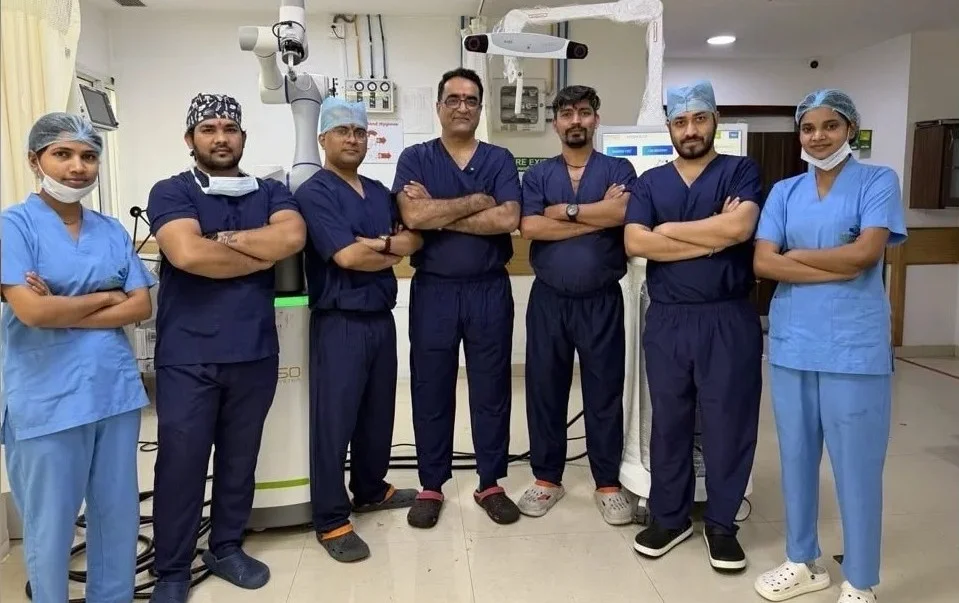
Noida: A 72-year-old woman who had been struggling with severe knee pain and mobility problems for nearly seven years has experienced relief following a robotic-assisted bilateral knee replacement at Felix Hospital in Noida. The patient was diagnosed with osteoarthritis in both knees, a condition that had gradually affected her ability to walk, climb stairs and perform routine household activities.
According to the hospital, the procedure marks its first robotic-assisted bilateral knee replacement. The surgery was performed by Dr Ankit Uppal, Director of Orthopaedics and Chief Joint Replacement Surgeon at Felix Hospital. After evaluating the patient’s medical condition and the extent of joint damage, the medical team recommended replacing both knee joints.
Robotic Technology Helps Improve Surgical Precision
Robotic-assisted knee replacement uses advanced technology to help surgeons plan and perform procedures according to a patient’s individual anatomy. Before surgery, detailed assessments are conducted to understand the structure of the knee, bone condition and joint alignment. This information helps the surgeon prepare a personalised surgical plan.
During the procedure, robotic assistance helps guide bone preparation and implant positioning according to the planned alignment. The technology is designed to improve precision and assist surgeons in making adjustments based on the patient’s specific requirements.
The hospital stated that robotic assistance supports surgical decision-making but does not replace the surgeon’s expertise. The surgeon retains complete control over the procedure and makes the final decisions at every stage.
Patient Shows Improvement After Surgery
Following the operation, the patient reportedly showed signs of improvement and began gradually returning to routine activities. The hospital stated that the procedure involved minimal blood loss and was performed without using a tourniquet, a device commonly used to temporarily restrict blood flow during certain operations.
The treatment was also carried out without external stitches, according to the hospital. However, recovery following knee replacement varies from patient to patient and depends on factors such as age, overall health, muscle strength and rehabilitation.
Doctors recommended regular medical monitoring and physiotherapy to help restore movement, strengthen the surrounding muscles and improve joint function. While many patients gradually resume routine activities within several weeks, complete recovery can take longer.
Understanding Osteoarthritis and When Knee Replacement Is Needed
Osteoarthritis is a degenerative joint condition in which the protective cartilage gradually wears down, causing pain, stiffness, swelling and reduced mobility. It commonly affects older adults and can significantly interfere with everyday activities when it becomes severe.
Initial treatment may include medication, physiotherapy, lifestyle modifications and exercises to strengthen the muscles supporting the joints. However, when these measures fail to provide sufficient relief and joint damage substantially affects daily life, doctors may recommend knee replacement surgery.
Bilateral knee replacement involves replacing both knee joints, either during the same surgical procedure or in separate operations. The decision depends on the patient’s age, overall health, medical history and surgical risk factors.
Family Expresses Gratitude to Medical Team
The patient’s family members expressed satisfaction with the improvement in her condition and thanked the doctors and hospital staff for their support. They said that her mobility difficulties over the past several years had affected her daily life.
Dr Ankit Uppal stated that robotic technology helps surgeons plan joint replacement procedures according to individual anatomical requirements. He emphasised that the primary objectives are to improve implant positioning, reduce pain and support better mobility.
The hospital highlighted that robotic-assisted knee replacement may offer advantages in surgical planning and precision, although outcomes and recovery periods differ depending on individual patient conditions.

