

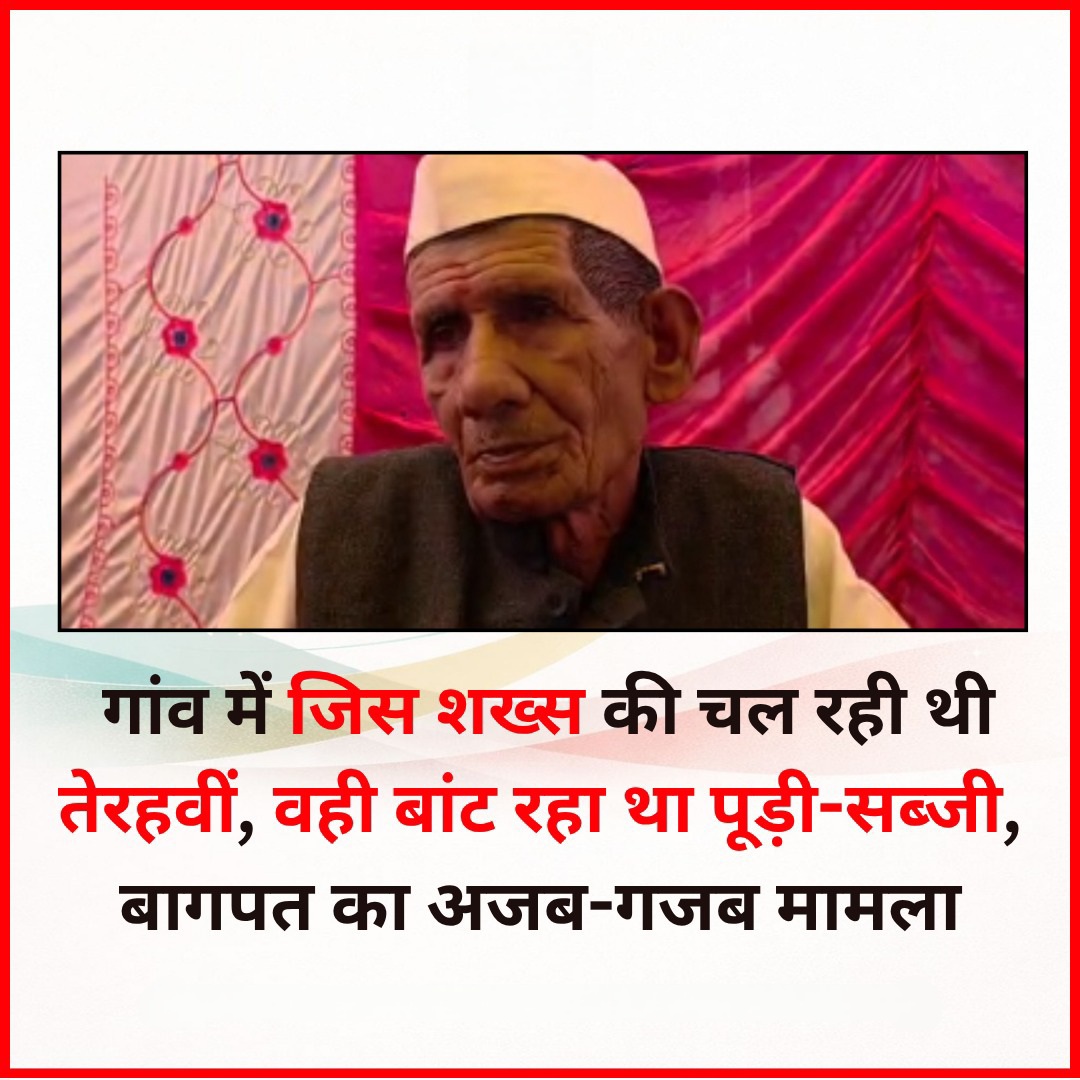
An 80-year-old man in Uttar Pradesh’s Baghpat district organized his own post-death ritual, known as Terahvin, while still alive. Baljor Singh, a resident of Jauhri village in the Baraut tehsil area, decided to complete the traditional ceremonies in his own presence so that his daughter would not have to bear the burden of funeral rituals after his passing. The event featured a formal havan and a community feast attended by around 900 people. Throughout the gathering, Singh personally welcomed the guests who were served puri, vegetables, raita, and laddoos. Following the feast, he also tied a turban on his grandson Mukul’s head, formally entrusting him with family responsibilities.
Explaining his unusual decision, Singh stated that he has no sons and only one daughter in the family. Under conventional customs, the responsibility of performing funeral rites and the thirteenth-day ceremony after his death would have fallen on his daughter. He did not want her to face the added pressure and obligations of organizing such events after he is gone. With this thought in mind, he chose to complete his Terahvin during his lifetime. He believed that being alive allowed him to oversee the arrangements himself while giving him an opportunity to meet his relatives, acquaintances, and fellow villagers one more time.
Eight Cooks Prepare Feast for 900 Guests
Preparations for the gathering resembled those of a major family function. Cooking stoves were set up at the house, and eight cooks were hired to prepare meals for the large crowd. The menu included puri, vegetables, raita, and laddoos. The day’s proceedings began in the morning with a traditional havan ceremony. Afterward, nearly 900 people from Jauhri and neighboring areas partook in the feast.
Relatives and villagers turned out in large numbers to attend the occasion. What made the event particularly notable was the active presence of the very person whose post-death feast was being held. Singh greeted attendees at the venue and remained involved in supervising the dining arrangements throughout the program.
Grandson Entrusted with Family Duties
Following the Terahvin feast, another significant traditional ritual was performed. Baljor Singh tied a turban on the head of his grandson, Mukul. Through this customary act, he conveyed the message of passing on family responsibilities to the younger generation in the presence of gathered relatives and villagers.
In traditional social practice, the turban-tying ceremony is conducted after a family head’s demise to formally recognize the successor. By completing this ritual while alive, Singh ensured that family arrangements were settled in front of him. His decision has sparked widespread conversation across the village.
Unconventional Move Draws Regional Attention
The ceremony in Jauhri village surprised many residents. Usually, Terahvin is observed as a solemn occasion of mourning and tribute after a person’s death. By organizing it during his lifetime, Singh set an unconventional example aimed at sparing his daughter future ceremonial responsibilities and settling family matters in advance.
Taken at the age of 80, his decision has become a major topic of discussion in Baghpat and surrounding areas. For villagers, the sight of the host actively managing his own thirteenth-day feast made the event memorable and distinct from established social norms.

