

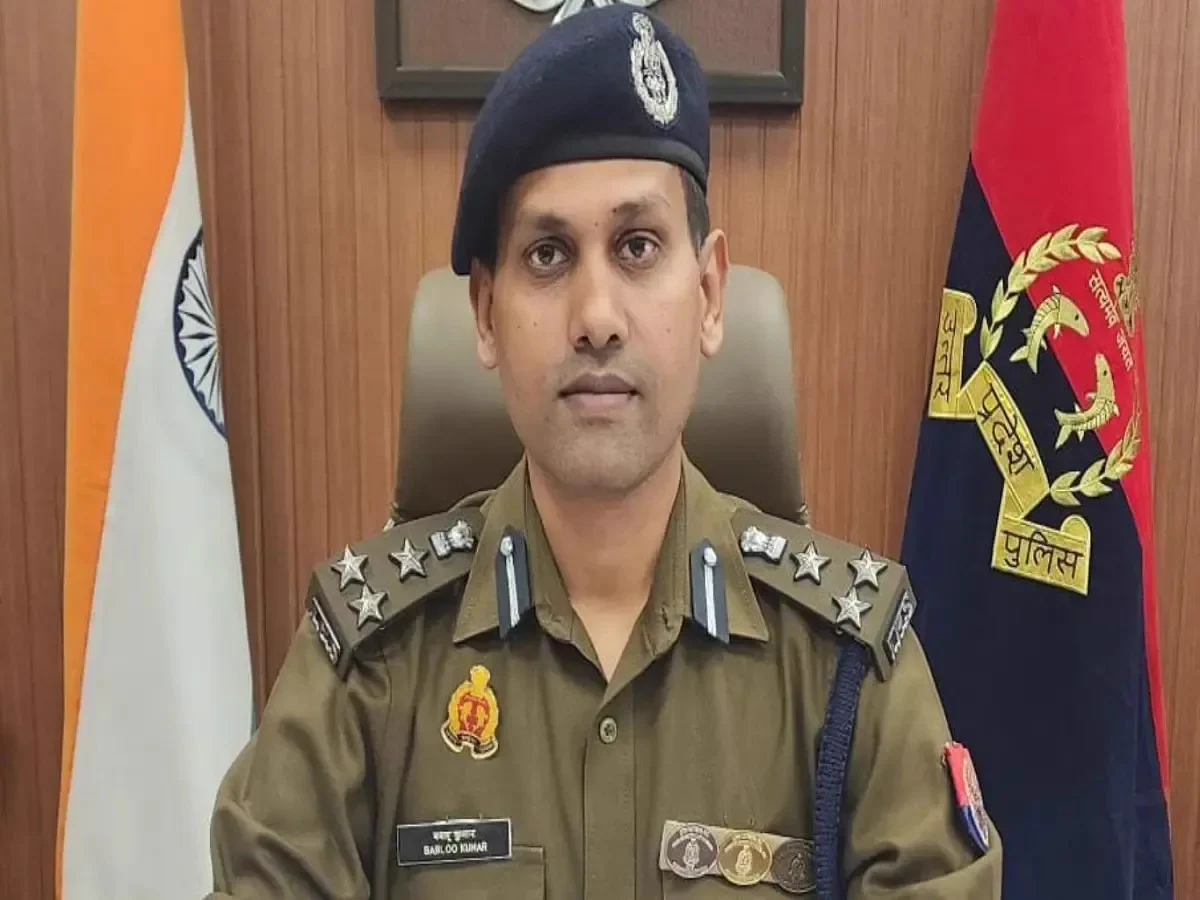
Lucknow: The field policing initiatives implemented by Uttar Pradesh-cadre Indian Police Service (IPS) officer Babloo Kumar serve as direct, practical examples of administrative ethics for candidates preparing for General Studies Paper 4 of the Union Public Service Commission (UPSC) Civil Services Main Examination. Moving beyond traditional methods of crime control, his administrative interventions demonstrate core public service values including integrity, compassion, empathy, accountability, women’s safety, child protection, and technological innovation. The Indian Institute of Technology (IIT) Kanpur recently honoured the 2009-batch officer with the Satyendra K. Dubey Memorial Award 2026 in recognition of his sustained commitment to ethical policing, professional honesty, and the integration of technology in law enforcement. Originally hailing from Madhubani district in Bihar, Kumar earned his BTech and MTech degrees in Electrical Engineering from IIT Kanpur before entering the police service. Over the course of his career, he has held key leadership responsibilities across ten districts in Uttar Pradesh, namely Mahoba, Jaunpur, Jalaun, Shahjahanpur, Mathura, Muzaffarnagar, Saharanpur, Agra, Azamgarh, and Moradabad. His district-level governance illustrates how public administrators can design effective, localized solutions using existing institutional resources.
Proactive Vigilance and Institutional Accountability
For UPSC aspirants studying administrative innovation and preventive leadership, Kumar’s tenure as Superintendent of Police in Azamgarh provides a notable case study through the Eagle Criminal Monitor initiative. Designed to track the movements of top-10 criminals and other active offenders, the system assigned two specially trained constables to each of the district’s 25 police stations, establishing a dedicated workforce of 50 personnel. Equipped with motorcycles and helmets, these constables were relieved of routine policing tasks to focus exclusively on monitoring active criminals, verifying their jail status, and tracking their conduct and associations following release. Their mandate also included compiling detailed dossiers on identified offenders and transmitting daily intelligence updates to senior officers via a dedicated WhatsApp group and the District Crime Records Bureau, under the supervision of the Circle Officer, Sadar. In the context of UPSC Ethics, this model highlights proactive decision-making, accountability, and intelligence-led policing aimed at preventing offences before they occur. Alongside external vigilance, Kumar reinforced internal discipline and transparency through measures such as Operation Prahar, which focused on strict action against negligence and corruption among police personnel, while utilizing data analysis and CCTV networks to strengthen administrative efficiency.
Compassion, Empathy, and Citizen-Centric Governance
Administrative ethics requires balancing strict enforcement with social sensitivity, a principle reflected in Kumar’s community-oriented initiatives in Saharanpur and Agra. During his posting in Saharanpur, he introduced Abhibhavak Yojana to address the educational and social challenges faced by poor and vulnerable children lacking adequate family support and guidance. Under this programme, police officers and personnel were connected with the upbringing and schooling of children in need, offering them educational assistance, positive mentorship, and social protection. The initiative operated on the premise that timely institutional support can steer marginalized children away from criminal influences and harmful environments. For GS Paper 4 candidates, Abhibhavak Yojana exemplifies compassion, empathy, and a broader commitment to social responsibility. Later, while serving as Senior Superintendent of Police in Agra, Kumar established Pink Booths at prominent public locations to enhance women’s safety and ensure the prompt redressal of their complaints. By deploying women police personnel at these booths, the administration made law enforcement more approachable, enabling female citizens to report their grievances without hesitation. In ethics examinations, Pink Booths serve as a clear illustration of gender sensitivity, human dignity, equality, and citizen-centric administration.
Connecting Theory with Practice in UPSC GS Paper 4
The relevance of Kumar’s administrative record for civil services preparation is further underscored by the legacy of the Satyendra K. Dubey Memorial Award. Instituted in memory of IIT Kanpur alumnus Satyendra Kumar Dubey, who was murdered in 2003 after exposing corruption in the National Highways Development Project, the award honours moral courage, integrity, and professional honesty in public life. For candidates preparing for General Studies Paper 4, Babloo Kumar’s initiatives bridge the gap between theoretical ethical concepts and real-world bureaucratic application. In examination answers and case studies, Eagle Criminal Monitor can be cited to demonstrate innovation and preventive accountability, while Operation Prahar illustrates institutional integrity and a zero-tolerance stance toward corruption. Similarly, Abhibhavak Yojana provides a concrete example of empathy and welfare-oriented governance, and Pink Booths highlight gender-sensitive public service. Together, these initiatives demonstrate that ethical administration extends beyond the mechanical enforcement of laws, requiring public servants to place fairness, sensitivity, and the broader public interest at the centre of governance.

