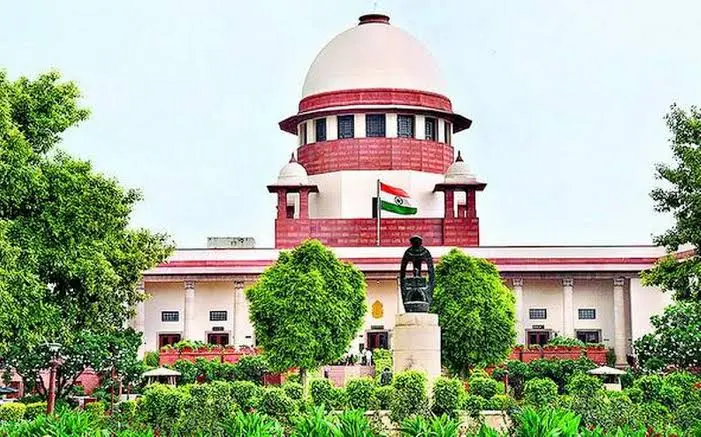
New Delhi: The Supreme Court has issued a stern directive to four major financial institutions in connection with the alleged builder-bank nexus in home loan subvention cases. The court has directed HDFC Bank, ICICI Bank, Sammaan Capital and PNB Housing Finance to grant unconditional sanction for prosecuting their concerned officials within one week.
The bench made it clear that failure to comply with the deadline could result in the chairpersons and managing directors of the institutions being summoned to appear personally before the court. The directive follows concerns raised by the Central Bureau of Investigation (CBI) over delays and difficulties in obtaining prosecution sanctions against officials allegedly connected with the case.
A bench comprising Chief Justice of India Surya Kant, Justice Joymalya Bagchi and Justice V. Mohan heard the matter and expressed serious concern over the obstacles faced by the investigating agency. The issue of conditional approval reportedly granted by HDFC Bank was also brought to the court’s attention.
What Is the Home Loan Subvention Scheme Controversy?
The case concerns housing projects where builders and financial institutions entered into home loan subvention arrangements. Under these schemes, homebuyers obtained loans from banks or housing finance companies, while the builders agreed to pay the borrowers’ EMIs for an initial period, generally until possession of the property was handed over or another agreed milestone was reached.
The arrangement was marketed as a convenient option for buyers because it reduced their immediate financial burden during the construction period. However, problems emerged in several projects when builders allegedly failed to complete construction on schedule or defaulted on their EMI payment commitments.
As a result, homebuyers who had not received possession of their flats found themselves facing recovery proceedings from financial institutions. Many were caught in a difficult situation: they had neither received the promised homes nor been relieved of their loan repayment obligations.
Investigators suspect that, in certain cases, alleged collusion between builders and officials of financial institutions enabled arrangements that ultimately exposed homebuyers to financial losses. The CBI investigation is examining the alleged role of the concerned individuals and the manner in which these loan arrangements were approved and operated.
Supreme Court Flags Delays in CBI Prosecution Sanctions
The Supreme Court had ordered a CBI investigation into the alleged builder-bank nexus in April 2025. During the investigation, the agency encountered difficulties in obtaining the necessary prosecution sanctions against certain officials.
The CBI raised the issue before the court, stating that delays in securing approval were affecting the progress of the legal process. The matter also involved Section 19 of the Prevention of Corruption Act, which requires prior sanction from the competent authority before a court can take cognisance of certain offences allegedly committed by public servants in the discharge of their official duties.
Against this background, the Supreme Court directed the four financial institutions to grant unconditional approval for prosecution within seven days. The court’s warning regarding the personal appearance of the institutions’ top executives underlines the seriousness with which it is treating the delay.
The direction is intended to remove procedural obstacles in the investigation and allow the agency to proceed with cases where sufficient material has been gathered. However, the grant of prosecution sanction does not establish the guilt of the officials concerned; the allegations will have to be proved through the judicial process.
FCRF Launches Certified Chief Risk Officer (CRO) Program for India’s Risk Leaders
CBI Reports 55 Cases, 22 Chargesheets Filed
During the hearing, the CBI submitted its sixth supplementary status report before the Supreme Court, providing an update on the progress of the investigation.
According to the agency, a total of 55 cases have been registered in connection with the matter. Investigations have been completed in 25 cases so far. Of these, chargesheets have been filed in 22 cases, while closure reports have been submitted in the remaining three.
Investigation into the other cases is continuing. The Supreme Court directed the agency to complete the pending investigations without unnecessary delay.
The bench also urged the courts concerned to avoid procedural delays in taking cognisance of the chargesheets and framing charges. Chief Justice Surya Kant indicated that the Supreme Court could consider prescribing timelines for the disposal of the trials as well.
The court made it clear that attempts to prolong proceedings through unnecessary delays would not be viewed favourably. Its observations suggest that the focus is not limited to completing the investigation but also extends to ensuring that the subsequent judicial proceedings move forward efficiently.
Next Hearing to Review Compliance
The Supreme Court is expected to take up the matter again within seven to ten days. During the next hearing, it will review whether HDFC Bank, ICICI Bank, Sammaan Capital and PNB Housing Finance have complied with the direction to grant unconditional prosecution sanctions within the stipulated period.
The bench also indicated that failure to follow its order could lead to further directions directly against the concerned financial institutions.
The case has wider implications for homebuyers caught in disputes arising from subvention-based housing loans. It also raises questions about the responsibility of financial institutions in assessing builder commitments, monitoring loan arrangements and protecting borrowers from the consequences of alleged defaults.
The progress of the CBI investigation, the prosecution sanctions and the subsequent court proceedings will be important in determining the accountability of the individuals involved. For homebuyers who paid for properties but were left facing loan recovery demands without receiving possession, the case remains a significant legal development.