
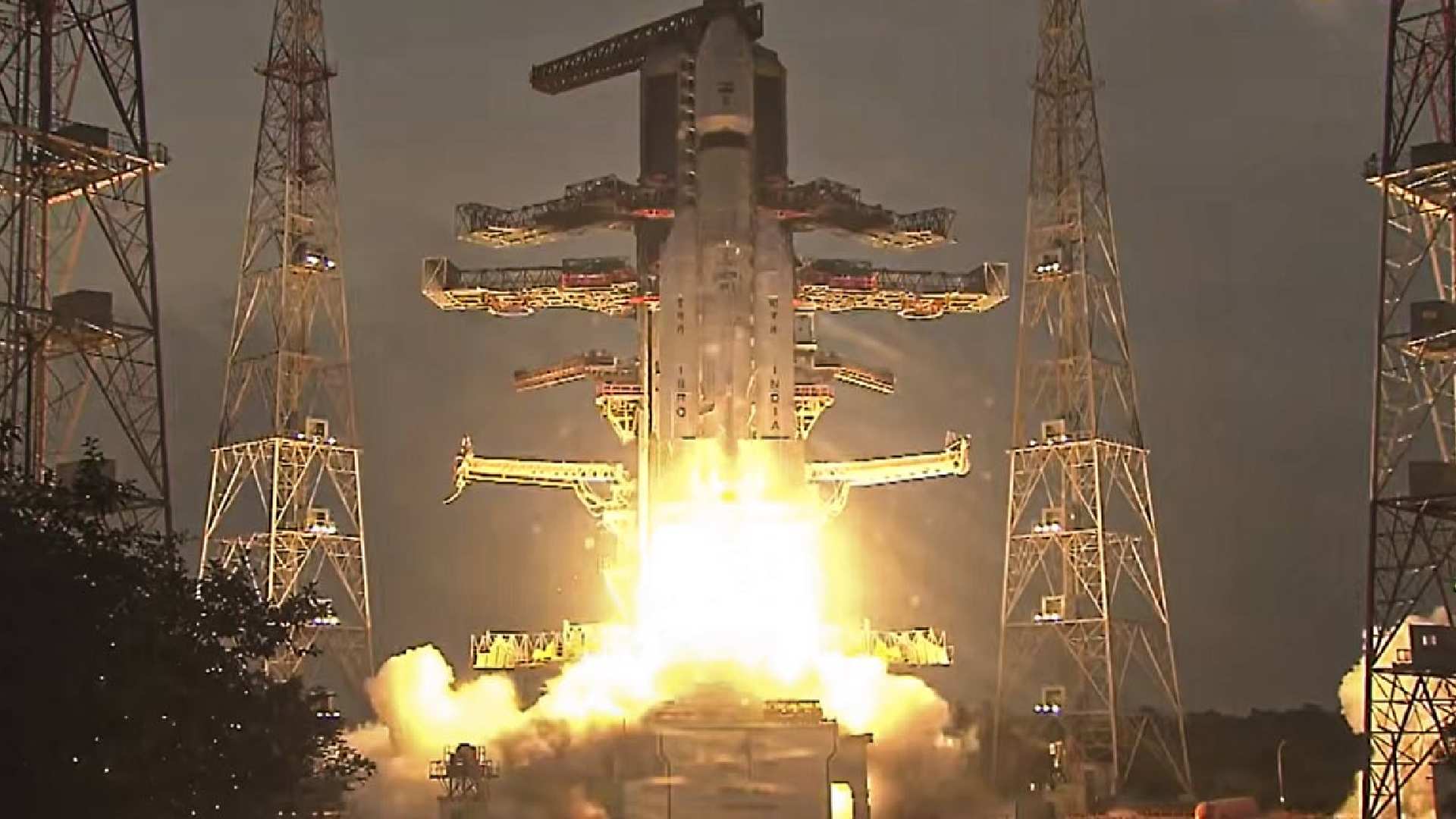
The evening sky over Sriharikota roared with pride as the Indian Space Research Organisation (ISRO) successfully launched its heaviest communication satellite, CMS-03, aboard the mighty LVM3-M5 “Bahubali” rocket — a symbol of India’s growing power and self-reliance in space technology.
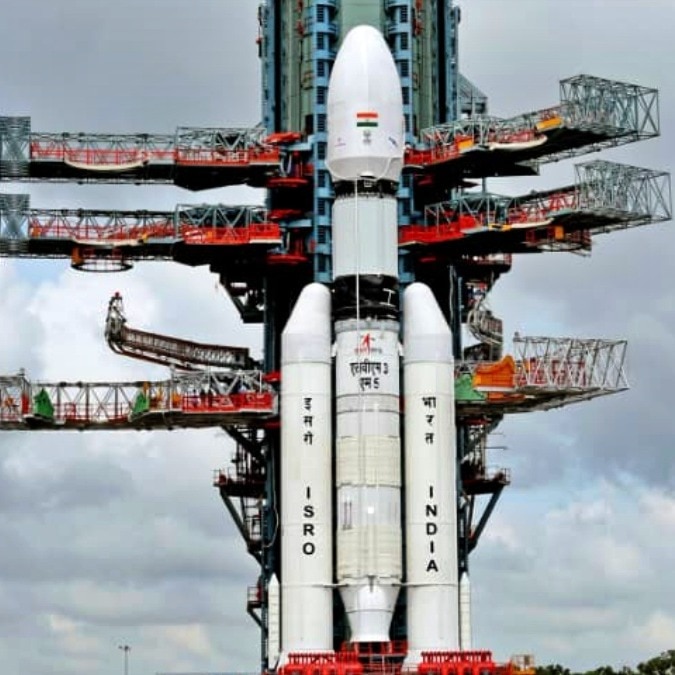
The 43.5-metre-tall Bahubali, named for its strength and reliability, lifted off at 5:26 PM from the Satish Dhawan Space Centre, carrying the 4,410-kg CMS-03 satellite into a Geosynchronous Transfer Orbit (GTO) — making it the heaviest payload ever launched from Indian soil.
A Milestone Beyond the Skies
The CMS-03 satellite is designed to enhance India’s communication network across land and sea, reinforcing digital connectivity and national security. This mission marks the fifth operational flight of the LVM3, featuring advanced cryogenic technology and indigenous engineering brilliance.
“This mission reaffirms India’s complete mastery over heavy-lift launch systems,” ISRO Chairman V. Narayanan said, hailing the team’s flawless execution.
From Tumba to the Stars: India’s Space Evolution
From its first humble rocket launch in 1963 from Thumba to today’s high-tech missions, India has transformed into a global space powerhouse.
Recent breakthroughs include:
Chandrayaan-3 (2023): First successful landing near the Moon’s South Pole.
Aditya-L1 (2024): India’s first solar observatory studying solar flares and magnetic storms.
XPoSat (2024): Making India the second nation to launch an X-ray polarimetry mission.
Gaganyaan (2025–27): India’s first human spaceflight programme approaching liftoff.
NISAR (2025): A landmark Indo-US satellite mapping mission with NASA.
Vision 2047: India’s Space Roadmap
ISRO’s long-term plan, Space Vision 2047, includes:
●A crewed lunar landing by 2040.
●Launch of the Bharatiya Antariksh Station (BAS) by 2035.
●A Venus orbiter mission by 2028.
Development of the Next Generation Launch Vehicle (NGLV) — a reusable rocket designed to cut launch costs dramatically.
Private Sector Joins the Cosmic Revolution
Under India’s new Space Policy 2023, over 300 startups are now part of the growing space ecosystem. ISRO’s partnerships with private firms have opened doors for innovation, satellite manufacturing, and advanced propulsion systems — pushing India toward becoming a space economy hub.
A New Chapter of National Pride
From Aryabhata (1975) to Bahubali (2025), India’s space journey stands as a testament to vision, perseverance, and people. Each launch is not just a technological feat — it’s a reminder that India’s dreams are no longer bound by the Earth’s gravity.
With CMS-03’s successful liftoff, ISRO once again proves that India is not just reaching for the stars — it’s bringing them within its orbit