
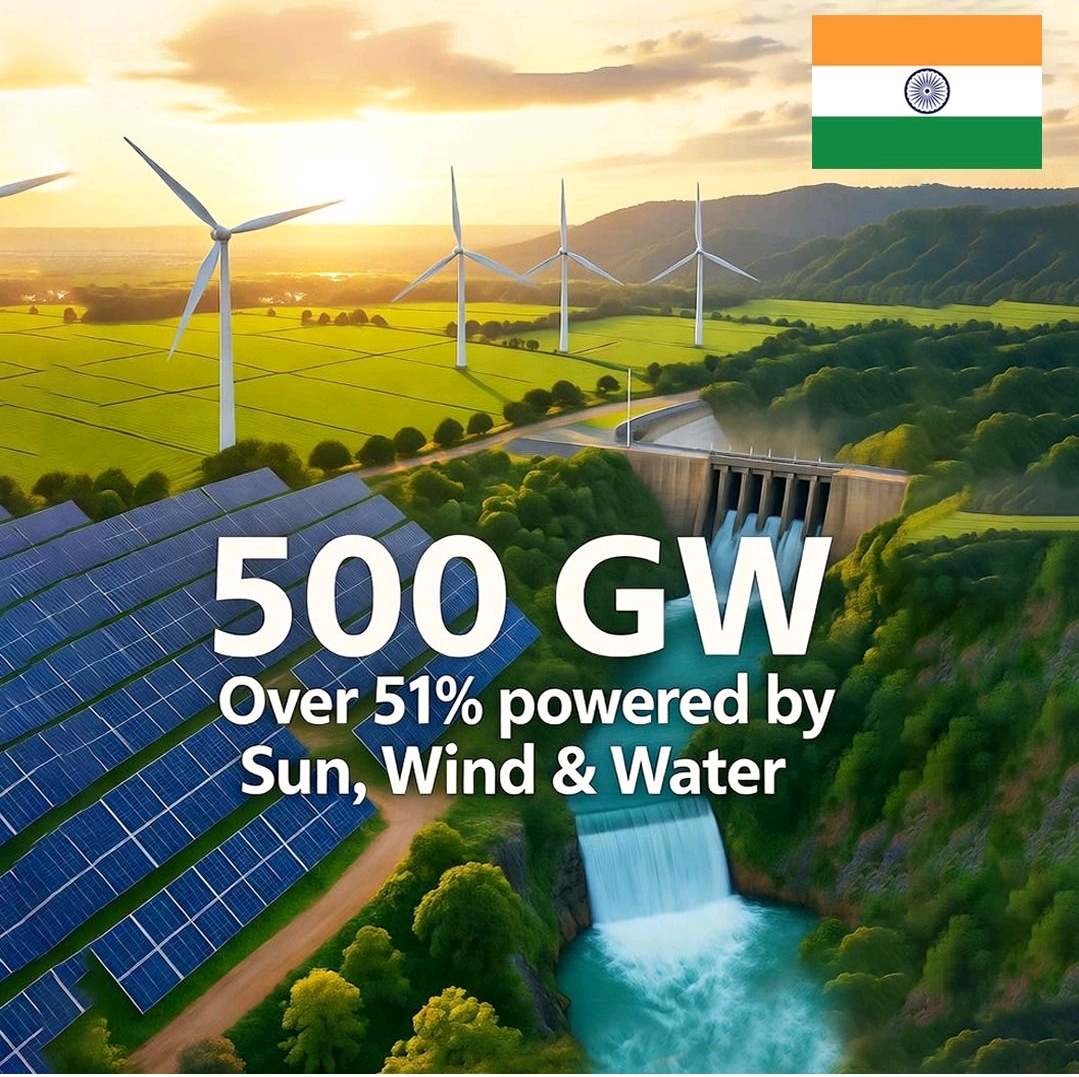
India is fast positioning itself as one of the world’s most powerful digital infrastructure hubs, backed by a scale of energy security that few nations can match. Union Commerce and Industry Minister Piyush Goyal has said that India’s 500-gigawatt electricity capacity and fully integrated national power grid give the country a decisive edge in attracting global data centre and artificial intelligence investments.
Addressing a briefing on India’s energy and industrial outlook, Goyal underlined a key differentiator.
“Europe does not have a national grid. The United States does not have one either. India does,” he said, calling it a “strategic advantage” for the digital economy. “This makes India one of the most reliable, scalable and cost-efficient destinations for data centres anywhere in the world.”
Goyal, who previously headed the Power and New & Renewable Energy ministries, said India’s grid is designed to handle simultaneous growth across households, agriculture, industry, and digital infrastructure—a capability that global investors are increasingly prioritising.
Big Tech’s Multi-Billion Dollar Bet on India
The Minister’s remarks come amid a wave of massive investments by global technology giants, reinforcing India’s rise as a regional and global data hub.
Google has announced a $15-billion, gigawatt-scale data centre project in Andhra Pradesh in partnership with the Adani Group, aimed at powering next-generation AI and cloud services.
Amazon Web Services (AWS) has committed $7 billion over 14 years to expand its data centre footprint in Telangana.
Microsoft has unveiled a $17.5-billion investment plan to strengthen India’s AI ecosystem and cloud infrastructure.
“These investments are not accidental,” Goyal said. “They reflect global confidence in India’s energy reliability, regulatory stability, and digital ambition.”
Rising Digital Power Demand
India’s rapid digitalisation is pushing power demand sharply upward. Minister of State for Power Shripad Naik recently informed Parliament that data centres currently consume about 1 GW of electricity, a figure projected to surge to 13.56 GW by 2031–32.
Experts note that India’s diversified energy mix—spanning coal, renewables, hydro and nuclear—offers the resilience required for 24×7 digital operations.
Goyal emphasised that India’s competitive power tariffs provide long-term predictability for investors.
“Our goal is not just electricity supply, but building the foundation of the global digital economy,” he said, adding that India is emerging as a preferred destination for green and hybrid data centres due to rapid renewable energy expansion.
Balancing Growth, Coal and Clean Energy
Responding to concerns over coal dependence, Goyal clarified that thermal power will remain part of India’s balanced energy strategy.
“We cannot compromise on reliable electricity,” he said, noting that new coal capacity will be added responsibly to reduce import dependence.
At the same time, the government is pushing cleaner solutions such as coal gasification, hybrid energy systems, and renewables, with thermal power demand expected to touch 307 GW by 2035.
“As a developing nation, we must ensure affordability today while transitioning sustainably for tomorrow,” Goyal said.
Power Sector Reforms Strengthen Confidence
Highlighting financial reforms, Goyal pointed out that power distribution companies’ debt has fallen sharply—from Rs 1.4 lakh crore four years ago to about Rs 6,500 crore today—due to structural reforms and better fiscal discipline.
“Globally, India’s power sector is now seen as a case study in scale, resilience, and reform,” he said. “As we move towards Viksit Bharat @2047, energy will be the backbone of our economic and digital growth.”
India at the Centre of the Digital Economy
With a unified grid, stable supply, competitive tariffs and aggressive clean energy targets, India is aligning energy security with digital ambition. As the global data centre and AI industry expands at double-digit rates, India’s infrastructure advantage could reshape the global digital map—placing the country firmly at its centre.