
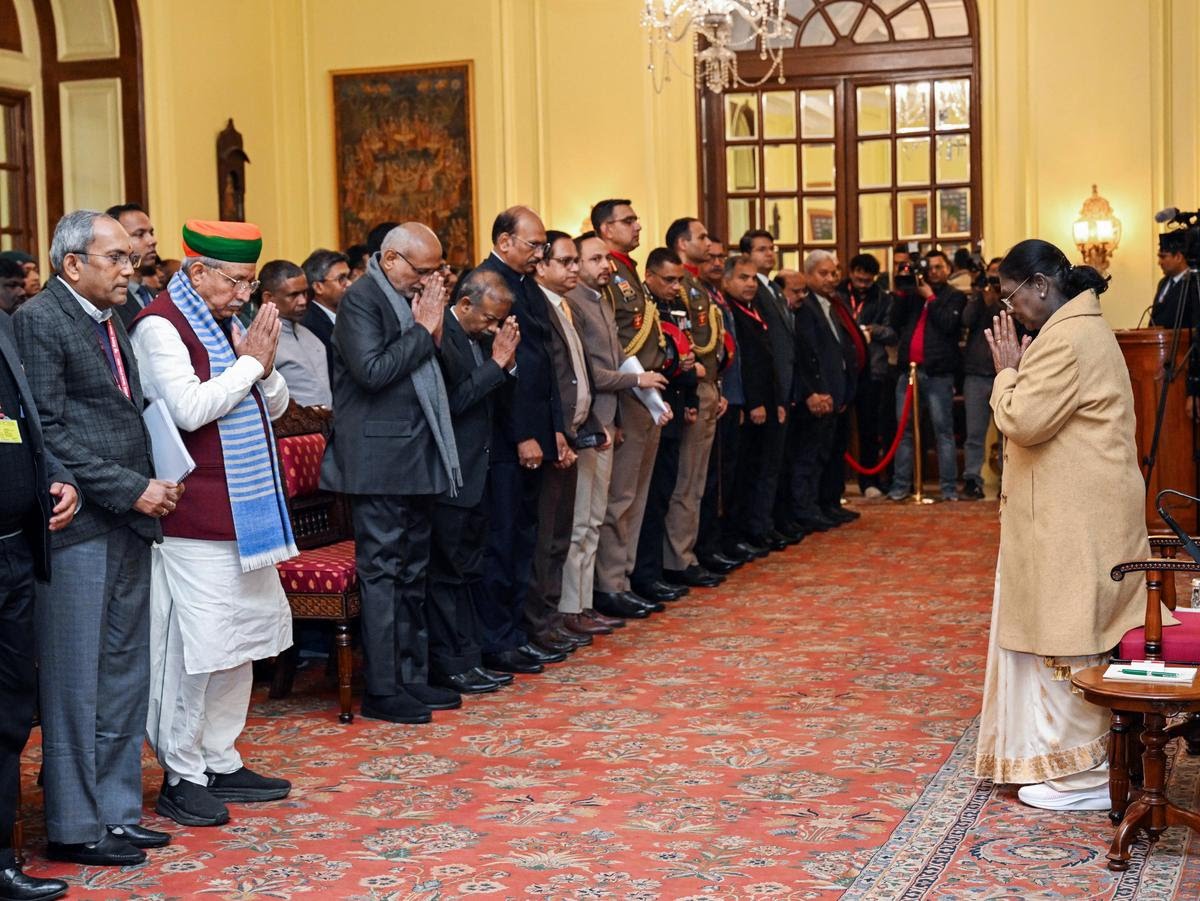
In a landmark step toward linguistic inclusion, cultural recognition, and democratic empowerment, President Droupadi Murmu on Thursday released the Constitution of India in the Santhali language at a special ceremony held at Rashtrapati Bhavan. The historic initiative marks a significant milestone in India’s journey toward inclusive governance, ensuring that the country’s founding document truly belongs to every citizen, regardless of language or background.
Calling the occasion a moment of “pride and joy for all Santhali-speaking people,” President Murmu said the initiative would empower millions by allowing them to read, understand, and connect with the Constitution in their mother tongue. She emphasised that the Constitution is not merely a legal document but a living guide that safeguards the rights, dignity, and aspirations of all Indians.
“This is not just the translation of a constitutional document, but a celebration of India’s linguistic diversity and democratic spirit,” the President said while addressing the gathering.
Strengthening Linguistic Equality
Santhali is among India’s most ancient living languages and is widely spoken across Jharkhand, Odisha, West Bengal, Bihar, and parts of Assam. The language received constitutional recognition when it was included in the Eighth Schedule of the Constitution through the 92nd Constitutional Amendment Act in 2003.
The release of the Constitution in Santhali is being seen as a major step toward linguistic justice, ensuring equal access to constitutional knowledge for tribal and indigenous communities who have historically remained at the margins of governance due to language barriers.
By making the Constitution available in Santhali, the government has reinforced its commitment to inclusive democracy, where every citizen can engage meaningfully with the rights, duties, and values enshrined in the nation’s supreme law.
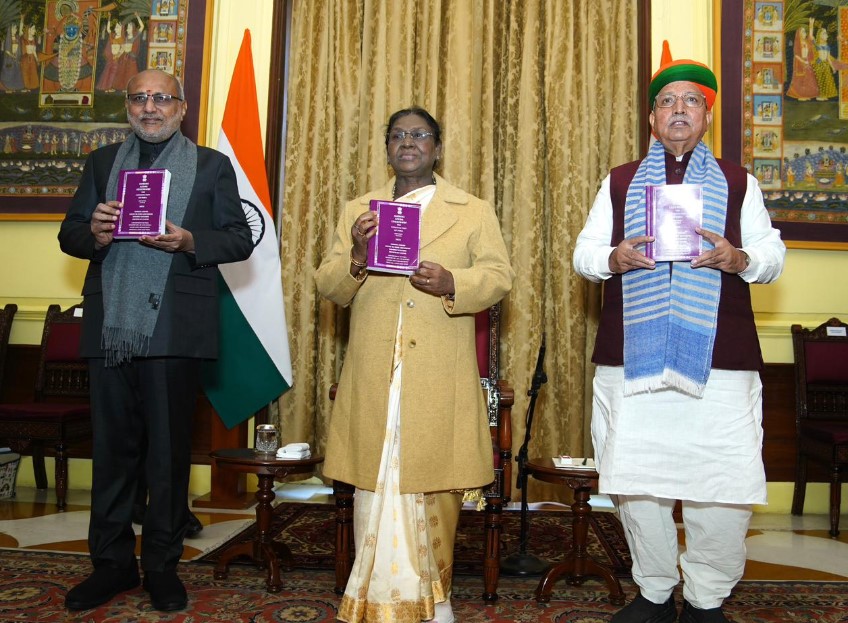
A Step Towards Cultural and Democratic Empowerment
President Murmu, herself hailing from a tribal background, highlighted the deep connection between language, identity, and dignity. She noted that access to the Constitution in one’s own language strengthens democratic participation and fosters a stronger sense of belonging among tribal communities.
“Language carries culture, history, and collective memory. When people understand the Constitution in their own language, democracy becomes more participatory and meaningful,” she said.
The event witnessed the presence of senior officials, scholars, linguists, and representatives of the Santhali community, making it both a historic and symbolic moment. Cultural pride, emotional resonance, and national unity were clearly visible throughout the ceremony.
Celebrating India’s Diversity
The release of the Santhali version of the Constitution is part of India’s broader vision to make governance more accessible and inclusive. It reaffirms the idea that the Constitution does not belong to a select few but to every Indian, in every language.
As India continues to embrace its rich linguistic and cultural diversity, this initiative stands as a powerful reminder that unity is strengthened—not weakened—by inclusion. The Santhali Constitution is not just a book; it is a bridge between democracy and the people it serves.