

In a bold leap toward next-generation warfare, the Indian Army has launched Operation Sindoor — marking the nation’s first major deployment of Artificial Intelligence (AI) on the battlefield. The move signals a decisive shift from conventional combat strategies to data-driven precision warfare, powered entirely by indigenous technology.
According to Lt. Gen. Rajeev Kumar Sahni, DG EME, over 23 AI-based applications were deployed during the operation to enhance surveillance, decision-making, and precision targeting. The success of the initiative has laid the foundation for India’s first Military Large Language Model (LLM) — set to be developed within six months — ushering in an era where secure, self-reliant AI systems support national defense.
AI: The New Core of India’s Defense Strategy“
These AI systems are not directed against any specific country, but are meant to strengthen India’s preparedness across all terrains and borders,” Lt. Gen. Sahni stated.
Built entirely on Army-owned datasets, these tools combine intelligence, logistics, and communications under a unified platform. The proposed Military LLM will further enhance secure, autonomous decision-making—ensuring that commanders can act faster, smarter, and more accurately in critical missions.
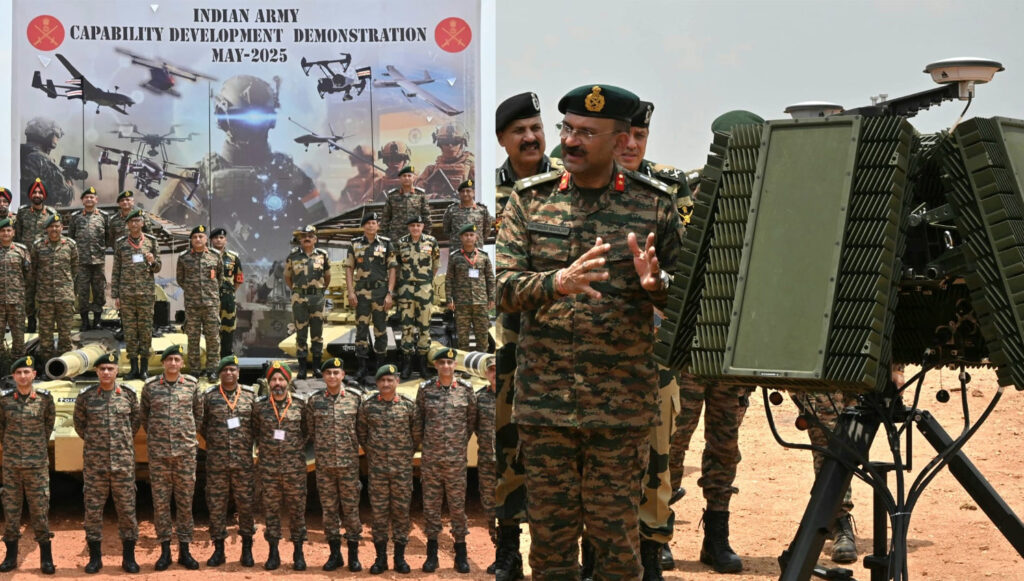
Battlefield Precision Meets Predictive Power
During Operation Sindoor, AI tools collected and processed real-time data from multiple sensors and intelligence networks. Through collaboration with the Directorate General of Information Systems (DGIS) and the India Meteorological Department (IMD), the Army leveraged 72-hour terrain-specific weather forecasts to guide field units and artillery operations with unprecedented precision.
The SANJAY Battlefield Surveillance System (BSS), deployed along India’s western front, enabled immediate tactical responses without dependence on remote or cloud servers — an essential edge in rapidly evolving combat zones.
AI Empowering Soldiers, Not Replacing Them
Among the most advanced systems tested was an Electronic Intelligence Application trained on 26 years of operational data, capable of identifying enemy sensors and frequencies with nearly 90% accuracy.
Yet, as Lt. Gen. Sahni clarified, “AI supports intelligence—it never replaces human judgment. Every decision on the battlefield remains with the commander. AI simply ensures that they have the most accurate and timely information possible.”
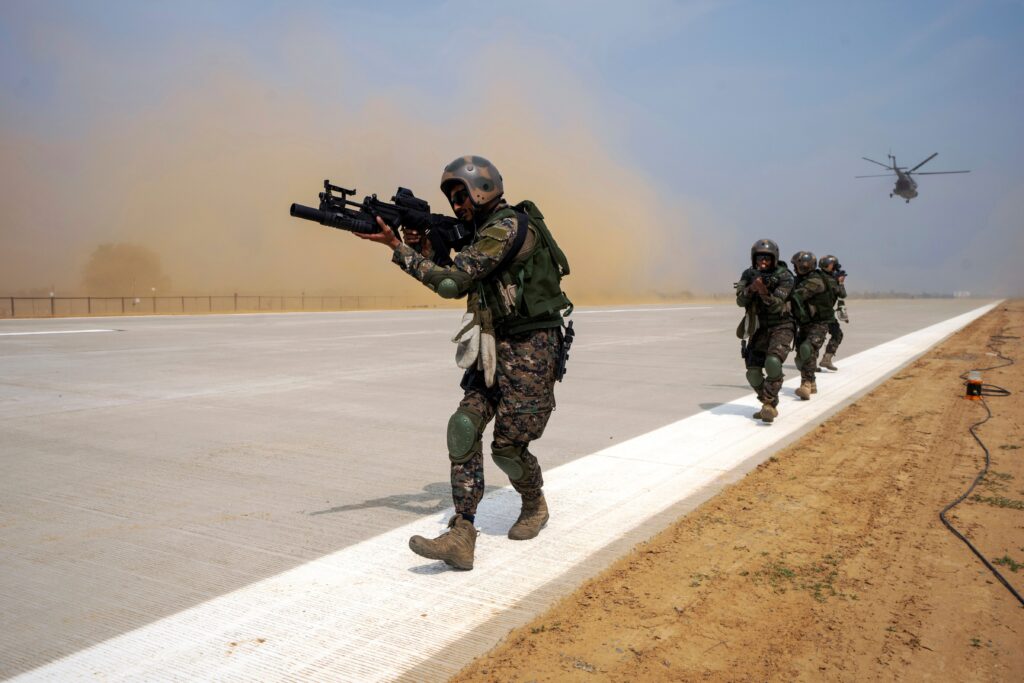
Indigenous Innovation: ‘AI as a Service’ and Project Jigyasa
To ensure that every unit can access cutting-edge digital support, the Army is introducing an “AI as a Service (AIaaS)” model, integrated within its secure military networks. This approach gives ground teams real-time access to AI analytics while maintaining defense-grade encryption and operational security.
At the heart of this framework is ‘Jigyasa’, a generative AI platform fully developed in-house. The system eliminates reliance on foreign software, ensuring data sovereignty and indigenous innovation—two cornerstones of India’s AI strategy.
A Defensive Revolution, Not an Arms Race
Amid comparisons with China and Pakistan, Lt. Gen. Sahni emphasized that India’s AI advancements are purely defensive, focused on strategic readiness and technological self-reliance.
The initiative aligns with the government’s IndiaAI Mission, launched in March 2024 with a budget of Rs 10,371.92 crore, to position India as a global hub for ethical and indigenous AI.
Looking Ahead: The Future of AI Warfare
Operation Sindoor is more than a military success—it’s a statement of India’s evolving defense philosophy. By combining artificial intelligence with on-ground strategy, the Army is redefining how nations prepare for modern conflicts.
As India builds its own Military LLM, the nation is poised to join the league of global defense innovators—where data, precision, and technology form the backbone of a new era of strategic superiority.