
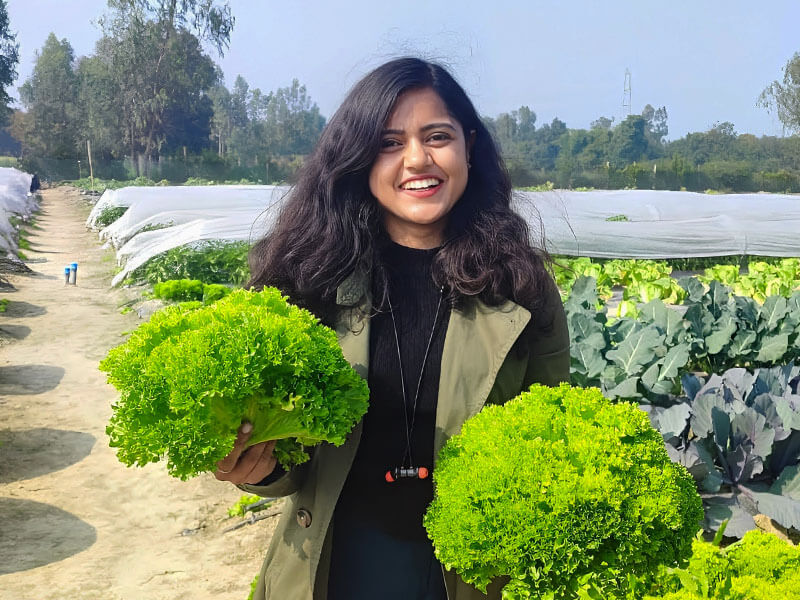
While most college graduates chase corporate jobs, Anushka Jaiswal from Lucknow chose to follow her heart — and the soil. Today, she’s a millionaire farmer earning over Rs 1 crore annually, proving that success doesn’t always wear a suit — sometimes, it wears muddy boots.
From Delhi Classrooms to Lucknow Farmlands
Anushka completed her bachelor’s degree from St. Stephen’s College, Delhi, one of India’s top institutions. During her placement season in 2017, she surprised everyone by rejecting multiple lucrative job offers. Her dream? To make a difference at the grassroots level.
Despite studying French, she found true satisfaction not in language but in horticulture — the art of growing life. It all began with a few tomato plants on her terrace that eventually blossomed into a full-fledged passion for farming.
The Birth of a Modern Farmer
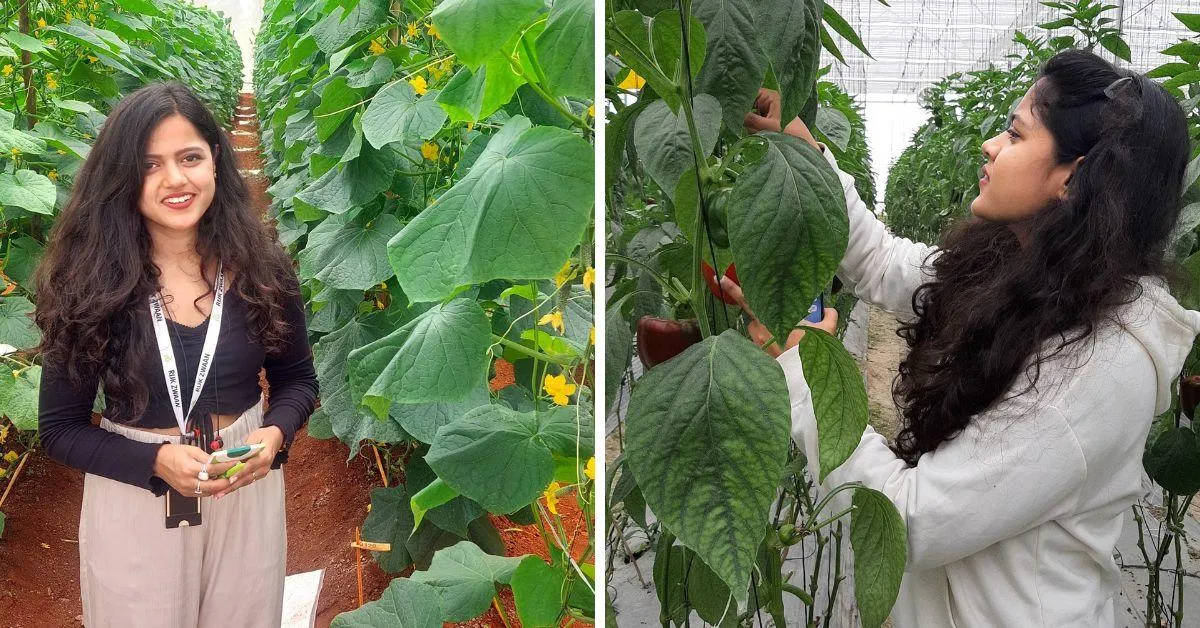
Encouraged by her brother, Anushka enrolled at the Institute of Horticulture Technology in Noida, where she learned the science of modern, sustainable agriculture. In 2020, at just 24 years old, she started a polyhouse farm on one acre of land — a bold move during the pandemic when uncertainty loomed large.
Her first experiment with English cucumbers turned into a resounding success — a 51-ton harvest, nearly three times the average yield of traditional farmers.
From One Acre to Six Acres — And Counting
With her success, Anushka expanded her farm to six acres, cultivating high-value vegetables like bell peppers and English cucumbers. Her polyhouse farming techniques ensure better productivity, minimal water usage, and year-round harvests.
By 2023–24, her venture recorded a turnover exceeding Rs 1 crore, placing her among India’s most successful young agripreneurs — even out-earning several corporate CEOs.
Inspiring India’s Youth to Return to Roots
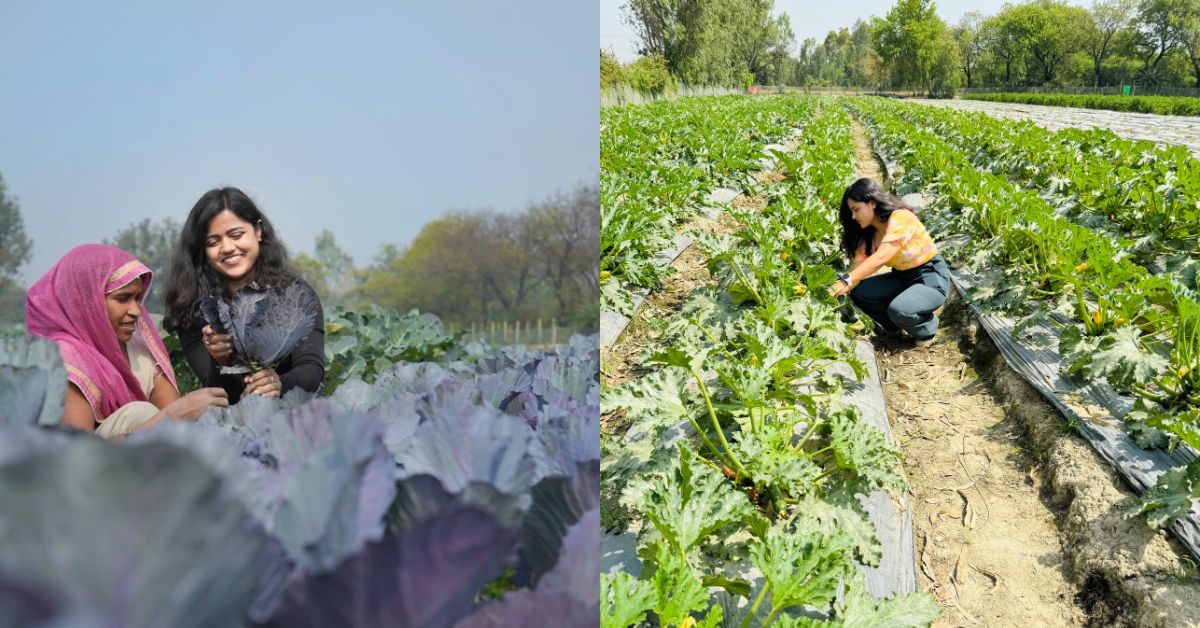
Anushka’s journey stands as an example of how education, innovation, and determination can transform India’s agricultural landscape. She represents the new face of rural entrepreneurship — young, tech-savvy, and passionate about sustainable growth.
Her story sends a powerful message: The future of India is not just in air-conditioned offices, but also in the fertile fields that feed the nation.