
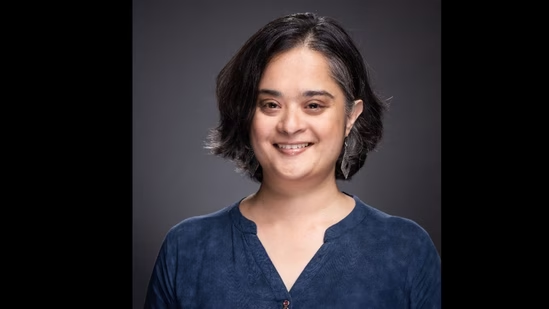
In the fast-evolving world of artificial intelligence, few stories are as compelling as that of Devi Parikh, an Indian-origin AI scientist whose career has spanned global tech labs, prestigious universities, and now, entrepreneurship. From shaping Meta’s generative AI efforts to co-founding her own startup, Parikh’s journey is inspiring thousands of young tech aspirants worldwide.
From Academia to Facebook AI Research: A Career Built Through Constant Reinvention
Before becoming one of Meta’s most influential AI leaders, Parikh moved fluidly between research and teaching roles. Her turning point came in 2016, when she joined Facebook AI Research (FAIR) as a research scientist.
For years, she split her time between Meta’s AI lab in Menlo Park and teaching computer vision at Georgia Tech, nurturing the next generation of AI engineers while expanding her own expertise across vision, multimodal AI, and generative models.
In 2021, she transitioned to Meta full-time — eventually rising to Senior Director of Generative AI, a role at the centre of Meta’s race to compete with OpenAI and Google.
A New Chapter: Leaving Meta to Build Yutori
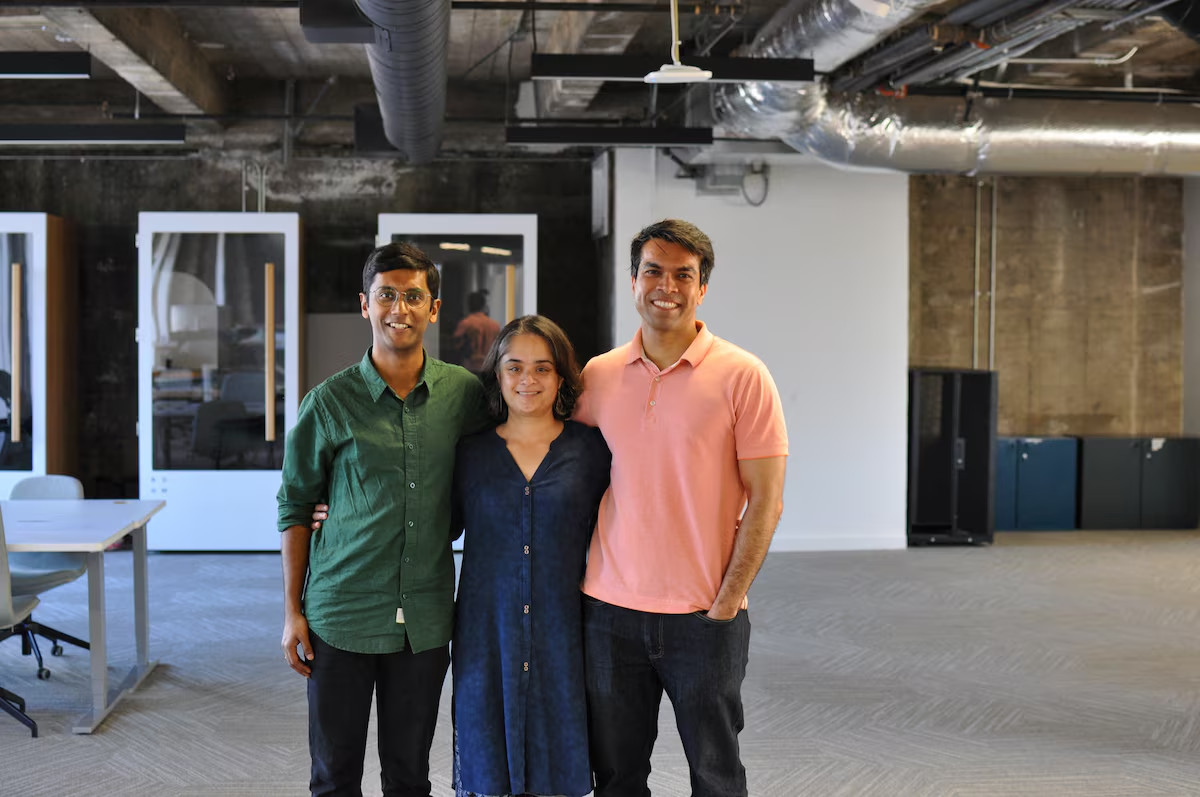
In 2024, Parikh did something many wouldn’t dare — she left a high-profile, secure leadership role to co-found an AI startup, Yutori, alongside her husband and a close friend.
Her decision was driven not by strategy, she says, but by curiosity and passion.
“Some of the most rewarding moves in my career were driven by interest, not guaranteed outcomes.”
Today, Yutori focuses on building next-generation AI tools, and Parikh is deeply involved in hiring, research direction, and product strategy.
What Parikh Learned About Breaking Into AI (Hint: A PhD Isn’t Mandatory)
One of her strongest messages to aspiring AI professionals: don’t assume you need a PhD to succeed.
While doctoral degrees matter in academic research, Parikh argues that practical skills and hands-on experience often matter more.
“If you keep putting in the time and effort, you’ll stand out — and you’ll build valuable skills along the way.”
At Yutori, she explains, hiring decisions are based on:
●Real-world experience
●Ability to train models
●Performance in technical interviews
●Projects and open-source contributions
Formal credentials matter far less than proof of problem-solving ability.
Why Flexibility Is the Most Important Skill in AI
Parikh’s own career is a masterclass in adaptability.
She watched the field shift dramatically a decade ago, when deep learning overtook traditional computer vision. Many researchers resisted the change — she embraced it.
Her work evolved from:
●Classical computer vision →
●Multimodal AI →
●Generative AI and foundation models
She warns young professionals against clinging to old identities:
“If I’d held onto my identity as only a computer vision researcher, I would’ve missed major opportunities.”
Her advice?
Stay curious. Stay flexible. Follow the work that excites you — not just what looks good on a résumé.
A Role Model for India’s Tech Generation
At 41, Devi Parikh stands as one of the most influential women in global AI. Her journey from academia to Big Tech leadership and now startup innovation sends a powerful message:
Success in AI belongs to the curious, the adaptable, and the persistent — not just the credentialed.