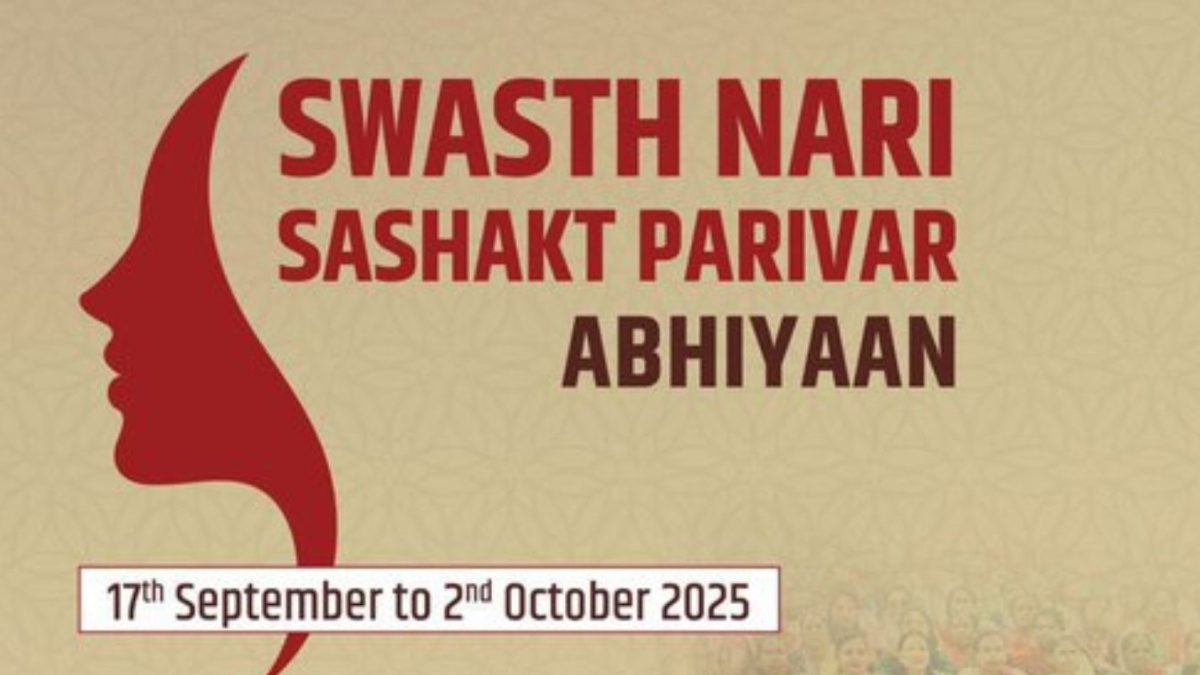
Marking his 75th birthday, Prime Minister Narendra Modi unveiled a sweeping public health campaign aimed at strengthening women’s healthcare and family nutrition. The program, officials say, represents one of the government’s most ambitious gender-focused outreach efforts to date.
A Campaign With National Reach
In Madhya Pradesh on Tuesday, Mr. Modi formally launched the “Swasth Nari, Sashakt Parivar Abhiyaan” (Healthy Women, Empowered Families Campaign), timed to coincide with the start of Rashtriya Poshan Maah (National Nutrition Month). The initiative will run from September 17 to October 2, bringing more than 100,000 health camps to government facilities across the country.
The camps are designed to provide preventive health care that is often neglected by women in rural and underserved regions. Services will include routine check-ups, screenings for breast and cervical cancer, gynaecological consultations, eye examinations, and blood donation drives. In Delhi, AIIMS has announced daily walk-in services at multiple centres from 9 a.m. to 2 p.m.
Addressing Gaps in Women’s Health
Public health experts have long noted that Indian women frequently seek medical care late, if at all, due to cultural, financial, and logistical barriers. By making screenings free and widely available, officials hope to reduce the burden of undetected illnesses and improve maternal health outcomes.
In Madhya Pradesh, where Mr. Modi launched the campaign, authorities also distributed sickle cell screening and counselling cards — a nod to the heavy disease burden in tribal communities. Simultaneously, the government rolled out the Adi Seva Parv, a service initiative tailored for India’s tribal populations.
Symbolism and Strategy
The timing of the launch — on the prime minister’s milestone birthday — was not lost on observers. Supporters framed it as emblematic of Mr. Modi’s personal commitment to women’s empowerment and family welfare. Critics, however, cautioned that such drives must be backed by sustained investment in rural health infrastructure if they are to deliver long-term change.
The initiative’s integration with Poshan Maah underscores its dual focus on preventive health and nutrition. By aligning two flagship campaigns, the government signaled that women’s health and family nutrition remain central to its vision of a healthier India.