
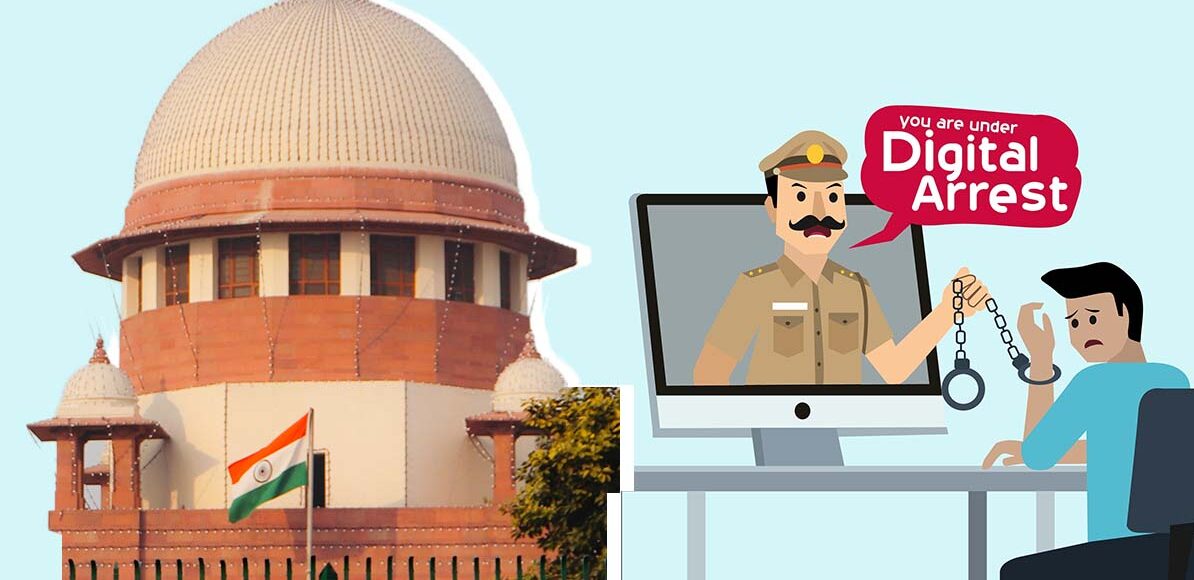
In a landmark move, the Supreme Court of India has taken suo motu cognizance of the rapidly spreading ‘Digital Arrest Scam’, which has already defrauded citizens of more than Rs 3,000 crore across the country.
Calling the revelations “shocking and deeply concerning,” the Court warned that the growing menace of cyber impersonation could “undermine public faith in law enforcement and the justice system” if left unchecked.
Fake Police, CBI Calls, and Rs 3,000 Crore Lost
During Monday’s hearing, a three-judge bench comprising Justice Surya Kant, Justice Ujjal Bhuyan, and Justice Joymalya Bagchi reviewed confidential reports submitted by the Ministry of Home Affairs (MHA) and the Central Bureau of Investigation (CBI).
The reports exposed a nationwide web of fraudsters impersonating police officers, CBI officials, and court staff through fake video calls, forged documents, and counterfeit court orders.
These cybercriminals have been threatening citizens with “digital arrests” — demanding payments to avoid fabricated legal action.
“It is shocking that citizens, including elderly individuals, have been defrauded of more than ₹3,000 crore. Unless strict action is taken, this menace will only deepen,”
— Justice Surya Kant remarked.
Court Appoints Amicus Curiae; CBI to Expand Probe
To ensure coordinated legal and enforcement action, the Supreme Court has appointed an amicus curiae to assist in preparing further directions.
The next hearing is scheduled for November 10, where additional measures will be finalized.
The CBI informed the Court that several fraud networks are operating from foreign locations, using sophisticated financial, technical, and human networks.
Solicitor General Tushar Mehta assured the bench that the MHA’s Cyber Crime Division is already working to dismantle these syndicates.
Case Sparked by Elderly Couple’s Harrowing Ordeal
The case originated from an Ambala-based elderly couple’s complaint.
Scammers posing as CBI and ED officers claimed the couple’s bank accounts were linked to illegal activities, and demanded Rs 1.05 crore to “resolve the matter.”
The victims were held under a form of “digital arrest” — forced to stay on video call for hours while transferring the money out of fear.
Two FIRs have been registered under multiple sections of the Bharatiya Nyaya Sanhita (BNS). The Court observed that forged judicial documents and impersonation of officials are not only crimes of fraud but attacks on the credibility of the justice system.
Nationwide CBI Probe Likely
The apex court hinted that all Digital Arrest Scam cases could soon be brought under a single nationwide investigation by the CBI.
The bench also sought details on whether the agency has adequate cyber forensic experts and resources to trace funds routed through cryptocurrency and overseas accounts.
How the ‘Digital Arrest Scam’ Works
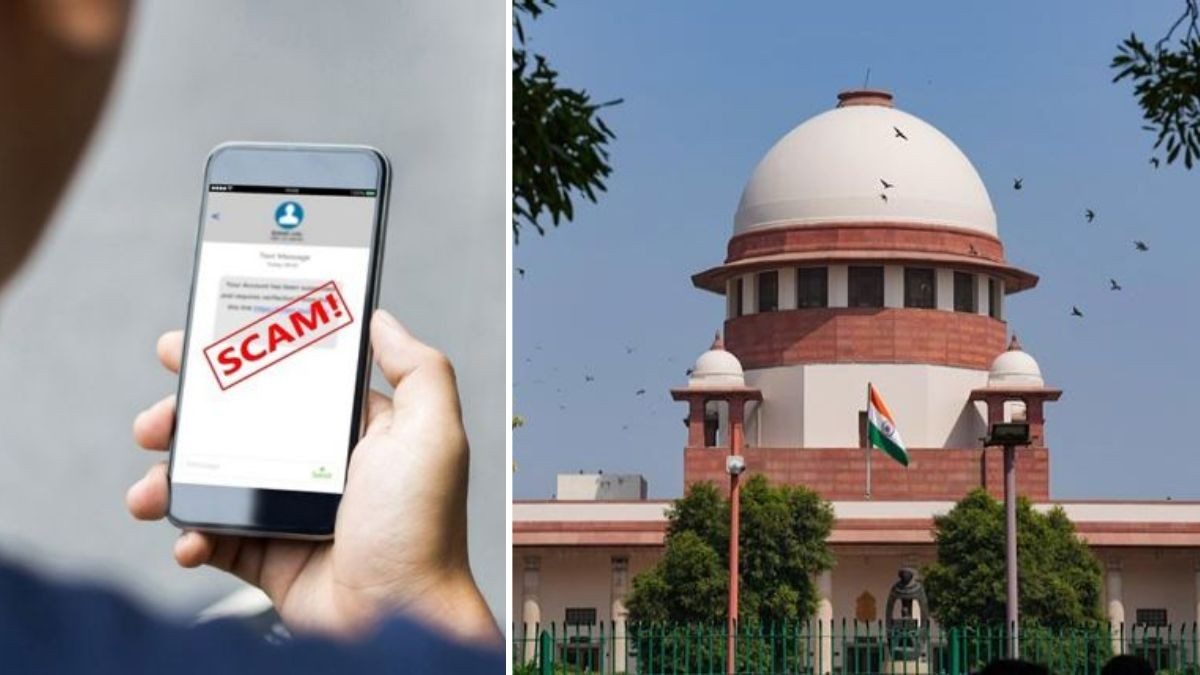
●Scammers call victims via WhatsApp or video chat, posing as law enforcement officials.
●They accuse the target of being involved in a crime or identity misuse.
●Fake court notices, arrest warrants, and ID cards are sent as proof.
●Victims are threatened with arrest unless they transfer money immediately — often to crypto wallets or foreign accounts, making recovery nearly impossible.
Senior Citizens Most at Risk
Experts warn that senior citizens are among the most frequent victims due to limited digital literacy and a tendency to trust authority figures.
Fraudsters exploit fear, confusion, and urgency to extract money, often leaving victims emotionally scarred and financially drained.
Supreme Court’s Call for Awareness and Action
The Court emphasized that tackling this crisis requires both law enforcement strength and citizen awareness.
“We must empower our agencies through judicial orders so that no criminal can exploit citizens in the name of the law,”
— the bench stated.
Cybersecurity experts believe this intervention could become a turning point in India’s cyber fraud prevention framework, provided that the government and enforcement bodies act in sync.
A National Wake-Up Call
The “Digital Arrest Scam” is not just a financial fraud — it’s a psychological weapon that erodes public trust.
The Supreme Court’s bold stand serves as a wake-up call to strengthen India’s digital security, legal awareness, and institutional safeguards — ensuring that fear no longer becomes a tool for fraud.