

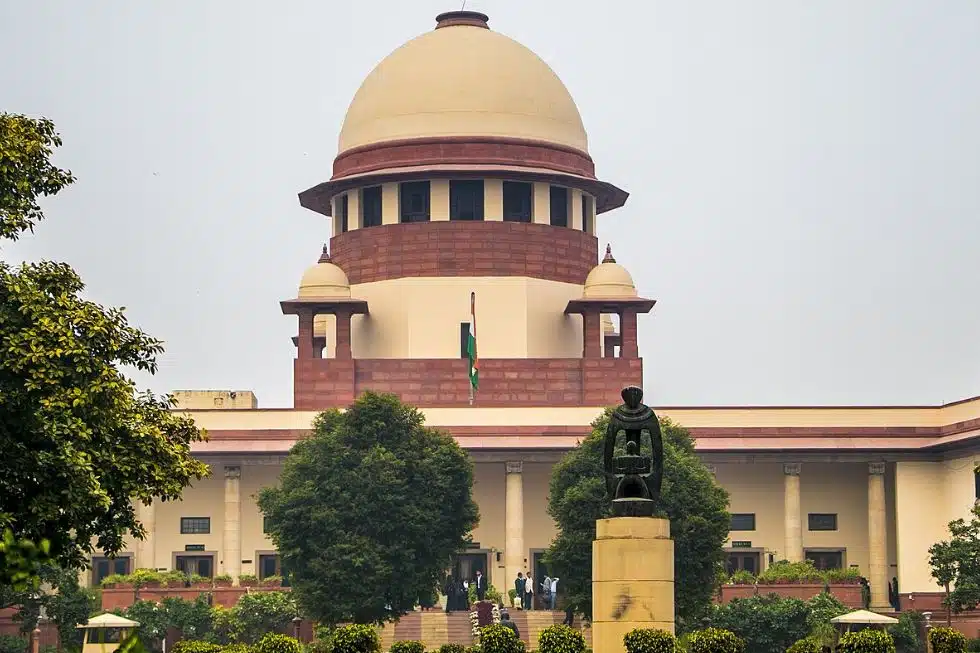
NEW DELHI: The Supreme Court observed that a citizen’s right to vote cannot be taken away simply because they were temporarily absent from their registered address, advising the Election Commission of India to establish an effective outreach mechanism for 4.7 million people excluded from Delhi’s draft electoral roll. Hearing a petition filed by social activists Anjali Bharadwaj and Amrita Johri, a bench comprising Chief Justice of India Surya Kant and Justices Joymalya Bagchi and V. Mohana questioned the exclusion of nearly a third of Delhi’s 14.5 million registered voters following a Special Intensive Revision exercise. The court noted that migration within a major metropolitan city for employment or education is routine, and election authorities must seek practical solutions rather than dropping unreachable voters from draft rolls.
Public Listing Proposed to Trace Excluded Voters
During the proceedings, the Chief Justice suggested that the commission publish a dedicated list of voters who featured on earlier rolls but could not be traced during door-to-door verification. The bench indicated that an official public appeal could urge these residents to contact their nearest Booth Level Officer to complete pending formalities. Stressing the necessity of bridging the communication gap between citizens and administration, the judges maintained that voters should not face severe disenfranchisement merely because they were unavailable at the specific hour verification officers visited. The court directed the commission to explore multiple administrative alternatives and scheduled the next hearing after two weeks.
Procedural Lapses Must Not Extinguish Fundamental Rights
Justice Joymalya Bagchi remarked that the right to vote carries profound democratic weight, placing a high standard of care on election authorities during roll preparation. The bench stated that an inability to submit an enumeration form or an administrative error cannot permanently extinguish a citizen’s franchise, characterizing the massive scale of omissions as a structural discrepancy. The judges voiced sharp concern over requiring previously registered voters to submit fresh Form 6 applications, which are meant for first-time electors. The bench suggested that authorities should instead accept existing enumeration forms or previously filed records rather than imposing redundant paperwork, cautioning that eligible electors should not suffer because of procedural rigidities.
Commission Confirms Verification Channels Remain Open
Appearing for the Election Commission, Senior Advocate D.S. Naidu submitted that names missing from the draft list have not been permanently erased, assuring the bench that the statutory window for seeking inclusion remains accessible. Counsel indicated that election authorities would consider accepting delayed enumeration forms and could extend deadlines if circumstances require. The court noted that it has not issued any final ruling regarding the legal validity of excluding voters based on logical discrepancies, recalling that such measures were sanctioned only as an interim mechanism in West Bengal. Advising against strict, unyielding cut-off dates, the bench instructed the commission to keep accepting Forms 6 and 8 while it formulates concrete measures to reach the excluded population before the upcoming hearing.

